

Among the countless traditional craft villages in the thousand-year-old land of Hanoi , So village in Cong Hoa commune still retains its own unique mark: the famous dong vermicelli village, where the clear, chewy white vermicelli strands are created with skill, meticulousness and professional quintessence passed down through generations.
For the people here, dong vermicelli is not only a product, but also the soul of the village, a pride associated with the history of their ancestors and the flavor of their homeland.
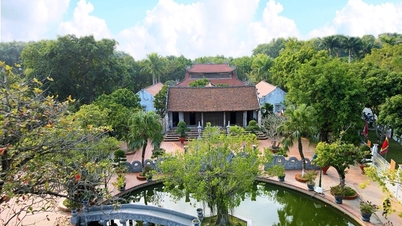
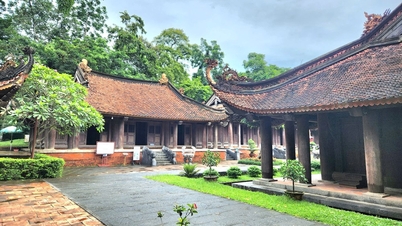
Long-standing traditional profession associated with the ancient So communal house
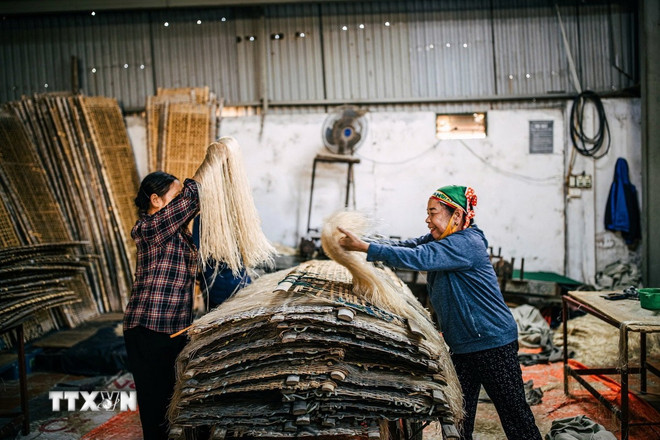
No one in So village knows exactly when the vermicelli making profession began. The elders only remember that from their childhood they saw their fathers making vermicelli every day. The sounds of making rice paper, drying rice paper, slicing vermicelli, and bundling vermicelli echoed in the early morning sun and lasted until late afternoon.
Since then, the name "So village vermicelli" was born and associated with So communal house - the famous ancient communal house of this land, as a long-standing cultural mark of the ancient people of Quoc Oai.
So Village is located in a cool green space, surrounded by four mountains Long-Ly-Quy-Phuong. Nature has blessed this place with a source of clear, sweet and cool well water, which becomes an important factor in creating the unique color and flavor of dong vermicelli.
Many gourmets still say that So village vermicelli is clear, transparent and chewy partly thanks to the village water, which cannot be imitated anywhere else.
The essence of cassava - the secret of famous vermicelli
Professionals say that to have delicious vermicelli, the ingredients must be standard.
So villagers use 100% arrowroot powder - old arrowroot, large, even tubers, purchased from famous raw material regions such as Dien Bien, Son La, Tuyen Quang, Bac Kan ...
After being brought back, the tapioca flour will go through a meticulous processing process:
After being brought back, the tapioca flour will go through many times of soaking and washing to filter out sand and impurities.
After 3 filtering times, a small portion of the purified flour is taken to make cooked flour, mixed with raw flour to maintain adhesion before being steamed into cakes.
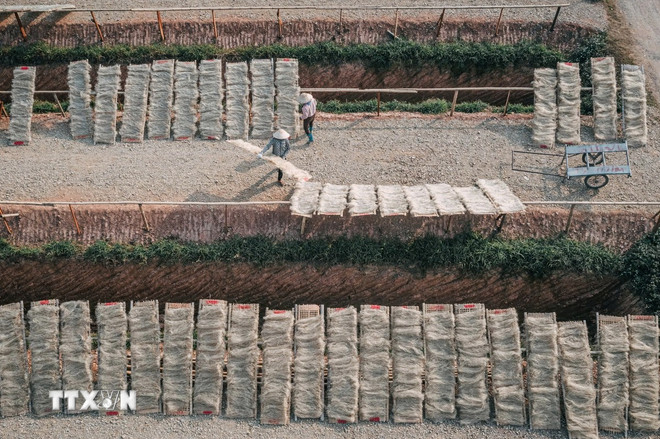
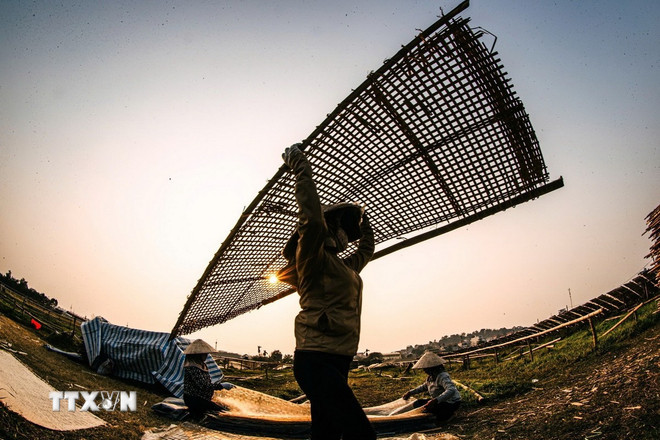
The special feature of So village vermicelli is the technique of drying against the wind. The vermicelli is dried in the field for 90-180 minutes depending on the sun and wind. Thanks to drying against the wind, the vermicelli dries quickly, evenly and more transparently.
After the cake reaches the right wilting level, the worker puts it in the cutting machine, soaks it until soft, shapes it into strands, and then continues to dry it for about 3 more hours to let the vermicelli dry naturally.
Thanks to strict adherence to these manual steps, So village vermicelli has characteristics that consumers love:
Thanks to this traditional process, So village's dong vermicelli has a clear white color, naturally chewy and crispy fibers, does not get soggy when cooked and especially does not use preservatives or additives. The flavor of dong rieng is distinct, light and refreshing.
It is the meticulousness in each stage that has created the reputation of So village vermicelli for decades.
Keep the profession all year round, busiest during Tet season
Nowadays, vermicelli making is still maintained all year round, but the main season is from September to December. This is the time when producers increase production capacity to serve the shopping needs of Tet.
Every house has a red fire, the fields for drying vermicelli are always white with evenly dried rice cakes, a familiar image every winter.
Thanks to the support of semi-automatic machines, many households in the village can produce 3-4 tons of vermicelli per day, meeting the growing demand of the market.
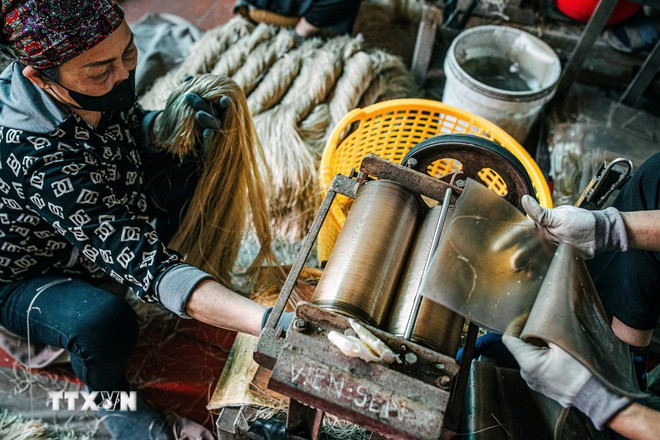
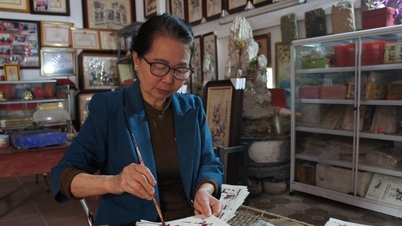
Despite the presence of machines, important steps such as selecting cassava, filtering flour, drying cakes and drying fibers must still be decided by workers based on many years of experience.
And although there are many vermicelli production facilities on the market, consumers still remember So village vermicelli as a traditional brand with stable quality and unmistakable hometown flavor.
Keeping the village's tradition alive, bringing the brand far and wide
So village vermicelli has become a familiar part of every Vietnamese family meal. From the fragrant bowl of chicken vermicelli on New Year's Day, stir-fried vermicelli with mixed vegetables on the feast tray, or rustic vermicelli mixed in daily meals, all evoke a rich, clear, pure flavor of the Northern countryside.
Not only delicious and easy to prepare, cellophane noodles are also popular because they are healthy, low in fat, gluten-free, and suitable for many different diets.
In the context of an increasingly expanding market, So village vermicelli has appeared in many supermarket systems, specialty stores and is widely consumed both domestically and internationally. That not only brings stable income to the people but also contributes to preserving traditional occupations, affirming the value of Vietnamese agricultural products.
The people of So village understand that a brand can only be sustainable if it maintains its original quality. Therefore, despite innovating machinery to increase productivity, they still persist in maintaining the core of the profession: the meticulousness, delicacy and dedication of the craftsman.
In the modern flow, preserving and promoting the traditional vermicelli making craft not only helps improve people's lives but also contributes to preserving the cultural values of a century-old craft village.
With its confirmed quality, So village vermicelli continues to be the pride of Quoc Oai people, a specialty imbued with the flavor of the homeland./.
Source: https://www.vietnamplus.vn/mien-dong-lang-so-tinh-hoa-tu-cu-dong-ban-sac-tu-ban-tay-nguoi-tho-post1074573.vnp
![[Photo] Urgently help people soon have a place to live and stabilize their lives](/_next/image?url=https%3A%2F%2Fvphoto.vietnam.vn%2Fthumb%2F1200x675%2Fvietnam%2Fresource%2FIMAGE%2F2025%2F12%2F09%2F1765248230297_c-jpg.webp&w=3840&q=75)







































































Comment (0)