

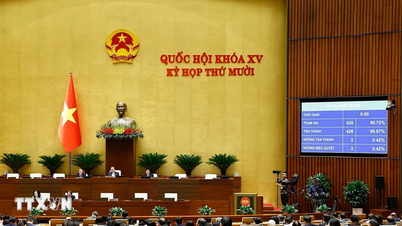
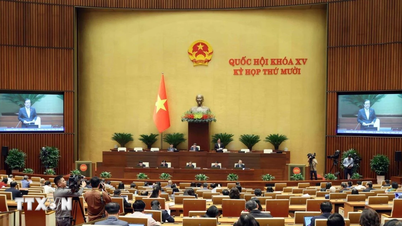
Agreeing on the policy of free periodic health check-ups and moving towards free hospital fees for people, however, at this morning's discussion session, National Assembly delegates said that there needs to be a suitable roadmap to ensure the ability to respond, in terms of human resources, material resources and financial resources, especially for grassroots health care .
Calculate the route carefully
The National Assembly 's Resolution on a number of breakthrough mechanisms and policies for the protection, care and improvement of people's health stipulates that from 2026, people will be entitled to periodic health check-ups or free screening at least once a year according to priority groups and roadmaps, and to exempt hospital fees according to the roadmap to achieve free hospital fees for all people by 2030.
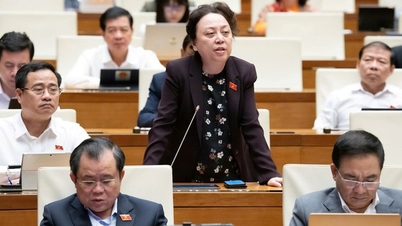
Assessing this as a very humane policy, delegate Pham Thi Kieu ( Lam Dong delegation) said that exempting hospital fees at the basic level within the scope of health insurance benefits until 2030 is a historic step, reducing the direct cost burden on people and strengthening social security.
However, for the policy to be feasible and sustainable, it is necessary to clearly define and quantify the concept of "basic level" of exemption from hospital fees; more specifically regulate the scope, roadmap and operating mechanism; develop a set of scientific and transparent criteria, along with a full assessment of scenarios for balancing the health insurance fund and the state budget. When increasing the benefits for policy beneficiaries and low-income people, it is necessary to carefully calculate so as not to put too much pressure on the fund, ensuring breakthroughs but not affecting the financial sustainability of the health system.
Delegate Duong Khac Mai (Lam Dong delegation) suggested that the drafting agency specify the roadmap to increase the benefit level and move towards exempting hospital fees in stages of 3-5 years linked to the target of balancing the health insurance fund and the state budget, avoiding the risk of fund imbalance in the medium and long term.
Regarding the policy of increasing the coverage of 100% of medical examination and treatment costs for people in near-poor households and the elderly aged 75 and over who are receiving social pension benefits (Point a, Clause 1, Article 2), delegates proposed to study and expand it to the group of people aged 70 and over, in line with the current average healthy life expectancy of 68 years.
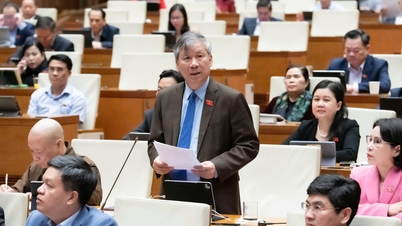
Delegate Nguyen Tam Hung (Ho Chi Minh City delegation) proposed adding criteria to determine groups of subjects with increased benefits based on the level of health risks and high disease risks, instead of relying solely on social and administrative criteria. According to Delegate Hung, in reality, people with high risks such as chronic diseases, genetic diseases, early metabolic disorders, etc. always need large and long-term treatment costs. Prioritizing based on health risks will be in line with reality, ensure health equity and contribute to reducing the burden of long-term diseases.
Sharing this view, delegate Nguyen Anh Tri (Hanoi delegation) proposed to exempt hospital fees early for people being treated for difficult-to-cure cancers, patients on dialysis and cancer patients using expensive treatment drugs, without waiting until 2030.
Delegate Nguyen Anh Tri also suggested that it is necessary to clarify that free medical examination must go hand in hand with improving the quality of medical examination and treatment (ensuring good medicine, standard and updated diagnostic and treatment equipment), convenience for people (allowing people to proactively seek medical examination at the nearest and most convenient location, implementing real interconnection, eliminating the ceiling on health insurance payments); equality in benefits (ensuring that basic medical examination and treatment are arranged closest to people, with enough medicine, and all people receive the same benefits according to the level of illness); and have a reasonable roadmap to ensure feasibility and effectiveness.
Increase investment in primary health care
Also raising the need for a suitable roadmap, delegate Dang Bich Ngoc (Phu Tho delegation) said that in reality, the grassroots health network still faces many difficulties and disparities between regions, especially in remote areas and ethnic minority areas. Facilities, equipment, and information technology systems for electronic health records are limited. Medical staff are lacking, and equipment and information technology operating skills are weak. Practical surveys show that many commune/ward health stations lack doctors, have degraded facilities, outdated equipment, cannot be used, causing waste and not meeting the needs of initial medical examination.
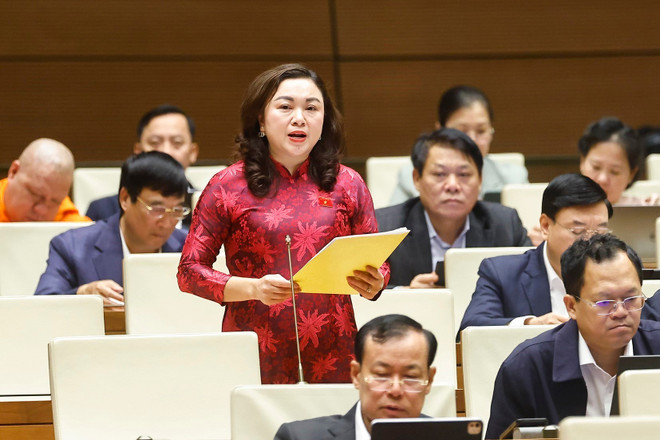
Accordingly, delegates proposed prioritizing investment in human resources and facilities in disadvantaged areas; having a mechanism to train and foster local medical staff, especially local staff who have been with the health sector for a long time, in order to retain medical staff at the grassroots level.
The delegates also proposed identifying priority groups for periodic health check-ups from the beginning of 2026, including: ethnic minorities in remote areas; poor and near-poor households; and vulnerable groups. The Government needs to clearly define each group and priority roadmap to ensure transparency and fairness.
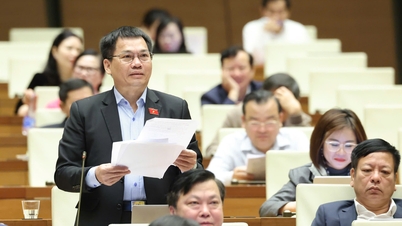
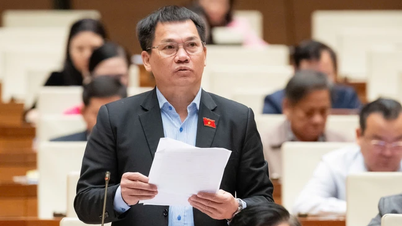
Also concerned about this issue and analyzing more specifically, delegate Thach Phuoc Binh (Vinh Long delegation) commented that the grassroots health care system is currently very weak: 30% of health stations do not have doctors, 35% of stations lack medicine and supplies; service quality has not created trust so people still go beyond the line. "If we expand health insurance benefits while the lower level has not been consolidated, people will continue to flock to the upper level, increasing expenditure from the health insurance fund, causing overload and going against the goal of reducing the financial burden on people," delegate Thach Phuoc Binh said.
According to Mr. Binh, the procurement and bidding system still has many shortcomings, lacks unified guidance, causing supply disruptions; many hospitals have been discharged, exceeded funds and had health insurance arrears of about 7,000 billion VND in the period 2018-2021. Mr. Binh said that increasing benefits in the context of an unstable payment mechanism can easily lead to service abuse, especially in autonomous units. Medical human resources are declining, income is low, pressure is high, commune-level health facilities face the risk of doctor shortages in the near future. "A policy that increases the demand for medical examination and treatment but does not increase the supply capacity will cause overload," said delegate Thach Phuoc Binh.
Accordingly, delegate Thach Phuoc Binh proposed to complete the standardization of at least 70% of commune health stations in terms of facilities, equipment, and essential drug lists, ensuring that each station has at least one doctor; deploy the national basic health service package, improve the quality of grassroots health care to reduce over-provision and reduce health insurance costs. In addition, it is necessary to complete the legal framework on bidding and procurement before 2026, amend Decree 98, issue circulars in line with the Bidding Law, build a national drug and material price system to limit price differences, reduce payments, and ensure that additional health insurance benefits are implemented substantially.
Delegates also recommended policies to attract and retain talented people for the health sector, especially at the grassroots level. In addition, a safe and healthy working environment must be ensured for health workers./.
Source: https://www.vietnamplus.vn/mien-phi-kham-suc-khoe-mien-vien-phi-can-lo-trinh-phu-hop-de-dam-bao-kha-thi-post1080507.vnp


![[Photo] National Assembly Chairman Tran Thanh Man receives First Vice Chairman of the Federation Council of the Federal Assembly of the Russian Federation](/_next/image?url=https%3A%2F%2Fvphoto.vietnam.vn%2Fthumb%2F1200x675%2Fvietnam%2Fresource%2FIMAGE%2F2025%2F12%2F02%2F1764648408509_ndo_br_bnd-8452-jpg.webp&w=3840&q=75)













































































Comment (0)