

From training institutions to artists and artisans, many believe that this is the time to transform policies into tangible driving forces, opening up more space for creativity, nurturing talent, and enabling Vietnamese culture to reach further and shine on the global cultural map.
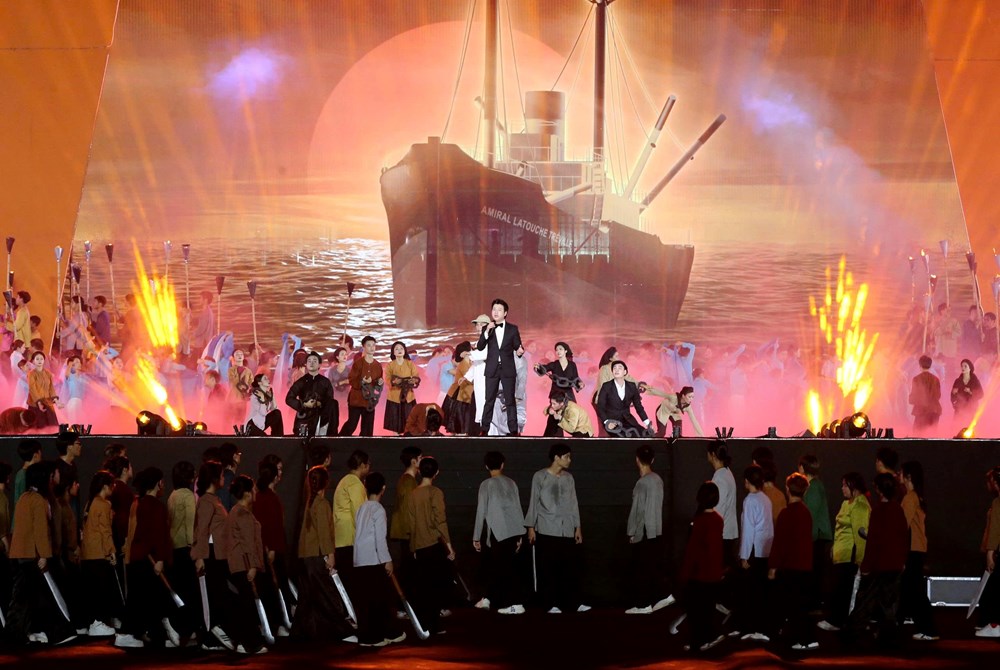
A boost for the cultural ecosystem .
From the perspective of art training institutions, Resolution No. 28/2026/QH16 on the development of Vietnamese culture is seen as an important signal for a longer-term investment phase in culture. This is also where new policies can most clearly be implemented, directly impacting the environment for discovering, nurturing, and developing future generations of artists.
According to People's Artist Do Quoc Hung, Director of the Vietnam National Academy of Music, the core value of this document lies in establishing a new perspective: Culture is placed in its rightful position as an endogenous resource and a driving force for national development. From this approach, culture needs long-term, focused investment, through mechanisms and policies capable of creating a creative environment and nurturing talent.
A key highlight of the Resolution is the provision that the State guarantees a minimum annual expenditure of 2% of the total state budget for culture, gradually increasing according to development requirements, in order to implement the Party and State's guidelines and policies in each period; while also encouraging the mobilization of social resources to participate. This approach shows that culture is being placed within a more open mechanism, with the State playing a leading role and society accompanying it.
Simultaneously, investment incentive policies, including the application of a 5% value-added tax rate on certain cultural and artistic activities, including performing arts, are expected to reduce cost pressure on organizations. When the burden of input costs is shared, institutions and art organizations will have more opportunities to expand their activities, improve the quality of their creative work, and bring cultural products closer to the public.
“With these new mechanisms, the links between training, creativity, production, and distribution have more opportunities to be reorganized more effectively and efficiently. For performing arts, this is especially important, because the market can only develop sustainably when supported by quality training and the adaptability of artists. When the cultural ecosystem operates smoothly, young talents will have more open career opportunities, from domestic stages to international creative environments,” People's Artist Quoc Hung remarked.

Provide the mechanisms for talent to flourish.
Another noteworthy point is that the Resolution dedicates a specific article to policies for rewarding and developing talent and specialized human resources in the fields of culture and sports . This is considered an important step forward, touching upon a fundamental issue in cultural and artistic life.
According to People's Artist Do Quoc Hung, institutions or resources, ultimately, are conditions for creating an environment. The decisive factor in the vitality and depth of culture remains the creative people. Therefore, without mechanisms to discover, nurture, value, and protect talent, it will be very difficult to create artistic masterpieces, and even more difficult to build a competitive cultural industry.
In the arts, especially music and performance, talent cannot be cultivated in short cycles. It is a long, in-depth, and continuous training journey. According to People's Artist Quoc Hung, a talent needs to be discovered early, nurtured in a high-quality academic environment, with excellent teaching staff, comprehensive facilities, and standard practice conditions.
Therefore, the regulations on investing in modern facilities, supporting domestic and foreign training, and mechanisms for recruiting and utilizing talent, as outlined in the Resolution, show that the policy has addressed core issues that professionals in the field have been concerned about for many years. This is an important foundation for art training institutions to have more opportunities to discover, nurture, and take young talents further.
Looking at the long term, this approach opens up the possibility of changing perceptions about art education. It's not just about training professionals, but also about investing in the nation's creative resources. A well-trained artist, developed in the right direction, can create aesthetic value and become a cultural representative, bringing national identity to the world and contributing to shaping Vietnam's image in the context of integration.
From that perspective, the value of the Resolution goes beyond simply supplementing resources. More importantly, this document reinforces the belief that investment in culture is being properly prioritized, and that artistic talent is recognized and appreciated through appropriate development mechanisms. This serves as an impetus for training institutions and professionals to continue innovating, improving the quality of their work, proactively integrating, and contributing to the vitality of national culture.

Associate Professor, Dr. Tan Nhan, Meritorious Artist, Head of the Vocal Department, Vietnam National Academy of Music, believes that the Resolution is aiming to restructure the cultural ecosystem as a unified whole, in which institutions, resources, and people are placed in a close, mutually supportive relationship. Within this overall framework, the group of policies for rewarding and developing talent plays a particularly important role. Specific regulations on preferential allowances for each field, working conditions, and training and performance allowances based on role and level of participation in each work and program demonstrate an effort to better recognize the value of artistic labor.
Notably, the Resolution also emphasizes the proactive role of local authorities in allocating budgets and mobilizing social resources to reward and support artisans and creative artists, especially in the fields of folk culture and traditional arts. According to Associate Professor, Doctor, and Meritorious Artist Tan Nhan, this is a crucial point as many art forms are facing the risk of a shortage of successors. When artisans are given the opportunity to create, teach, and participate in promotion, heritage is not only preserved in memory but also has the chance to be revived in contemporary life.
Based on these new developments, professionals expect that policy breakthroughs will soon be effectively implemented, transforming into a real driving force for development. This also forms the basis for Vietnamese culture to continue to be nurtured in a progressive direction, rich in national identity, while simultaneously enhancing the position of Vietnamese art on the international stage.
A support system for artists when their careers are over.
The policy of supporting retraining for artists after their careers end is considered a new and humane initiative. For many art forms such as dance, circus, and some traditional performing arts, the career lifespan is often short, while the previous framework for supporting career transitions was not sufficiently clear. Retraining provides artists with more opportunities to stabilize their lives after the stage. More importantly, the cultural sector retains a highly experienced workforce, continuing to contribute through teaching, training, and passing on their skills to future generations.
Source: https://baovanhoa.vn/van-hoa/mo-duong-cho-tai-nang-cat-canh-225891.html















































































Comment (0)