

 |
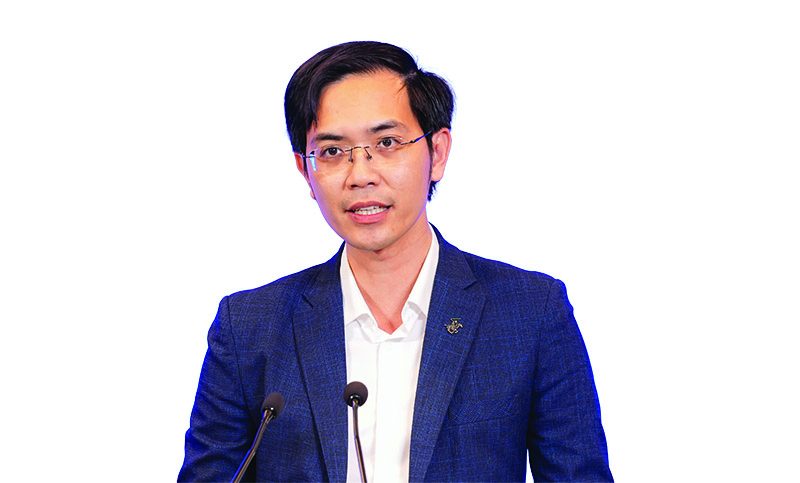
| Assoc. Prof. Dr. Nguyen Huu Huan, Vice Chairman of the VIFC-HCMC Executive Agency |
BILLIONS OF USD COMMITTED TO INVEST IN VIFC-HCMC
Sir, after VIFC-HCMC commenced operations, what were the most notable initial results in attracting capital flows and financial institutions?
The initial phase, following the launch of VIFC-HCMC, can be seen as a "market confidence building" phase, and in this respect, we have achieved quite clear initial results.
Within a very short period after its launch, the Center recorded commitments totaling billions of USD, with the aviation finance sector accounting for a large proportion. These capital flows were not short-term or speculative, but linked to long-term financial infrastructure components, from data and technology to trading platforms.
This shows that the Center is on the right track in developing niches with competitive advantages, linked to the real value chain of the economy such as aviation, maritime, logistics, or green finance.
Most significantly, VIFC-HCMC has begun to appear on the "map of interest" of global financial institutions. The fact that major institutions are proactively approaching, proposing cooperation, or exploring opportunities to establish a presence at the center shows that Vietnam is gradually being recognized as a potential financial destination, rather than just a developing capital market.
From a transactional perspective, we are currently in the "design and activation of the platform" phase, encompassing cross-border and interbank payment systems, as well as blockchain sandbox mechanisms, asset tokenization, and new financial products being implemented simultaneously. This may not immediately generate large transaction volumes, but it is fundamental because it determines the long-term operational structure of the Center.
A particularly noteworthy point is the improvement in Ho Chi Minh City's international standing on rankings such as the GFCI (Global Financial Centres Index). This significant rise in ranking in a short period is not simply a result of current indicators, but reflects the expectations of the global financial community regarding the center's development trajectory.
If we look at it from the perspective of the development of international financial centers, starting with building trust and positioning, attracting initial capital commitments, and establishing infrastructure and operational frameworks are necessary conditions before moving on to the acceleration phase.
 |
| An international financial center will help position Ho Chi Minh City on the global financial map. |
Currently, which financial segments at VIFC-HCMC are attracting the most interest from international capital?
International capital flows are currently not going into mainstream financial segments, but rather focusing on sectors that are both globally significant and have significant "openness" and growth potential in Vietnam. This presents an opportunity for VIFC-HCMC not only to participate, but also to "leapfrog" and position itself within the world 's new financial value chains.
Most notably, aviation finance, with components such as aircraft leasing, fleet financing, aviation insurance, and reinsurance, is a very large market globally, but in Vietnam it remains largely untapped, leaving significant room for growth thanks to its favorable position in the international transport and logistics chain.
Furthermore, maritime finance and logistics are also a key sector attracting capital. As global trade tends to restructure supply chains, financial centers connected to seaports and logistics always have a significant advantage. Vietnam, especially the southern region, has the right foundation to develop trade finance products, ship financing, transport insurance, and supply chain finance services.
Another very clear trend is that capital flows are particularly interested in digital finance, fintech, and digital assets. Investors are interested in areas such as blockchain, cross-border payments, stablecoins, and asset tokenization (from real estate to financial instruments). This can be seen as a "strategic differentiator" for VIFC-HCMC compared to many traditional financial centers.
Furthermore, green finance and ESG products are also attracting significant capital flows. In the context of the global push towards a green economy, Vietnam is one of the countries with a huge demand for capital for energy transition, sustainable infrastructure, and smart cities. Therefore, products such as green bonds, sustainable investment funds, carbon credits, etc., are attracting the attention of international financial institutions and are considered a long-term investment channel.
Finally, it's impossible to overlook the international interbank market and cross-border financial services. This is the "soft infrastructure" but plays a very important role. If done well, it will be the foundation for international capital flows to enter and exit flexibly, thereby enhancing market liquidity and depth.
KEY TO ATTRACTING GLOBAL INSTITUTIONS
Currently, what mechanisms or tools does VIFC-HCMC have in place to attract global financial institutions, investment funds, and international banks to establish a presence at the Center, sir?
We are not following the traditional approach that relies solely on tax incentives or costs, but are building an integrated institutional-technological-market ecosystem to address the specific pain points of global financial institutions when expanding into new markets.
First and foremost is the unique institutional framework, which allows for the design of a highly flexible "separate legal space." Within this space, international financial institutions can conduct cross-border fundraising, investment, profit transfer, or service provision activities with simpler procedures than the rest of the economy, while still remaining under a separate supervisory mechanism.
Secondly, there is the sandbox mechanism for financial innovation. VIFC-HCMC is implementing sandboxes for blockchain, digital assets, and asset tokenization, allowing institutions to test new products in a risk-controlled environment. Allowing controlled testing helps Vietnam leverage its "late mover" advantage, enabling it to move faster into next-generation financial models.
Alongside this is an integrated financial technology infrastructure, with a unified operating platform including digital identity, multi-currency wallets, cross-border payment systems, and real-time data. By joining the center, institutions can directly connect to the existing ecosystem, significantly reducing costs and time to enter the market.
Another crucial factor is the development of new financial markets and products such as international financial exchanges, green finance markets, asset tokenization platforms, or aviation and maritime finance components. This creates real business opportunities, rather than just incentives.
Furthermore, membership policies and selective incentive mechanisms are designed in a very different way. Institutions that participate early as "founding" or "strategic members" will have a significant advantage in shaping the market, accessing investment opportunities, and participating in establishing the rules of the game.
In short, VIFC-HCMC competes not with a single factor, but with a combination of ecosystem-based tools: a unique institutional framework, an innovation sandbox, integrated digital infrastructure, a new product market, and a strategic membership policy. It is this combination that is decisive in attracting and retaining global financial institutions in the long term.
In the course of its operations, what are the biggest advantages that have helped VIFC-HCMC quickly establish its financial ecosystem?
The biggest advantage lies in the fact that institutions have taken a proactive approach, creating a sufficiently flexible space to experiment with and implement new financial models. This is very different from the traditional development approach, where institutions often lag behind the market.
Secondly, there's the "late mover" advantage – starting later but moving faster. VIFC-HCMC isn't burdened by outdated structures, allowing it to directly design a next-generation financial model, integrated with digitalization, data, and global connectivity. We may not "catch up," but we can "leapfrog" in certain segments like fintech, digital assets, or cross-border payments.
Another crucial advantage is the connection between finance and the real economy. Ho Chi Minh City and the southern region are major economic centers with developed seaports, logistics, aviation, and trade systems, creating a huge demand for real finance. When finance is linked to real-world transactions, the ecosystem will form more quickly and sustainably.
Furthermore, the early involvement of international financial institutions creates a ripple effect, helping to build market confidence and foster network effects.
It's impossible to ignore the advantages in terms of cost and human resources. Compared to centers like Singapore or Hong Kong, operating costs in Ho Chi Minh City are significantly lower, while the workforce is young, dynamic, and quick to adopt new technologies. This helps financial institutions optimize their cost structure when expanding operations, especially in the context of a global trend towards restructuring to reduce costs.
Cost and human resource advantages are also significant strengths, as Ho Chi Minh City has significantly lower operating costs than many traditional financial centers, while possessing a young and adaptable workforce.
It can be said that the convergence of flexible institutions, a sufficiently large real economy, and the ability to leapfrog into the next-generation financial model is the foundation that helps the formation of the ecosystem not only accelerate but also provide a more solid foundation for the next stage of development.
Source: https://baodautu.vn/mo-duong-dua-tphcm-thanh-diem-den-dong-von-ty-usd-d579805.html



























































































Comment (0)