

 |
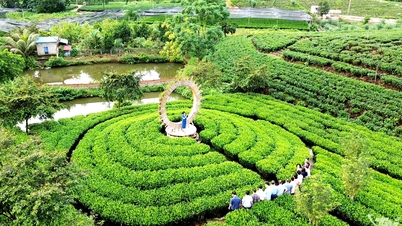
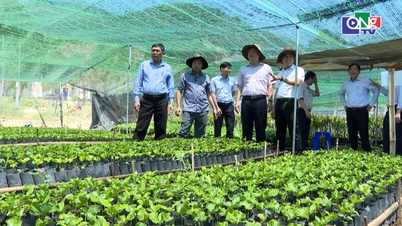
| International tourists experience the tea-growing region of Thai Nguyen . Photo: Provided. |
It doesn't have the "long, flat sandy beaches" of Quang Ninh or Khanh Hoa. It doesn't have the "snowy season" of Sa Pa (Lao Cai) or Mau Son (Lang Son); nor the royal palaces of Hue, but Thai Nguyen is a unique land that invites international tourists to visit, experience, and explore .
For example, Ba Be Lake in Ba Be commune is one of the 100 largest freshwater lakes in the world ; the Thai Hai Stilt House Village Conservation Area in Tan Cuong commune is the best tourist village in the world; Nguom Rock Shelter in Than Sa commune is a prehistoric dwelling dating back over 40,000 years; and Tan Cuong tea, famous throughout the country for its century-old reputation as "the finest tea".
Everything seems to beckon and entice, like the gentle melody of a mountain maiden falling onto the surface of the Cau River, leaving many hesitant to leave Thai Nguyen.
Visiting the "Four Great Tea Regions": Xinjiang, Luobang, Tongxi, and Wuzheng, international tourists can experience tea cultivation, processing techniques, and the art of tea appreciation alongside local farmers. These places embody the beauty of traditional culture passed down through generations, like the arrival and departure of spring, and its return.
Many international tourists have returned to the land of tea with the joyful feeling of reunion. Thai Nguyen, a land of kindness and tranquility, is filled with stories that stretch from the past to the present. It reminds many of the land that once sheltered, protected, and ensured the safety of President Ho Chi Minh and the Central Party Committee, enabling them to achieve the Dien Bien Phu miracle.
It is an important stop on the journey of international tourists. The ATK National Special Historical Site in Thai Nguyen province stretches from Phu Dinh to Cho Don. Known as the "Capital of the Thousand Winds," Thai Nguyen province is the only place in the world with such a unique capital.
It preserves many important historical traces of the Vietnamese revolution. Many international tourists visiting Vietnam are determined to visit the "Capital of the Thousand Winds" to understand why President Ho Chi Minh, the Central Committee of the Party, and the Vietnamese people defeated the invading French colonialists.
Upon arriving at the National Historical Monument commemorating the 60 young volunteer martyrs of Company 915 (Team 91, Bac Thai), many international tourists were deeply moved when their guides recounted the story of a generation of brave and resilient individuals who, undeterred by bloodshed, readily sacrificed their youth for a peaceful country.
Beautiful natural landscapes embrace historical landmarks, providing shade for numerous villages inhabited by ethnic minorities. For a long time, the stilt house architecture and customs of ethnic minorities have become "stories" that international tourists share with friends after visiting Thai Nguyen and return home to their families.
There you will also find traditional brocade fabrics and distinctive cuisine passed down through generations. All of these are unique features preserved, passed down, and widely promoted by the ethnic communities of Thai Nguyen province through tourism activities. Especially for international tourists visiting Vietnam, many of them have chosen Thai Nguyen as their destination.
 |
| Russian tourists choose to buy souvenirs during their visit to Thai Nguyen. |
International visitors to Thai Nguyen mainly come from South Korea, Japan, China, Germany, Canada, Australia, and some Southeast Asian countries. These are countries that have economic, investment, and educational cooperation relationships with Vietnam in general and Thai Nguyen in particular.
Therefore, Thai Nguyen province is gradually meeting the needs of high-end tourists, international business travelers, and foreign experts working in industrial zones within the province.
To meet the demands of the international tourist market, the province encourages units, businesses, and tourist destinations to proactively upgrade their facilities; train tourism staff with high professional qualifications and proficient foreign language skills. It also continues to diversify tourism products; develop new tourism products, especially those focusing on tea culture experiences, community tourism, and ecotourism.
Source: https://baothainguyen.vn/van-hoa/du-lich-thai-nguyen/202605/mo-rong-canh-cua-don-du-khach-quoc-te-8b13366/










































































Comment (0)