

 |
Pi Network has announced its listing on a major exchange. Photo: Coingape . |
On February 12th, the Pi Network development team announced that the blockchain would be launched on January 20th. This means that the digital currency users earned from attendance checks over the past six years can now be exchanged and traded transparently on the blockchain.
The event attracted attention because Pi was a controversial project that caused significant division. Cryptocurrency investors, in the name of blockchain superiority, viewed Pi Network as an equal, questioning its "mining coins with a phone" model. Conversely, those with a more open mind saw it as an opportunity to revive the cryptocurrency sector, which was struggling with illiquidity, a lack of standout projects, and capital tied up in "harmless" Bitcoin and memecoin.
However, both viewpoints suggest that ethical considerations were overlooked in the case of Pi Network. This is because the project targeted middle-aged and lower-income customers in developing countries. Meanwhile, the cryptocurrency ecosystem is still complex, and the process of creating accounts, securing transactions, and conducting trades is not easy for newcomers. Furthermore, participants need in-depth financial knowledge.
In the case of Pi Network, experts are concerned that many new traders will be scammed and suffer losses when participating on exchanges.
Legal risks
Colin Wu was quick to warn about the activities of Pi Network when many exchanges accepted it. This man is the owner of the Wu Blockchain account, a trusted cryptocurrency news channel worldwide . Wu also has a deep understanding of the Chinese market and is no stranger to Pi.
"Regarding this Ponzi scheme, if you still want to occasionally return to China, it's best to avoid it. Recently, a close friend of mine was arrested because his product was being used by a multi-level marketing group. Ponzi schemes are strictly cracked down on by the authorities; there are no gray areas," Colin Wu posted on his Chinese X account.
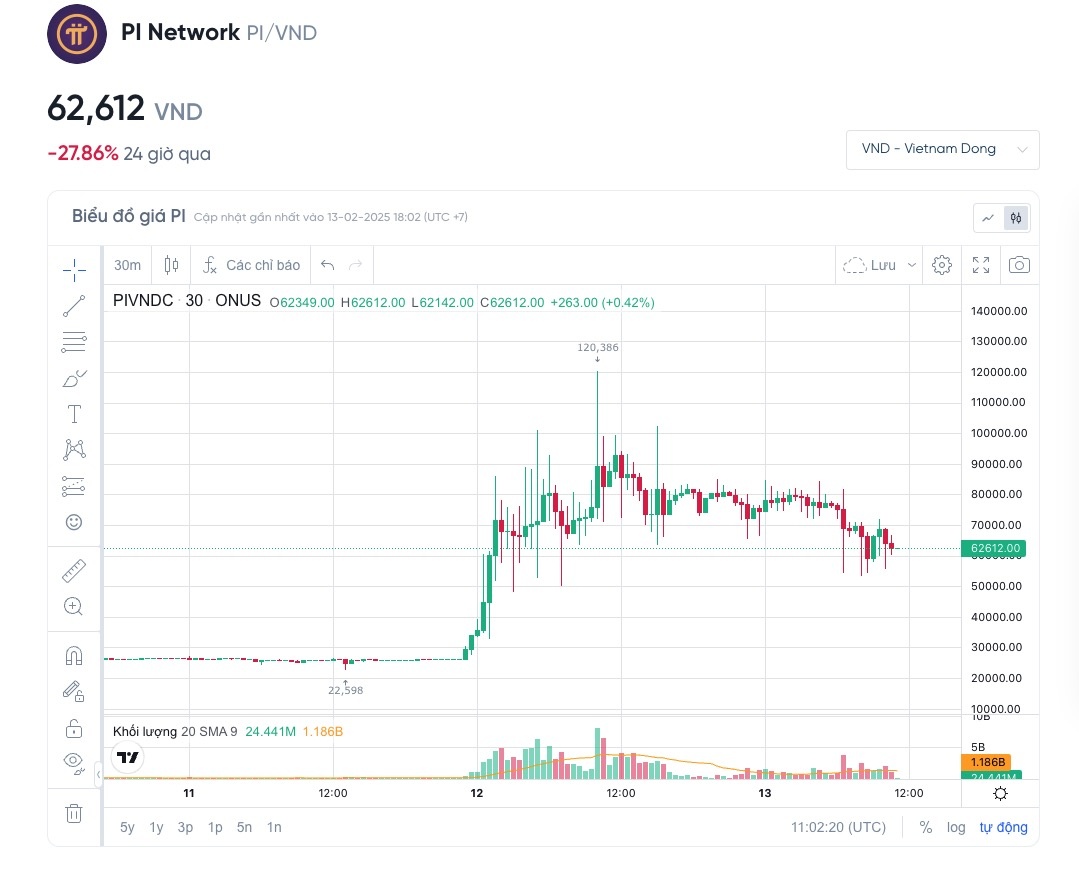 |
Pi cryptocurrency is traded as an over-the-counter (OTC) token on a Vietnamese exchange. Photo: ON |
He also emphasized that involvement with Pi Network poses significant legal risks to individuals and families in China. Colin cited a report from the Wuxi city police in Jiangsu province, warning about the project's targeting of the elderly.
"Under the guise of free cryptocurrency mining, they are actually operating on a Ponzi scheme, luring new users with promises of huge profits to collect personal data or steal money," said police in Wuxi city.
They also cited discovered cases. For example, in May 2023, a man, lured by an advertisement promising to exchange Pi for a car, nearly traveled 200 km to complete the transaction, only to later discover it was a scam.
AB.Kuai.Dong, the Chinese founder of a Metaverse project, calls Pi Network the largest multi-level marketing scheme in the Chinese-speaking world.
In Vietnam, at a press conference in June 2023, a representative from the Ministry of Public Security stated that activities related to Pi in Vietnam showed signs of recruitment, with money from earlier investors being paid to later investors in a binary, multi-level marketing business model.
Ethical concerns
One of Pi Network's biggest differentiators is its user community. The team reports that it currently has over 60 million users globally, with 20 million having completed Know Your Customer (KYC) verification and 10 million ready to join the blockchain. This number is many times higher than leading projects like Ethereum or Solana.
However, with its pyramid structure, where participants receive a percentage of the coins mined from those they invite, and it's free on mobile devices, the target audience is highly specific. According to experts in China, Pi miners in that country are mainly middle-aged and concentrated in rural areas. A similar structure is observed in Vietnam, where events organized by this community are concentrated in smaller cities, with participants being older adults.
Additionally, according to SimilarWeb , the project site is primarily accessed by users from Southeast Asia, South Asia, and Nigeria. These are still developing regions.
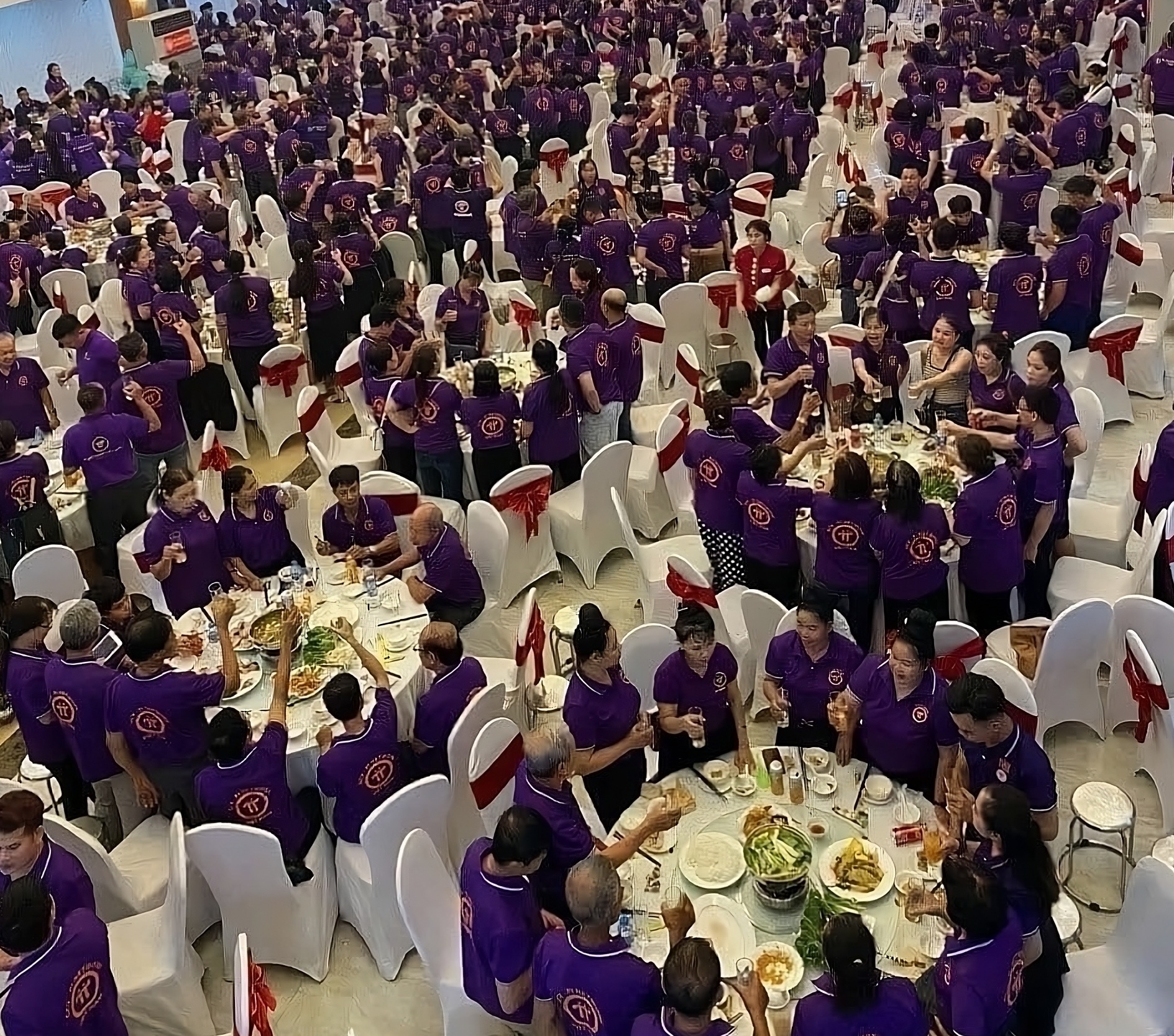 |
The Pi mining community event was held in Bac Ninh , with many elderly people in attendance. Photo: CQ |
This very customer base raises ethical concerns when Pi actually goes public. “Someone asked me today if I would participate in the Pi listing. I said, ‘Don’t joke around.’ Before, when I traded forex, I was constantly surrounded by middle-aged people holding banners demanding their hard-earned money back. Now that I’m dealing with cryptocurrencies, I don’t want to get involved in that kind of thing anymore. Stay away from it,” Ben Zhou, CEO of ByBit, humorously shared on social media.
The platform's leader also shared an article by Hoatian, an expert from CryptoInsight, expressing his opposition to supporting the Pi Network project. According to him, ethical considerations are being ignored as the cryptocurrency is about to be listed. "People think newcomers are too naive to believe 1 Pi = 1 BTC. But to them, memecoins on the blockchain are no different. Everyone knows they're playing a Ponzi scheme, 'get out first, win'," Hoatian said, using an analogy.
However, the willingness of major exchanges to list Pi poses significant risks. It creates opportunities for Pi miners, who are inexperienced in cryptocurrency trading, to suffer losses.





















































































Comment (0)