

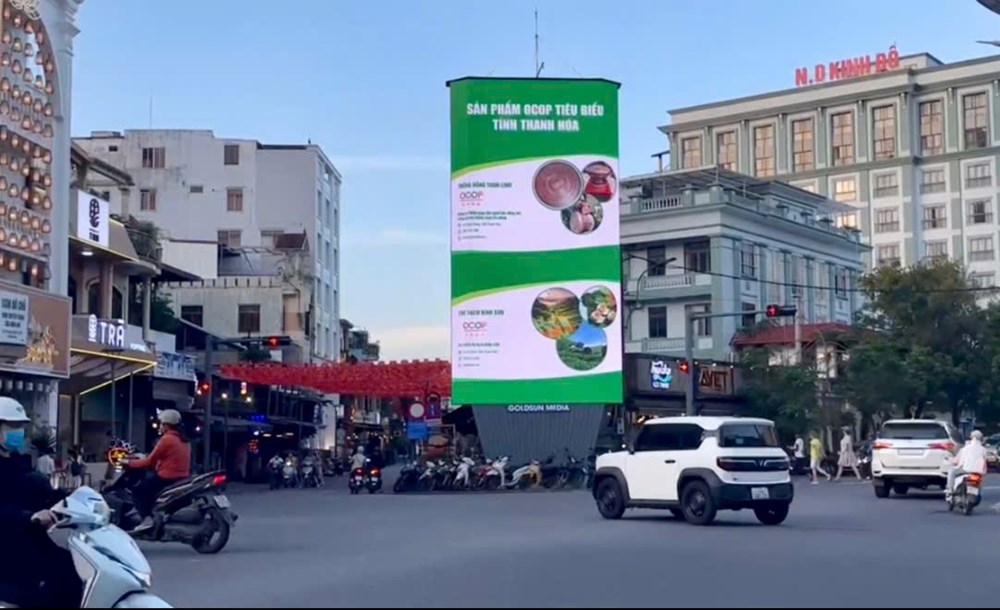
With 674 OCOP products achieving 3 to 5 stars, Thanh Hoa continues to maintain its 3rd position nationwide in 2026.
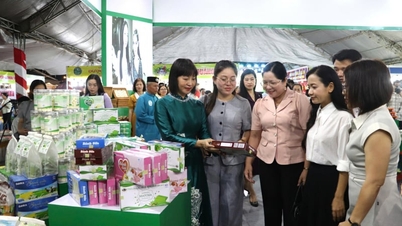
Besides contributing to increasing the value of agricultural products, each OCOP product also carries the story of the culture, traditional crafts, and identity of each rural area in Thanh Hoa province.
However, in the context of rapid digital transformation, the challenge of promoting local products is posing many new demands.
In reality, most of the content on social media today is primarily focused on quick access and easy viewing, but it's also easily scrolled past.
The lack of interactive experiences means that many OCOP products, despite their quality, still struggle to make a lasting impression on tourists.
Based on that reality, Thanh Hoa is shifting from a "information promotion" mindset to "creating digital experiences," where tourists can not only view but also interact, explore , and connect with the destination.
In this process, the Thanh Hoa Provincial Police force is playing a pioneering role. Not only are they fulfilling the task of ensuring data security, but they are also deeply involved in building a digital promotion ecosystem for the locality.
The provincial police, in coordination with the Department of Agriculture and Environment, have conducted an inventory and standardized data on traditional craft villages, OCOP products, and tourist destinations, creating a synchronized data source for promotion on digital platforms.
This is considered an important step in bringing the image of Thanh Hoa province closer to domestic and international tourists.
Notably, the Provincial Police Department advised the Provincial People's Committee to coordinate with Goldsun Media Group to promote OCOP products, traditional craft villages, scenic spots, and tourism events on a nationwide LED screen system.
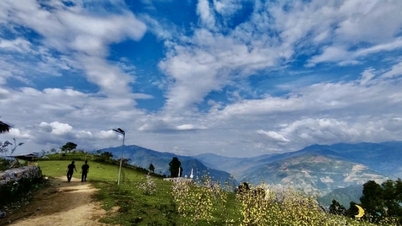
Images of Thanh Hoa's specialties, culture, and landscapes are now appearing in many major cities, significantly expanding the local media reach.
In parallel, many touch screen systems and information kiosks are also being promoted for installation at tourist areas and attractions.
Previously, tourists wanting to learn about a historical site or local specialty often had to ask locals, read brochures, or search haphazardly on their phones. Now, with just a few taps, all the information about the history of the place, local culture, OCOP products, or tourism services is displayed visually right at the destination.
Gone are the days of lengthy, text-heavy information boards; the new approach prioritizes images, videos, and interactive content. This is what's making a difference in the visitor experience.
Ms. Nguyen Thu Ha, a tourist from Hanoi, shared: “I was quite surprised that it was easy to find information about the history, culture, and even the local OCOP (One Commune One Product) products right at the tourist site. Thanks to that, the trip became more interesting and insightful.”
Meanwhile, Mr. Le Ngoc Tan, a tourist from Ninh Binh, believes that the application of digital technology helps save time searching for information and also creates a professional and modern feel for tourism in Thanh Hoa province.
Significantly, the value of the model lies not in the additional screens or kiosks installed, but in the experience it creates.
Many tourists, after researching information, proactively seek out craft villages, buy local products, or spend extra time exploring the stories behind each destination.
At that point, tourism is no longer simply about "going to see," but becomes a journey of connecting with the local culture, people, and way of life.
Source: https://baovanhoa.vn/nhip-song-so/mot-cu-cham-mo-khong-gian-van-hoa-xu-thanh-229413.html

























































































Comment (0)