

A solid foundation for the energy industry
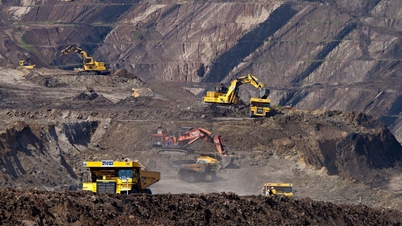
When joining the CPTPP, the UK made provisions and commitments to facilitate trade activities of member countries. In particular, when joining the CPTPP, the UK made clear commitments to the mining and quarrying industry, focusing on balancing market opening and protecting national interests.
Specifically, according to the Department of Trade and Multilateral Policy, Ministry of Industry and Trade, as a new member of CPTPP, the UK has taken careful and strategic steps to establish appropriate regulations in the mining and quarrying sector. The UK's reservations not only demonstrate its commitment to open trade but also reflect a special focus on the interests and sustainability of the national energy sector.

By joining the CPTPP, the UK has set out specific criteria for companies wanting to enter the mining and quarrying sector.
One of the notable points is the mandatory requirement to obtain a license to carry out exploration and production activities, which applies to both onshore and offshore activities. Mining and quarrying services are allowed to be freely provided to license holders without any restrictions. However, to ensure strict control, the UK has set specific criteria for companies wishing to participate in this sector.
Under the provisions of the CPTPP, a company wishing to own a mining license in the UK must meet one of the following three conditions: Having employees operating in the UK; registering a company in the UK with Companies House; or registering a branch of a foreign company with the Companies House...
For companies seeking to obtain a mining licence at a producing mine, the UK imposes more stringent requirements. Specifically, the company must be registered in the UK; or have a fixed place of business in the UK, as defined in the Corporations Tax Act 2010, which generally requires the presence of employees in the UK.
These criteria not only help the UK government maintain control over production activities, but also ensure that companies involved in mining activities have strong links with the UK economy and laws.
A notable point of the UK’s commitment is that mining and quarrying services can be freely provided to companies that have met the licensing requirements. This provision opens up great opportunities for foreign businesses to participate in the UK energy industry value chain, while maintaining fairness in the domestic market.
The UK’s commitment to the CPTPP mining and quarrying sector demonstrates a careful balance between protecting national interests and integrating deeply into the global economy. With strict but encouraging regulations, the UK not only strengthens its position in the energy sector but also opens up sustainable cooperation opportunities for international partners. This is a testament to the long-term vision and strategy of a new member of the CPTPP.
Commitment to air transport services
Similarly, when the UK joined the CPTPP, it made specific commitments on air transport services. From ground handling to space transport, the UK’s reservations reflect careful consideration of protecting national interests while opening up international trade.
The UK’s commitments in relation to air transport services focus on two main areas: services supporting air transport and air transport and related services. As a CPTPP member, the UK has made two reservations in Annexes I and II of the Non-Conforming Measures Reservations to the Services and Investment Obligations (NCMs) to preserve the right to adjust policies in the future.

The UK's commitments relating to air transport services focus on two main areas: air transport support services and air transport and related services.
The extent to which ground support services are available depends on the size of the airport. The number of service providers at each airport may be limited. For large airports, the minimum number of providers is two.
In relation to access to the ground support or self-service services market, the UK reserves the following:
One, if a Party applies to UK ground support services and airport self-service users treatment less favourable than the treatment the UK accords to the same Party's suppliers and users of the same services; or
Second, if a Party applies less favourable treatment to UK airport ground support services and self-service users than it accords to the corresponding services and users of another Party or non-member,
The United Kingdom may apply differential treatment to ground support services and self-service users at that Party's airports under the provisions of the Airport Ground Operations Regulations 1997.
For air services, the UK reserves the right to adopt or maintain any measures relating to airlines and airports, except for airport operations services.
For clarity, airport operations services do not include ownership, investment in airports or airport land, or any functions performed by the board of directors.
In addition, the UK reserves the right to adopt or maintain any measures relating to special air services in relation to the entry, departure or operation of aircraft within the UK.
The UK’s commitment to the CPTPP on air transport services not only opens up opportunities for international cooperation and investment, but also affirms the country’s position in strategic areas. This is a step that demonstrates careful consideration between national interests and global integration.
Source: https://moit.gov.vn/tin-tuc/mo-t-so-cam-ket-cua-vuong-quo-c-anh-trong-hie-p-di-nh-cptpp.html


















![[Photo] National Assembly Chairman Tran Thanh Man attends the VinFuture 2025 Award Ceremony](/_next/image?url=https%3A%2F%2Fvphoto.vietnam.vn%2Fthumb%2F1200x675%2Fvietnam%2Fresource%2FIMAGE%2F2025%2F12%2F05%2F1764951162416_2628509768338816493-6995-jpg.webp&w=3840&q=75)

























































Comment (0)