

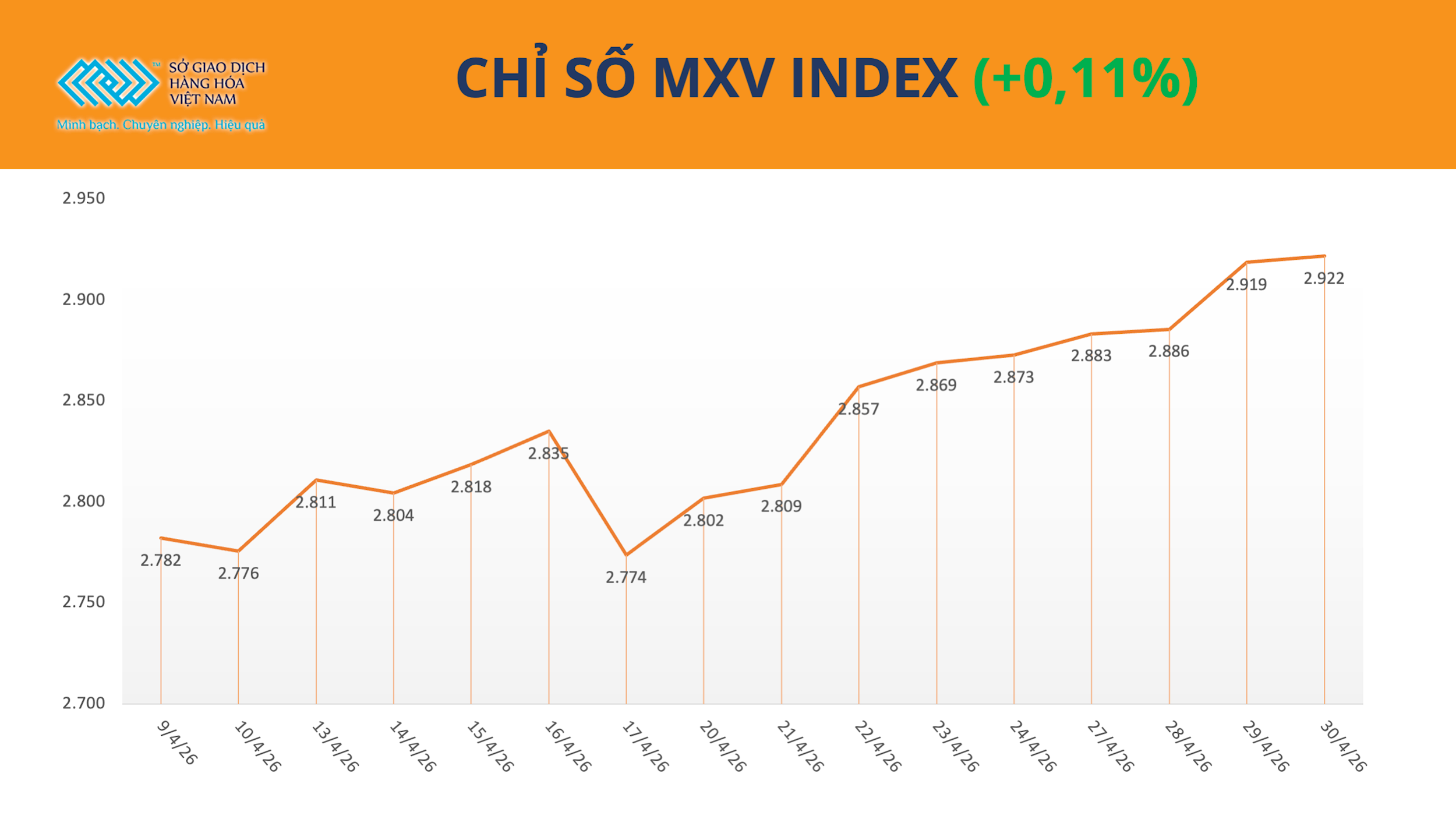
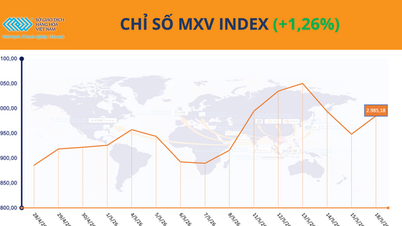
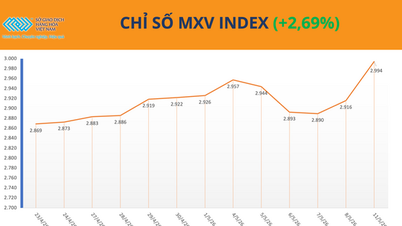
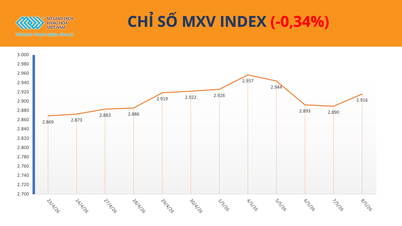
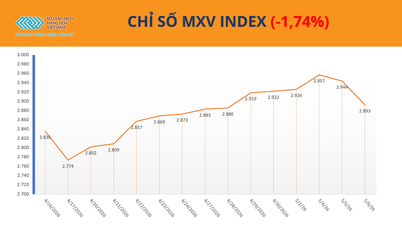
Despite persistently high inflationary pressures and the cautious monetary policy of the US, capital flows continued to pour into commodity markets. At closing, the MXV-Index rose 0.11% to 2,921 points, extending its winning streak to 10 consecutive sessions and holding firm above the 2,900-point peak.
According to the Vietnam Commodity Exchange (MXV), the metals market became the focus as 8 out of 10 commodities simultaneously increased in price, with platinum leading the trend. After a series of 5 weak sessions, the price of platinum futures for July delivery surged nearly 5%, approaching the $2,000/ounce mark.
The primary driving force behind the price increase was currency factors, as the US dollar weakened sharply following Japan's intervention to support the yen. The Dollar Index fell 0.9% to 98.06 points, thereby increasing the attractiveness of assets priced in USD.
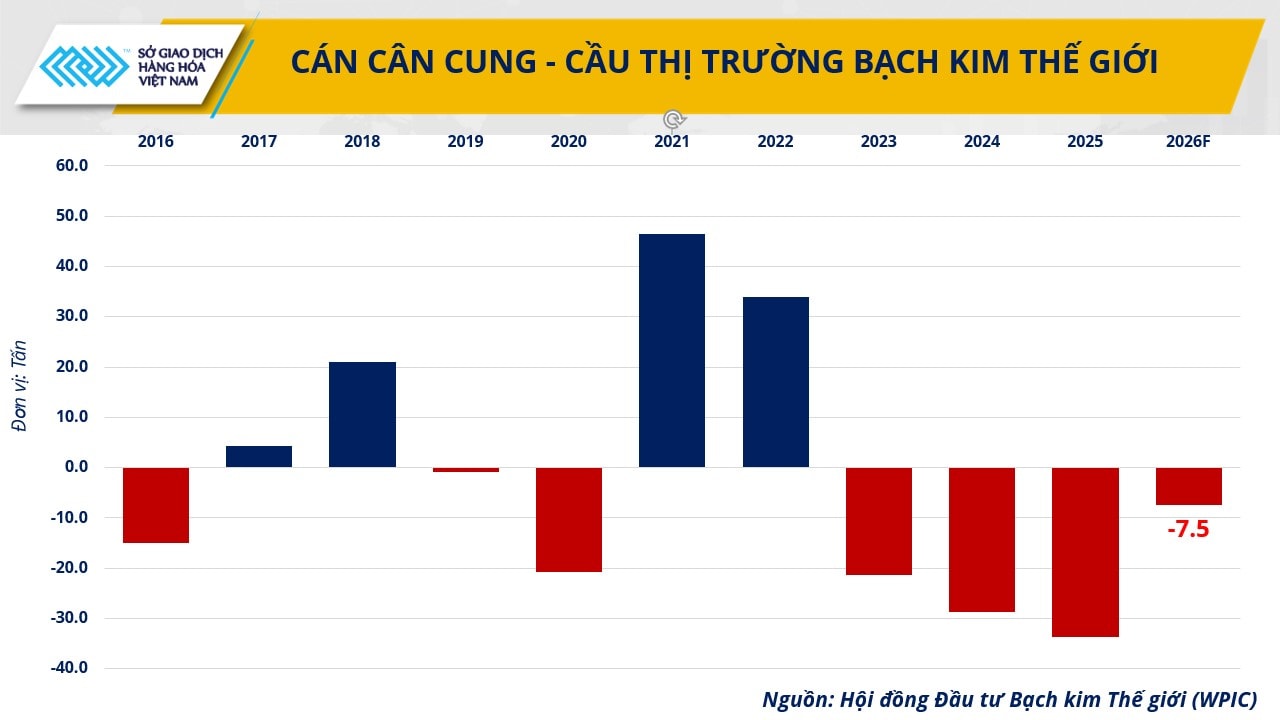
However, the supply and demand dynamics are the core factors supporting prices. According to the World Platinum Council (WPIC), the market continues to be in deficit, with a projected shortfall of approximately 240,000 ounces in 2026, while global inventories have fallen to 2.6 million ounces – the lowest level in eight years. Supply has only increased slightly by about 2% due to recycling activities, while mining output has remained virtually flat.
Conversely, demand showed signs of improvement as China's April manufacturing PMI reached 50.3 points, bolstering expectations for industrial consumption.
In the industrial raw materials group, rubber prices continued their upward trend due to the combined impact of energy costs and consumer demand. High crude oil prices, caused by disruptions in the Strait of Hormuz, significantly increased the cost of synthetic rubber production, thereby driving a shift toward using natural rubber.
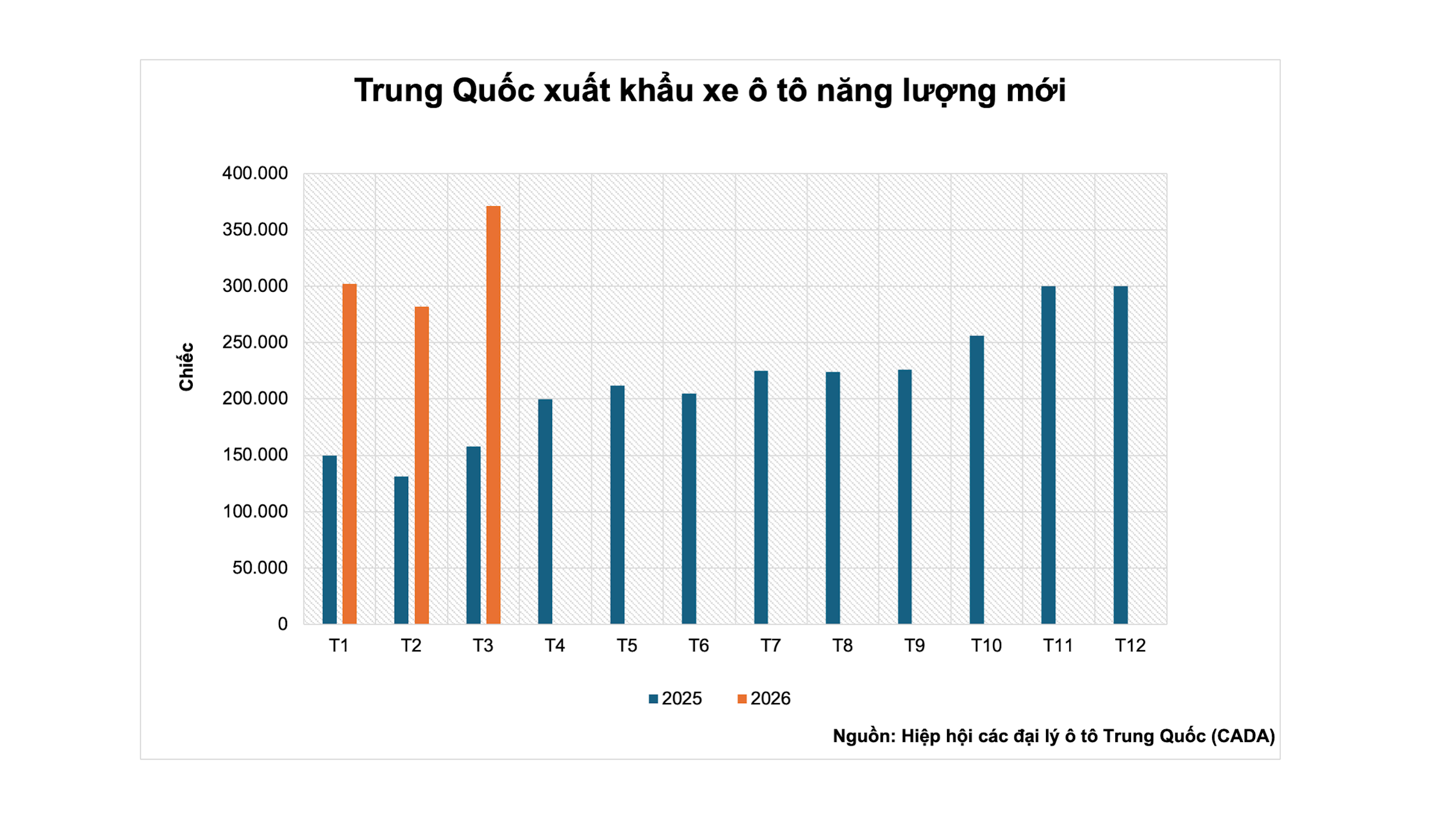
At the same time, consumer demand is supported by strong growth in the new energy vehicle sector. In China, this segment accounts for more than 50% of domestic production, with exports in March reaching 371,000 units, an increase of over 130% compared to the same period last year.
On the supply side, tightening pressure continued to increase as Thailand's rubber exports in the first quarter fell 15% to 678,000 tons. At the close of trading, RSS3 rubber prices rose more than 1% to around $2,535.6/ton, while TSR20 reached $2,163/ton.
Domestically, rubber latex prices continue to rise, with liquid latex averaging 476 VND/degree, while cup latex reached 23,630 VND/kg – the highest in many years.
According to MXV, this development shows that money flows in the market are becoming increasingly sensitive to energy and currency fluctuations, thereby maintaining an upward trend in the short term.
Source: https://hanoimoi.vn/mxv-index-duy-tri-tren-vung-cao-ky-luc-2-900-diem-747912.html


































































































Comment (0)