

The Vietnam News Agency is pleased to present an article by Dr. Le Quang Minh, School of Economics (Vietnam National University, Hanoi), which deeply analyzes the significance of Resolution 59-NQ/TW as international economic integration enters a new phase; clearly identifies major bottlenecks in the implementation of free trade agreements (FTAs) in Vietnam, thereby suggesting fundamental solutions to shift from "participation" to "shaping," enhancing the effectiveness of integration and added value for the economy.
2026 is a special year, marking the 40th anniversary of Vietnam's reform (1986-2026). Vietnam stands at a crucial juncture in its international economic integration process, possessing one of the highest numbers of FTAs in the region, yet its added value and implementation efficiency still have much untapped potential. How can we transform the opportunities from free trade agreements into tangible benefits for businesses? How can the economy not only "participate in the playing field" but also "shape the rules of the game"? The solution to this problem lies in the spirit of Resolution 59-NQ/TW on international integration in the new context and the orientations set out at the 14th National Congress on improving the quality and effectiveness of international integration.
To realize that aspiration, it is first necessary to clearly identify the profound changes in the global context – where the concept of 'integration' is being redefined by stringent standards.
Identifying the new situation
Previously, the measure of economic integration's success lay primarily in the number of FTAs signed and the extent of tariff reductions. However, that mindset has become narrow. The new situation identified in Resolution 59-NQ/TW is a qualitative transformation of globalization.
The world is witnessing a shift in focus from traditional trade agreements to non-trade agreements that are legally binding. New-generation FTAs such as the Comprehensive and Progressive Trans-Pacific Partnership (CPTPP) and the European Union-Vietnam Free Trade Agreement (EVFTA) go beyond simply opening up markets for goods, delving into non-traditional issues: labor, environment, transparency, and intellectual property. In this context, Vietnam's traditional competitive advantages, such as low labor costs, readily available resources, and tariff preferences, are gradually losing their appeal. Zero-percent tariffs are no longer a magic wand if goods cannot overcome the increasingly sophisticated technical barriers to trade (TBT) and sanitary and phytosanitary (SPS) measures. In other words, the game has changed, from competing on price to competing on compliance and transparency.
Another prominent feature of the new situation is the rise of green standards and sustainable development. This is the biggest challenge, but also the most accurate test of the economy's ability to integrate in the coming period.
Vietnam's key export markets, such as the EU, the US, and Japan, are actively establishing green rules of engagement. Examples include the European Union's Carbon Border Adjustment Mechanism (CBAM) and the EU Regulation on Deforestation (EUDR). These mechanisms, in essence, are green technical barriers that force manufacturers to transform their models if they want to maintain their position in the global supply chain.
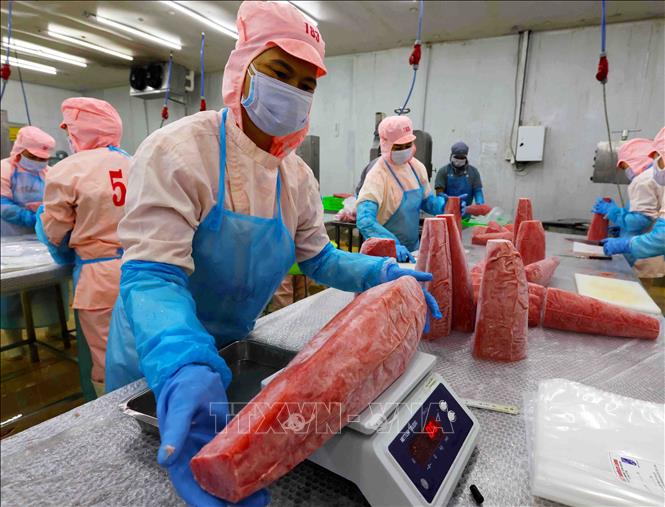
For key Vietnamese industries such as coffee, textiles, footwear, seafood, wood, and steel, this is a real challenge. If they fail to meet ESG (Environmental, Social, and Governance) standards, Vietnamese businesses not only face the risk of additional tariffs but also risk being eliminated from the competition right from the start. The "do it now, fix it later" mentality or pursuing economic development at all costs is completely outdated in the face of these green shields.
Finally, it is impossible to ignore the geopolitical factor – an unpredictable variable in the current integration process. Resolution 59 was issued in the context of a divided world, a resurgence of protectionist trade trends, and increasingly fierce strategic competition among major powers.
Global supply chains are undergoing significant restructuring towards "Friend-shoring" (shifting production to friendly countries) or "Near-shoring" (production closer to consumer markets) to ensure supply security. This places Vietnam in a position that is both advantageous and risky. The advantage is that FDI is seeking Vietnam as a safe destination to diversify supply chains. However, the risk lies in the fact that if Vietnam's internal capacity is not strong enough to absorb and participate in high-value-added stages, it may fall into the trap of outsourcing and become a "landing pad" for outdated technology or be drawn into unwanted trade disputes. Therefore, integration in this new context requires strong political resolve and flexibility in economic strategy to maintain self-reliance amidst ever-changing circumstances.
From "participation" to "creation"
In the face of these epochal changes, Resolution 59-NQ/TW of the Politburo is not merely a continuation of previous policies, but a significant leap forward in foreign policy thinking. The core of Resolution 59 and of the 14th National Congress lies in the shift in mindset: from a "participating" nation to a "constructive" nation.
We have moved beyond the era of merely trying to comply with international rules. With the country's new strength and position after 40 years of reform, the Party has determined that Vietnam must proactively participate in, contribute to, build, and shape multilateral mechanisms. This mindset demands a strong transformation from awareness to action: not passively waiting for the storms of the global market, but proactively anticipating and seizing opportunities to "leapfrog" ahead. Elevating multilateral diplomacy and proactively proposing initiatives at ASEAN, APEC, and the United Nations are vivid manifestations of this mindset of mastering the game. This affirms the resilience of a nation entering an era of self-improvement, daring to accept fair competition to assert Vietnamese values.
A distinctive highlight in the guiding principles of Resolution 59 is the clarification of the dialectical relationship between "international integration" and "independence and self-reliance." The 14th National Congress continued to emphasize the view that integration is an important method of development, but internal strength is the decisive factor.
We are integrating deeply but not dissolving. Opening up the market does not mean loosening management or losing economic security. The new mindset emphasizes building an independent and self-reliant economy even during the integration process. This means diversifying markets to avoid dependence on a single partner; building self-reliant supply chains where Vietnamese businesses hold key links. The absolute and comprehensive leadership of the Party and the unified management of the State are the key to ensuring that the Vietnamese economic ship sails into the open sea without veering off course, guaranteeing that economic integration always serves the highest interests of the nation.
Finally, the strategic thinking in Resolution 59 marks a shift in the measure of integration effectiveness. Previously, we often looked at macroeconomic figures such as total import and export turnover or registered FDI capital; now, the Party clearly defines that the people and businesses must be at the center, the subjects, and the true beneficiaries.
Integration is only truly successful when it brings better jobs and income to the people, creates sustainable employment opportunities, and helps Vietnamese businesses grow stronger in their own backyard. All integration policies and strategies must stem from the practical needs of businesses, using people's satisfaction and the competitiveness of businesses as benchmarks for evaluation. This is a deeply humane perspective, embodying the spirit of "the people are the foundation," ensuring that the fruits of globalization are distributed fairly, contributing to the realization of the aspiration for a prosperous and happy nation.
The key lies in the ability to absorb.

Successfully signing an FTA is merely obtaining a "passport." To translate that pass into real profit, we need to confront a paradox: the market coverage of Vietnamese goods is very wide, but the "depth" of added value is modest.
In reality, while the utilization rate of preferential Certificates of Origin (C/O) in many FTAs has improved, it still falls short of its potential. More worrying is the imbalance in the export structure: FDI enterprises still account for an overwhelming proportion (approximately 70-74% of export turnover), while domestic enterprises mainly participate in processing and assembly stages with low added value.
The benefits from tariff reductions, therefore, largely flow into the pockets of foreign investors or consumers in importing markets, rather than enriching the national coffers. Without improving our absorption capacity, we risk becoming a "transit hub" for goods or falling into the trap of cheap processing.
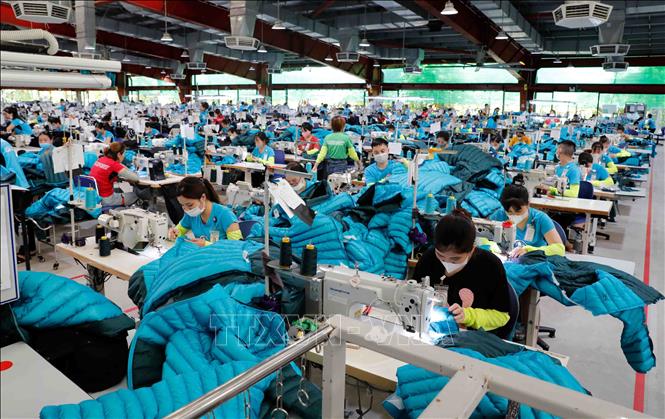
To resolve this paradox, Resolution 59 clearly states the urgent need to develop fundamental industries in a coordinated manner. In new-generation FTAs such as CPTPP and EVFTA, "Rules of Origin" are the most important barrier. The "yarn-forward" rule in textiles and garments, or requirements regarding regional value content, are technical barriers that cause many Vietnamese businesses to "watch" 0% tax incentives slip through their fingers.
The fundamental solution cannot be to continue importing cheap raw materials indefinitely, but rather to build a sufficiently strong supporting industrial ecosystem. The government needs to implement policies to encourage investment in upstream industries (textile production, chemicals, electronic components, breeding stock, animal feed, etc.). Only when Vietnamese businesses can proactively secure their input materials can they truly control the supply chain and fully benefit from tariff preferences. This is the most practical way to enhance domestic capacity.
Experience has proven that where there is thorough preparation in terms of quality, integration is successful. The story of Vietnamese shrimp is a vivid example. Having faced numerous difficulties due to technical barriers, anti-dumping duties, and countervailing duties in the US market, thanks to a strong transformation in farming processes, strict control of antibiotic residues, and traceability, Vietnamese shrimp has spectacularly overcome the most stringent "narrow gaps." According to Vietnamese Customs data, Vietnam's shrimp exports to the US in 2025 are projected to reach $796 million, a 5.4% increase compared to 2024, marking a brilliant year of success. This success does not come from luck, but from a mindset of "using quality as a shield," transforming the pressure of technical barriers into a driving force to upgrade the value chain of the seafood industry.

The effectiveness of FTA implementation in the coming period will no longer lie in selling more goods, but in selling "clean" goods. Major markets are erecting dense green technical barriers (ESG, CBAM). This is a harsh selection process; businesses that do not transition to green will automatically be eliminated from the game.
The textile and garment industry – a driving force behind exports – is facing existential challenges from the greening process. In the EU market, new regulations on eco-design and sustainable and circular textile strategies are forcing Vietnamese businesses to change if they don't want to lose market share. Many orders have shifted to rival countries with greener production practices (such as Bangladesh).
This reality serves as a wake-up call; the advantage of cheap labor is a thing of the past. Now, the passport to major markets is a green certification, a quantifiable environmental responsibility measured in every meter of fabric.
Therefore, effective implementation of FTAs means accelerating the energy transition, adopting a circular economy, and promoting low-emission production. The government needs to play a facilitating role through green credit packages, technological support, and the development of national standards harmonized with international standards. Businesses should view environmental and social responsibility costs not as a burden, but as an investment in a "passport" to access high-end markets.
Finally, improving the effectiveness of FTA implementation requires an institutional step forward. Instead of passively internalizing commitments (amending domestic laws to conform to international standards), Vietnam needs to proactively develop legal tools to protect the legitimate interests of domestic businesses.
Amidst the rising trend of protectionism, anti-dumping and anti-subsidy lawsuits targeting Vietnamese goods are increasing. The early warning system for trade defense risks needs to be operated more effectively, accompanied by a team of competent lawyers and international trade negotiation experts to support businesses in international litigation. At the same time, it is necessary to build legal technical barriers at home to prevent the influx of low-quality foreign goods and protect market share for domestic businesses. This is the mindset of taking ownership in implementing integration.
Resolution 59-NQ/TW has opened a new chapter in the Party's foreign policy and integration thinking, but for these correct policies to be implemented, a synchronized and decisive movement is needed from the entire political system to the business community. The challenge of improving the quality and effectiveness of economic integration can only be solved when we truly prioritize substance over form, and value added over the quantity of trade. It is time to transform the pressures from the world's stringent standards into a driving force for self-renewal. The success in implementing new-generation FTAs will be the most accurate measure of national governance capacity and the vitality of Vietnamese businesses, creating a solid foundation for the country to confidently move into an era of national progress.
Source: https://baotintuc.vn/kinh-te/nang-hieu-qua-thuc-thi-fta-the-he-moi-20260209104423876.htm



























































































Comment (0)