

Thai Nguyen province has long been known as the "finest tea region." Tea is not only a key crop but also closely linked to the lives, culture, and livelihoods of tens of thousands of households.
However, in the context of fierce market competition and increasingly stringent requirements for quality, food safety, and traceability, the Thai Nguyen tea industry faces the challenge of adapting to maintain its brand.
Tea development is not just about expanding acreage or increasing production, but also about standardizing quality, protecting brands, and gradually transforming digitally to enhance product value in the market.
Maintaining brand reputation through sourcing raw materials and product quality.
Thai Nguyen currently leads the country in tea cultivation area with approximately 23,000 hectares, generating an economic value of over 15,000 billion VND annually. To enhance the value of tea and tea culture, the province has issued Resolution No. 11-NQ/TU on the development of the tea industry for the period 2025-2030, aiming to have at least 250 tea products certified under the OCOP program (3 to 5 stars) by 2030, including at least 6 products achieving OCOP 5 stars; and 100% of tea products being sold through e-commerce. The total value of tea products is targeted to reach 25,000 billion VND.
Many businesses and cooperatives have received financial support in planting, caring for, processing, packaging, and branding, contributing to increasing the value of the product. Thai Nguyen tea is not only strongly consumed domestically but also exported to many major markets, making a positive contribution to the local economy.
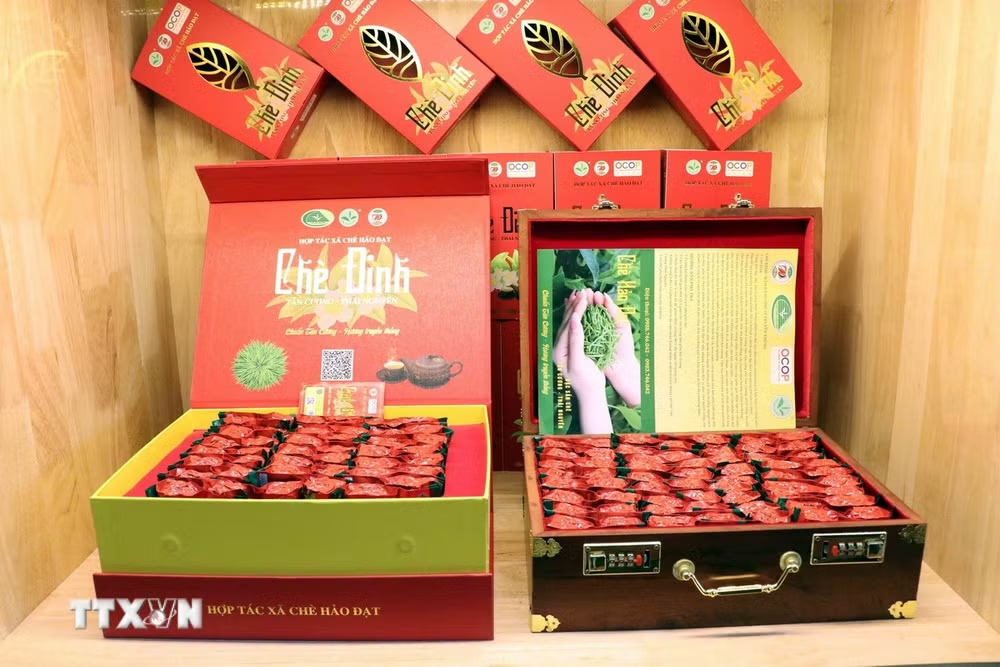
However, according to Mr. Vu Van Phan, Chairman of the Thai Nguyen Tea Association, maintaining the current brand is not easy. Production is still fragmented and lacks coordination; quality varies between regions.
Some establishments still follow traditional practices and do not fully comply with safety procedures. In addition, counterfeit and imitation products of Thai Nguyen tea brands still appear, affecting the product's reputation.
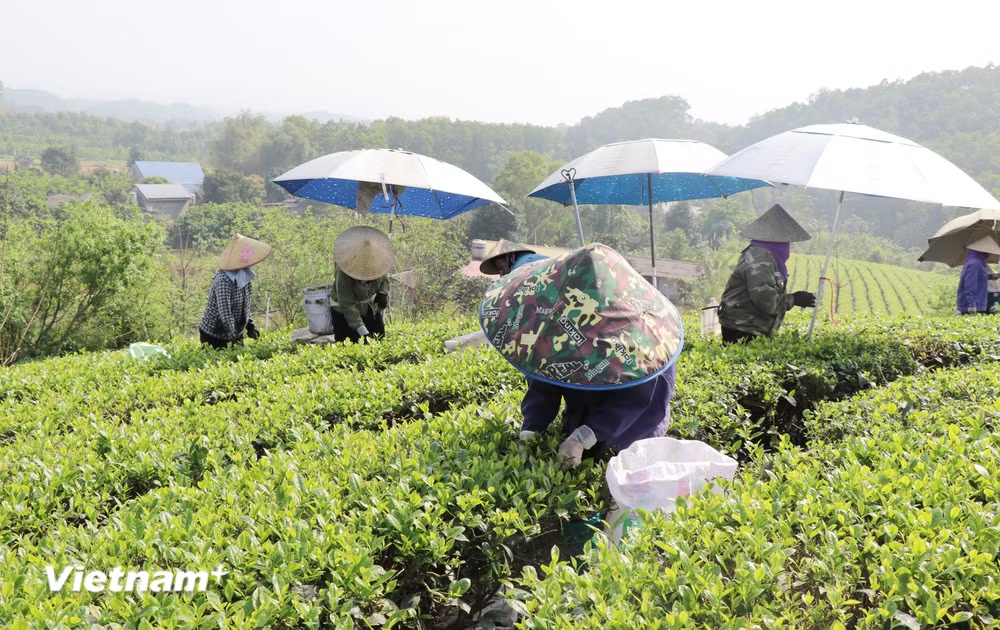
The tea industry also faces climate change and increasing demands for food safety. Mr. Nguyen Ta, Head of the Department of Crop Production and Plant Protection, said that erratic weather directly affects tea yield, quality, and pest and disease control.
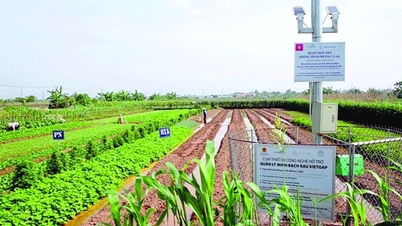
Establishing concentrated raw material areas, applying VietGAP and organic standards, and managing planting area codes have become essential requirements. "Today's consumers are not only interested in delicious tea but also want to know where the product is grown, how it is produced, and whether it is safe," Mr. Ta emphasized.
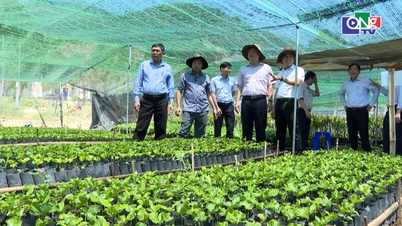
The Tuyet Huong Cooperative in Dong Hy commune, with 45 hectares of tea plantations entirely cultivated according to VietGAP standards and implementing planting area codes, clearly demonstrates market trends: customers are increasingly interested in packaging, traceability, and quality standards.
"Consumers now prioritize safe, high-quality products. Even with higher costs, these products are still well-received by the market," shared Ms. Tran Thi Tuyet, Director of Tuyet Huong Cooperative.
Directions to elevate the status of Thai Nguyen tea.
Besides quality standardization, digital transformation is becoming an inevitable trend. From online sales and social media promotion to the application of traceability labels, many businesses have changed their approach to the market.
Mr. Nguyen Tien Dung, Head of the Specialized Management Department of the Thai Nguyen Department of Science and Technology, believes that enhancing the value and competitiveness of tea requires the synchronized implementation of intellectual property, standards-measurement-quality, and digital transformation throughout the entire production chain.
Currently, Thai Nguyen manages one geographical indication, "Tan Cuong," and nine collective trademarks associated with tea products. The "Thai Nguyen Tea" trademark is protected in the United States, China, Russia, Japan, and South Korea, while the "Tan Cuong" geographical indication is protected in the European Union and the United Kingdom. This is a significant advantage that helps Thai Nguyen tea enter demanding markets and elevates its brand position on the international agricultural map.
"Digital transformation is not just about putting products online for sale, but also about tools for information transparency, quality management, and brand protection," Mr. Dung emphasized.
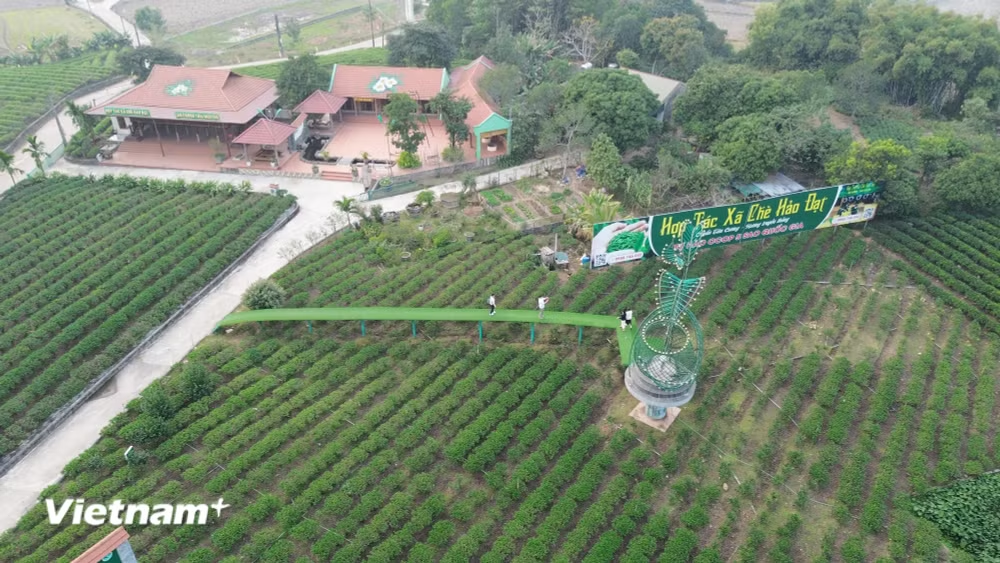
From a production perspective, Ms. Tuyet stated that the cooperative has gradually promoted its products on digital platforms, applying QR codes for traceability and selling through social media. However, many households are still hesitant about technology or do not fully understand digital transformation.
Mr. Vu Van Phan, Chairman of the Thai Nguyen Tea Association, affirmed that a unified traceability system is needed, linking farmers, cooperatives, businesses, and management agencies. "For Thai Nguyen tea to develop sustainably, we must change our production mindset, build brands, and access markets," Mr. Phan emphasized.
The reputation of Thai Nguyen tea has been built up over many generations, but in the context of increasingly fierce competition, that reputation will be difficult to maintain without standardized quality and transparency in production.
The journey of tea industry development today is the story of the entire value chain, where branding and digital transformation are becoming key to elevating Thai Nguyen tea in domestic and international markets.
Source: https://www.vietnamplus.vn/nang-tam-de-nhat-danh-tra-trong-thoi-ky-so-hoa-post1112219.vnp






















































































Comment (0)