

This is a fundamental step towards identifying and protecting durian, and gradually enhancing the product's value in a systematic and branded manner.
However, the gap between a legal "passport" and market competitiveness remains a long one, requiring a complete reorganization of the production and consumption chain towards synchronization and quality control.
From "money-making trees" to shaping the industry.
The province currently has over 9,200 hectares of cultivated land, producing nearly 58,000 tons; 67 export-oriented growing areas covering over 1,539 hectares and 6 export-oriented packaging facilities with a total capacity of approximately 420 tons of fresh fruit per day have been granted export-oriented codes. The products are mainly consumed domestically and exported to the Chinese market in the form of fresh fruit and frozen fruit segments.
In the last four years, the area under durian cultivation in Gia Lai has increased rapidly, not only due to farmers' conversion but also because of the participation of large enterprises with modern management processes.
Consequently, value chains have been formed. Many businesses and cooperatives have invested in cold storage, processing, and packaging systems right in the raw material areas, reducing dependence on traders and mitigating the risk of "bumper harvests leading to price drops".
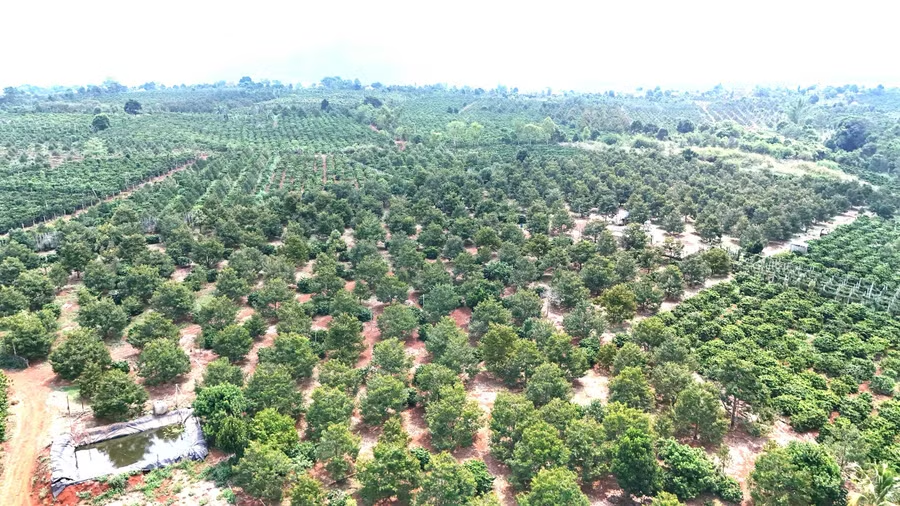
For example, Thagrico Cao Nguyen Fruit Company Limited (Pleiku ward) has nearly 1,000 hectares of durian trees in the two communes of Ia Tôr and Ia Púch (certified with the Global Good Agricultural Practices standard - GlobalGAP).
Last year, the first 100 hectares entered the production phase with a yield of approximately 1,000 tons. This year, the expected yield is around 3,000 tons, reaching 5,000-6,000 tons by 2027 and approximately 10,000 tons by 2030. The company aims for about 70% of its production to be exported and 30% for domestic consumption.
The economic benefits of durian cultivation are evident. In Kon Gang commune, many households have become well-off thanks to switching to durian farming; in Ktu village alone, 70% of households achieve an income of 300-500 million VND/year, with many households earning 1-4 billion VND/year.
Mr. Plói (from Ktu village) has over 1 hectare of intercropped durian trees, earning approximately 1 billion VND per year. He said: "I learned the production process from experienced farmers and also researched techniques online to produce organically, gradually reducing the use of chemical fertilizers. With a selling price of 50,000-60,000 VND/kg, the profit is much higher than many other crops."
Along with expanding the cultivated area, the province is actively planning specialized durian growing zones, linking them with the establishment of planting area codes and packaging facility codes; promoting farmer linkages through groups and cooperatives to act as a technical bridge and manage production processes; and cooperatives linking with businesses to ensure product consumption and expand markets. Currently, approximately 4,190 hectares of durian have been linked for production and consumption by 14 businesses, 20 cooperatives, farmers' associations, and farms.
However, rapid development has also revealed limitations such as fragmented production and uneven farming techniques. As noted by Mr. Vu Cao Luyen, head of the Farmers' Association in Phu Vinh village (Ia Tor commune), some households achieve high yields, while others have low efficiency due to a lack of technical skills. Reorganizing production into household groups and cooperatives, and standardizing processes, has become an urgent requirement.
The problem of brand and quality
With an increasingly competitive market, establishing the "Gia Lai Durian" certification mark holds significance not only legally but also strategically. According to the geographical area map confirmed by the Provincial People's Committee, the main growing areas are concentrated in the western part of the province, with favorable natural conditions for forming large-scale raw material zones.
A certification mark, if properly operated, acts as a "passport" that helps products penetrate deeper into the market and builds consumer trust.
However, the core issue is not about "having a name," but about the ability to ensure consistent quality, traceability, and maintain brand reputation.
The lack of linkages between production and consumption is diminishing the added value of products. Farmers mainly sell through traders or purchasing businesses on a case-by-case basis, lacking long-term contracts; while export businesses lack a stable and consistent supply of goods. As a result, the value of the product does not match its quality.
The story of Mr. Tran Cong Tu (village 2, Tan Binh, Dak Doa commune) is an example. Mr. Tu said: Last year, during the durian harvest, a company provided labels and promised to buy all the produce at a high price, but without any specific commitment, they did not return to buy the goods during the peak season, leaving farmers in a vulnerable position.
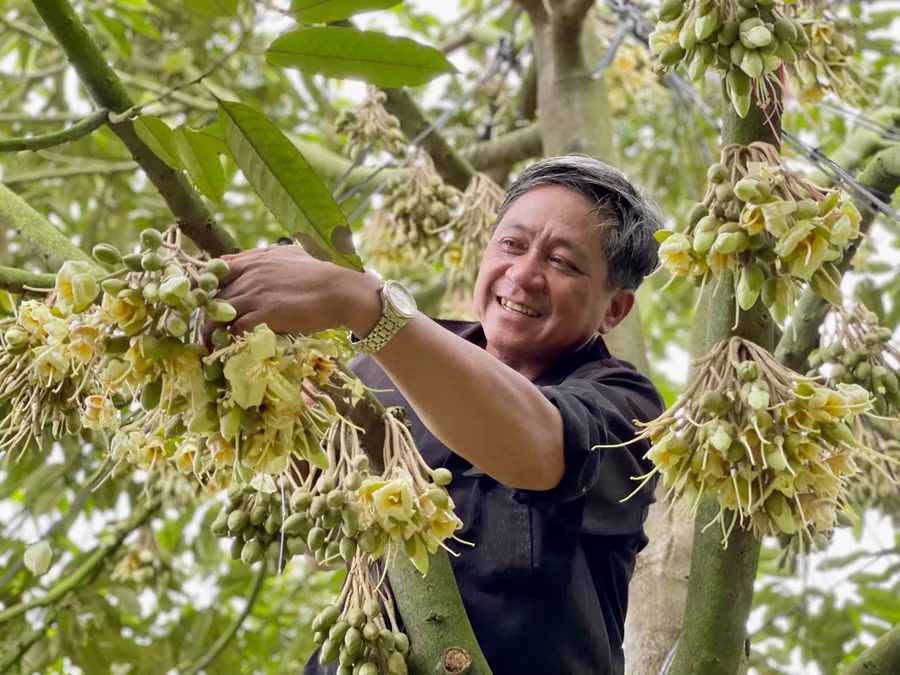
Mr. Nguyen Van Lap, Chairman of the Board of Directors of Minh Phat Farms Cooperative (Chu Prong commune), believes that the granted certification mark will be the foundation for shaping the brand of local agricultural products, creating motivation for producers to comply with standards.
In many localities, when durian products establish a brand, their value increases significantly, while durian from Gia Lai, despite its comparable quality, is priced lower by the market.
"Through collaboration with export businesses, I've noticed that Gia Lai province developed durian cultivation later than many other places, but this is actually an advantage in terms of selecting new varieties and applying science and technology to improve productivity and product quality," Mr. Lap shared.
According to Deputy Director of the Department of Agriculture and Environment Doan Ngoc Co, durian has become a key export commodity of Vietnam, especially since it was officially exported to China.
The opportunities are clear, but they come with challenges related to technical barriers to trade from other countries, such as traceability, plant quarantine, pesticide residue levels, and post-harvest standards.
Therefore, the provincial Department of Agriculture is actively disseminating information and guiding households, cooperatives, and businesses in the area to understand production standards, establish planting area codes, and promote production and consumption linkages… opening up new market segments.
Source: https://baogialai.com.vn/nang-tam-sau-rieng-gia-lai-post586282.html






















































































Comment (0)