

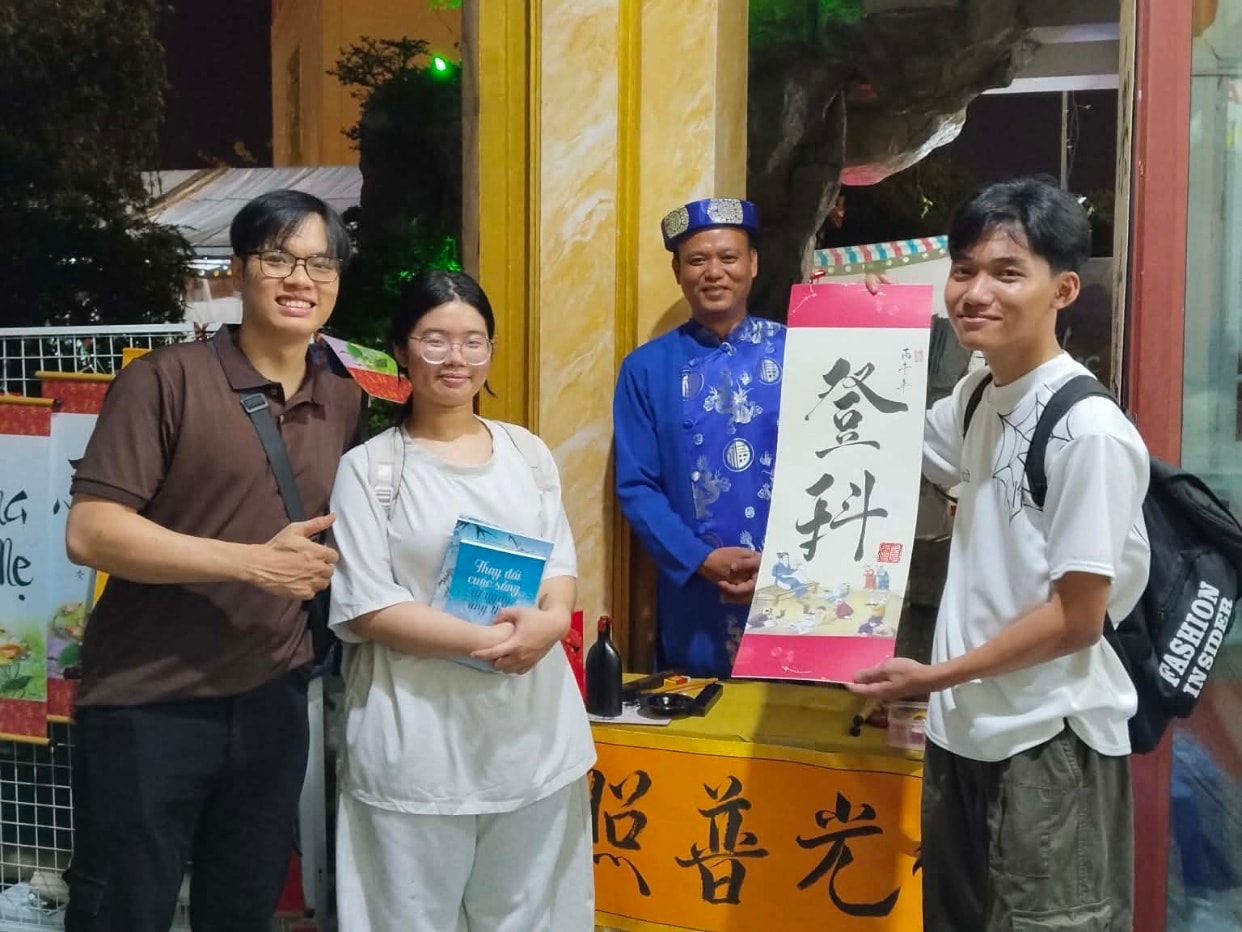
This activity not only provides an interesting cultural experience for tourists but also contributes to reviving the tradition of valuing literacy and honoring knowledge, which is deeply ingrained in the spiritual life of the Vietnamese people.
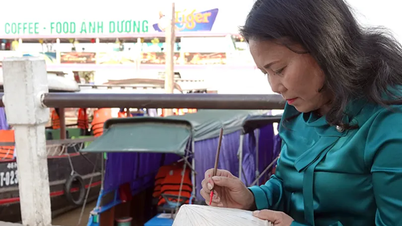
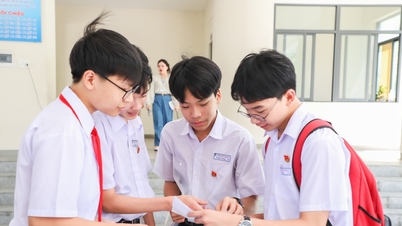
Le Hoang Nguyen, a 12th-grade student, and his group of friends intently watched every movement of the calligrapher. Each time the pen touched the paper, the black ink spread, creating soft lines like a vibrant painting. After just a few minutes, the words "Dang Khoa" (meaning "Passing the Exam") appeared clearly, both strong and elegant.
For Nguyen, it's not simply a work of art, but also a symbol of hope. "We're taking the university entrance exams this summer, so we wanted to come and ask for calligraphy to bring us good luck," Nguyen shared, carefully rolling up the paper and putting it in her backpack like a precious item.
Not only local young people, but many tourists are also captivated by this activity. Mr. Nguyen Tan Ngoc, from Hanoi, said that he initially only intended to visit the temple to offer incense. However, when he saw the "calligrapher" in his traditional ao dai and headscarf, he couldn't help but feel curious and fascinated. In particular, the ancient Chinese characters, bearing the strong imprint of Eastern culture, made him linger longer.
After receiving advice, he decided to request the characters "Khí" (meaning spirit/spirit) and "An" (meaning peace/tranquility). According to him, this was a wish for him to maintain a steadfast spirit and a peaceful life. "This was a very special experience. The characters are not only beautiful and elegant but also profound in meaning," Mr. Ngoc observed.
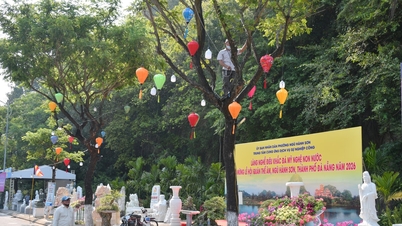
For many visitors, requesting calligraphy amidst the sacred atmosphere of the festival further enhances the spiritual value of their artwork.
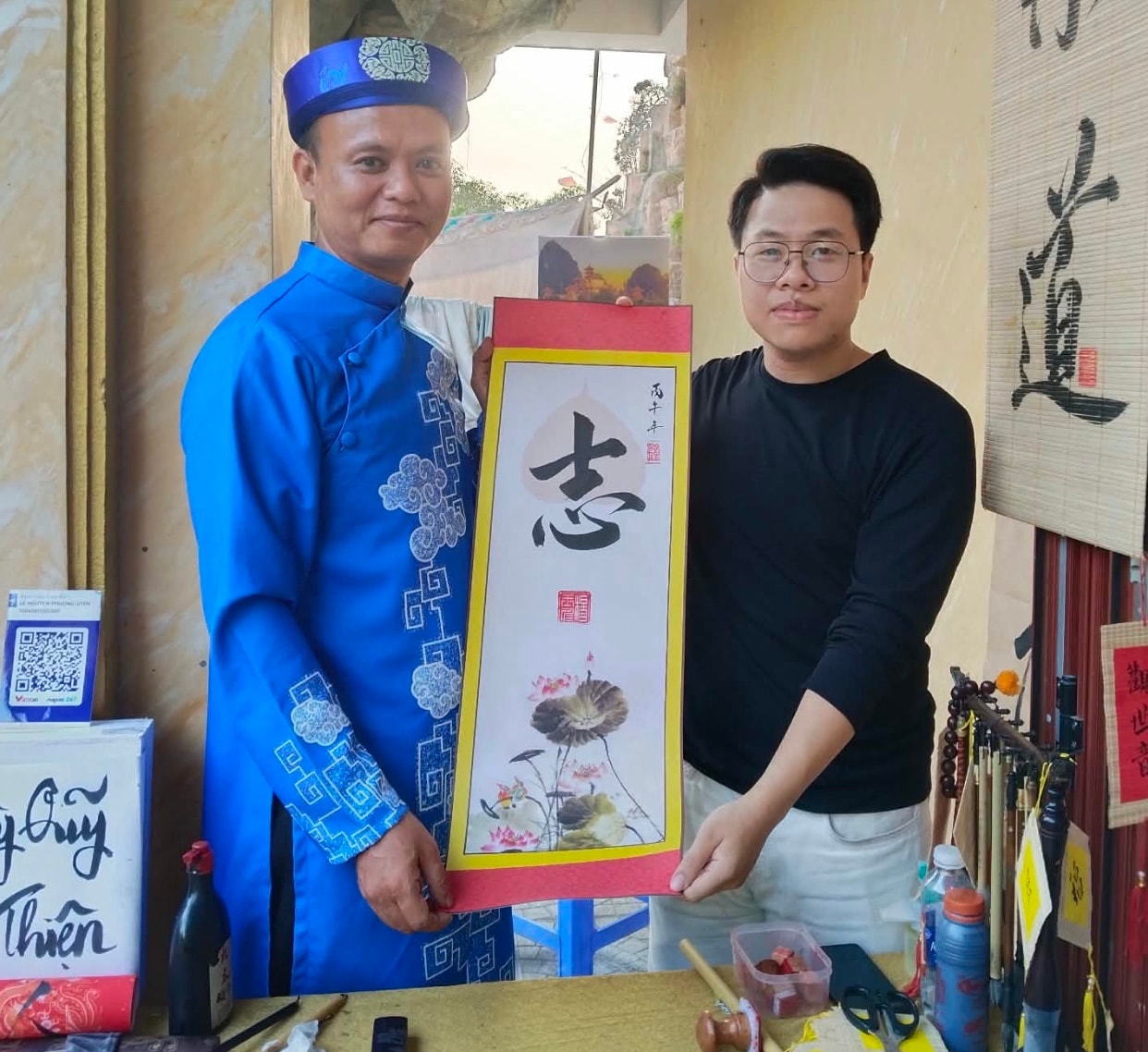
A notable aspect of this year's activity is the harmonious combination of Vietnamese and Chinese characters. While Vietnamese characters offer familiarity and ease of understanding, Chinese characters create a sense of mystery and antiquity. This diversity makes the calligraphy activity particularly appealing, especially to those encountering calligraphy for the first time.
Mr. Duong Ngoc Nhon, a calligrapher at the festival, said that the number of people requesting calligraphy this year is quite large, including many young people. Since the opening day, he has written about 300 calligraphy pieces on large sheets of paper. Each piece of calligraphy is not only a work of art but also contains the writer's observation and feelings towards the person requesting the calligraphy.
"Looking at each person's face and demeanor, I will suggest a suitable word," Mr. Nhon explained. For students, words like "Filial Piety" or "Passing the Exam" are often chosen; for business people, words like "Success," "Prosperity," and "Wealth" are more popular.
Meanwhile, those seeking peace often choose the characters "An" (peace) or "Tam" (mind/heart). Therefore, each calligraphy piece is unique and bears the individual mark of each person.
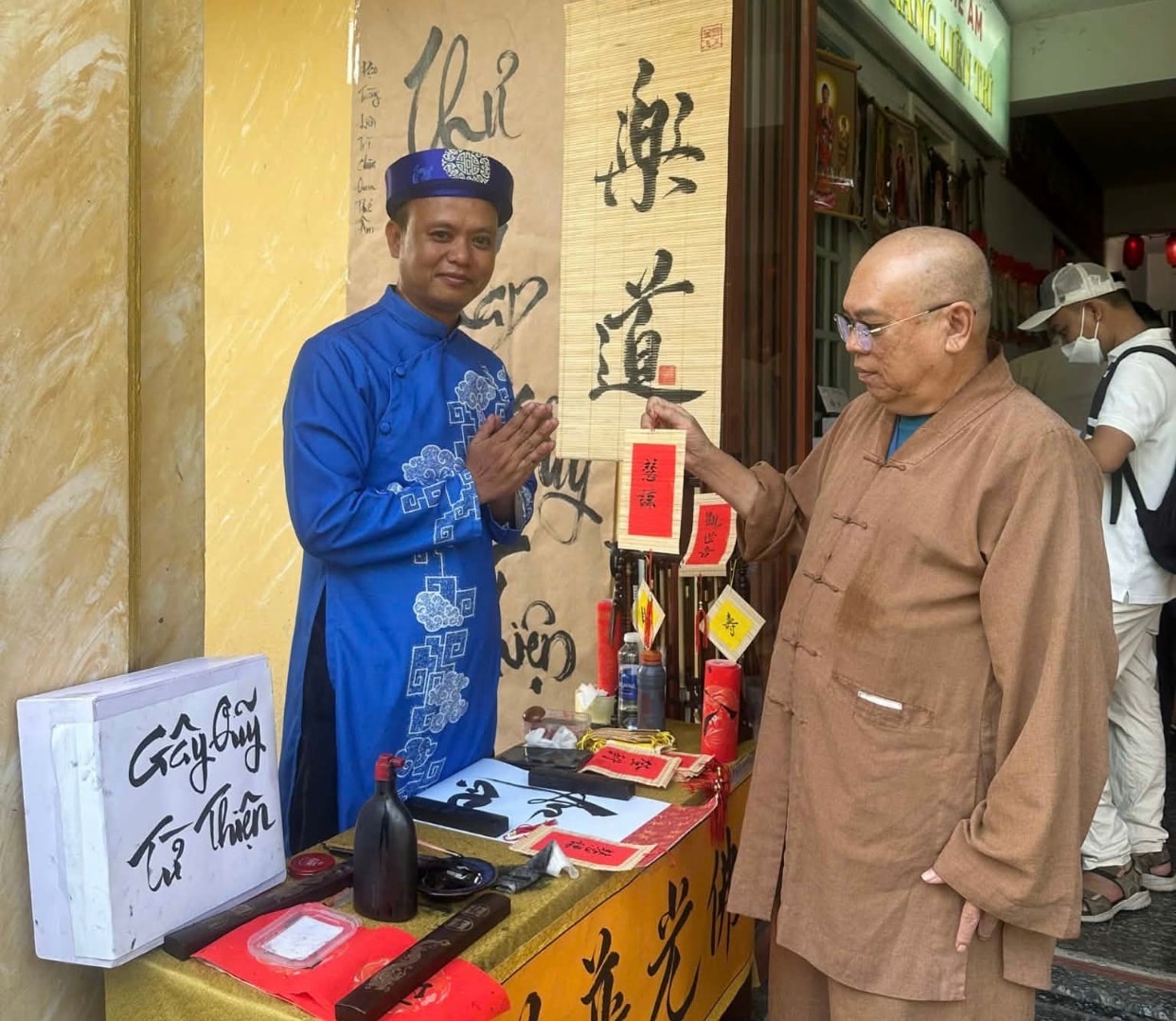
Born and raised in Da Nang , Mr. Nhon, despite being relatively young (45 years old), has spent many years studying Chinese characters and Buddhist philosophy. For him, giving calligraphy is not simply an artistic activity, but also a way to spread cultural values and positive energy to the community. "I hope that young people will understand and appreciate traditional values more, especially the calligraphy of sages and saints," he shared.
Even more commendable, the calligraphy activity at the festival is non-commercial. Those requesting calligraphy can make voluntary donations, and the money collected will go into the temple's charity fund. This further enhances the humanitarian significance of the activity, as each character not only brings spiritual joy but also contributes to supporting those in need.
It is evident that amidst the fast-paced modern life with its many changes, traditional values such as asking for calligraphy at the beginning of the year or during festivals still retain their strong vitality. Besides being a beautiful cultural tradition, this activity also becomes a bridge between the past and the present, between generations in society.
In the sacred space of the temple, each stroke of the calligraphy serves as a reminder of morality, how to live, and how to do good. For many, a piece of calligraphy is not just for decoration but also a guiding principle for life.
And it is these simple moments that contribute to the special appeal of the Quan The Am Festival, where everyone can find a "word" to express their faith and hope.
Source: https://baodanang.vn/net-dep-xin-chu-cau-may-3331281.html







































































Comment (0)