


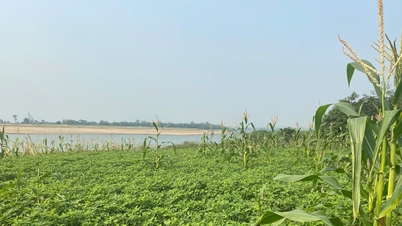
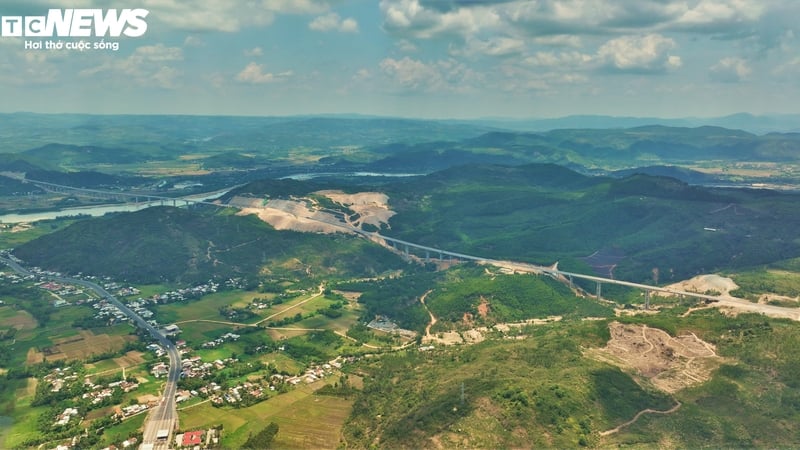
The Forest Protection Unit of Region III is responsible for managing and protecting forests in six communes: Thuan Chau, Chieng La, Muong Khieng, Binh Thuan, Muong E, and Long He. Currently, the entire region has nearly 37,884 hectares of forested land, including over 34,358 hectares of natural forest, more than 3,200 hectares of mature planted forest, and nearly 325 hectares of undeveloped planted forest. In recent years, the high price of coffee has created significant pressure and impact on forest management and protection in some communes. Furthermore, the lives of people in many areas remain difficult, mostly dependent on slash-and-burn farming; the customs and practices of slash-and-burn farming, along with limited awareness among some people, still lead to instances of clearing forests for farming and encroachment on forest land.
Directly participating in forest inspections in Thuan Chau commune, Mr. Pham Van Hoa, Head of the Forest Ranger Station Area III, shared: The biggest difficulty for the unit is the large management area, the vast forest area, the complex terrain, and the limited number of forest rangers. Meanwhile, violations often occur on a small scale, scattered, in the late afternoon or in areas far from the center, leading to patrols and inspections sometimes failing to detect violations in a timely manner. Most violations involve households clearing undergrowth to plant coffee trees (not cutting down trees), making it very difficult to detect these violations.
In response to this situation, the Forest Protection Department of Region III has directed local forest rangers to actively coordinate with specialized departments, associations, and organizations in the communes and villages to disseminate information about the role and benefits of forests, aiming to raise awareness and responsibility among the people regarding forest protection and development. Simultaneously, the Department has strengthened its forces in coordination with communes, villages, and functional forces to combat and crack down on illegal deforestation, logging, and encroachment on forest land. Emphasis is placed on closely managing border areas, promptly detecting changes in forest plots through satellite imagery or signs of clearing undergrowth to prevent any acts of forest encroachment. From 2025 to the present, the forest protection force has detected and handled 13 cases related to deforestation for farming, including 12 administrative cases and 1 criminal case.

The village of Bản Lùa in Mường É commune currently has 80 households, all of whom are ethnic Thai people. They are entrusted with the responsibility of managing and protecting over 100 hectares of forest, considered the "green lung" of the village. Mr. Lò Văn Hoan, Party Secretary and Head of Bản Lùa, enthusiastically stated: Along with disseminating information and encouraging people to comply with the Forestry Law, the village also has its own forest protection regulations, such as: Absolutely no deforestation, slash-and-burn farming, or indiscriminate harvesting of firewood. Anyone who destroys the forest will be severely punished according to the village and commune regulations. Minor violations may result in the family being disqualified from receiving the "Cultural Family" award that year; major violations will be reported to the commune and local forest rangers for legal action. For many years now, there has been no deforestation, no forest fires, and the forest is regenerating and thriving.
In addition, the Regional Forestry Department III proactively issued documents to the People's Committees of communes regarding strengthening state management responsibilities in forestry, clearly defining the responsibilities of each commune and forest owner for the forest area under their management. It promoted the role of 6,350 forest owners, including 296 community groups, 2,084 households, and 3,970 household groups in managing and protecting the forests. At the same time, it directed local forestry officers to stay close to the grassroots, regularly monitoring the situation in areas with a high risk of violations.
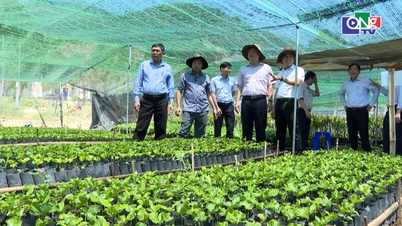
One of the innovative and effective approaches is the application of remote sensing imagery, satellite imagery, and forest change management software to identify and delineate areas showing signs of forest encroachment or new coffee planting on forest land. Based on this, forest rangers, in coordination with the People's Committees of the communes, conduct on-site inspections from the initial stages, promptly disseminating information and preventing the formation of large-scale violations.

In addition, the unit has strengthened coordination between forest rangers, police, commune authorities, and forest owners in inter-agency patrols; organized households to sign commitments to protect the forest; and processed and publicized cases of violations to enhance deterrence. As a result, many cases have been detected and handled from the outset, limiting the prolonged destruction of forests and encroachment on forest land.
Mr. Pham Xuan Truong, a forest ranger in charge of Thuan Chau commune, informed: Currently, Thuan Chau commune has more than 6,300 hectares of forest, of which many agricultural land plots belonging to local people border the forest, posing a high risk of encroachment. We have determined that to protect the forest, we must rely on the people and promote the role of forest protection teams in the villages. In addition, we must regularly visit the area, promptly update information on forest conditions, and take timely action to prevent violations.
To effectively rectify and prevent the encroachment on forest land, the Forest Protection Department of Region III continues to strengthen the role and responsibility of local Party committees and authorities, especially the heads of communes, in the management and protection of forests and forest land. It will intensify propaganda and dissemination of laws to raise public awareness of the value of forests, the responsibility to protect them, and the penalties for violations. It will enhance the application of science and technology, satellite imagery, and forest monitoring systems to detect areas at risk of violations early and address them promptly. It will conduct a review and clearly demarcate forest land boundaries in the field; complete land management records and forest allocation records to minimize disputes and encroachment. It will strictly punish acts of deforestation and illegal encroachment on forest land. Attention will be paid to developing sustainable livelihoods for people in forest areas, creating jobs and stable income sources to reduce the pressure of dependence on expanding production areas on forest land.
Source: https://baosonla.vn/xa-hoi/ngan-chan-tinh-trang-lan-chiem-dat-rung-z16G5T1vR.html

























































































Comment (0)