

Many banks are adjusting interest rates upwards.
From the beginning of March 2026, a number of commercial banks adjusted their deposit interest rates upwards across various maturities. Specifically, from March 10th, VPBank increased savings deposit interest rates by 0.2 - 0.5 percentage points for maturities of 6 months or more. For deposits under 1 billion VND, the bank maintained the interest rate for 1-3 month maturities at 4.54%/year, while the rate for 6-9 month maturities increased to 6.4%/year, the 12-month maturity to 6.5%/year, and maturities over 12 months to 6.2%/year.
Previously, LPBank also adjusted deposit interest rates upwards by 0.2 - 0.8 percentage points across all maturities starting from March 3rd. According to the new interest rate schedule, the 1-3 month term increased to 4.4%/year, the 6-9 month term increased to 6.2%/year, the 12-month term to 6.4%/year, and the term over 12 months reached 6.6%/year. Sacombank made a more significant adjustment, increasing by 0.6 - 1.3 percentage points compared to before. Accordingly, the interest rate for the 1-month term increased to 4.5%/year, the 3-month term to 4.7%/year, the 6-9 month term reached 5.5%/year, the 12-month term is at 5.8%/year, and the term over 12 months is at 6.3%/year. In addition to the banks mentioned above, several other banks such as Vietbank, MB, BaoVietBank, and VietABank also adjusted their deposit interest rates upwards from the end of February to the beginning of March.
 |
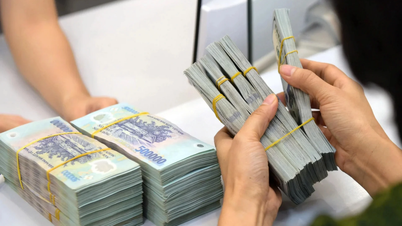
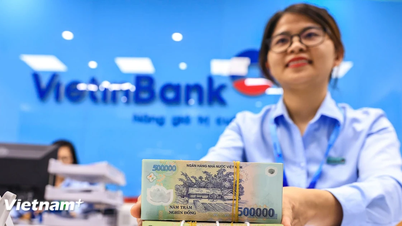
| Deposit interest rates at many commercial banks are trending upwards. |
The simultaneous increase in deposit interest rates by many banks indicates a growing need to attract capital. In the context of increasingly fierce competition for deposits, longer-term maturities continue to be prioritized for interest rate increases in order to strengthen medium and long-term funding sources.
According to the latest data from the State Bank of Vietnam, by the end of the fourth quarter of 2025, the banking system recorded more than 232 million individual payment accounts with a total balance of over 1.3 trillion VND. These are primarily demand deposits (CASA) used for daily payments, allowing users to withdraw money at any time. However, this type of deposit usually has very low interest rates, only about 0.1 - 0.5% per year. Therefore, to ensure a stable source of capital for lending activities, banks still rely heavily on time deposits with higher interest rates.
According to Mr. Pham Van Dau, Chief Financial Officer of HDBank , in the context of many banks experiencing lower-than-expected quarterly credit growth, the pressure to attract deposits may be somewhat reduced. However, banks still need to proactively optimize input costs to maintain operational efficiency. HDBank is focusing on boosting demand deposits, with a 32% increase over the past year, while actively seeking lower-cost international foreign currency funding sources. Simultaneously, the acceleration of digitalization helps the bank maintain a reasonable operating expense ratio, thereby ensuring a stable net interest margin (NIM) without significantly increasing lending interest rates, thus better supporting production, business, and consumer needs.
From a market perspective, the money market report published on March 3, 2026, by MBS suggests that although deposit interest rates increased by approximately 100-150 basis points in 2025, banks may continue to face pressure to raise capital in 2026. This is due to the increasing demand for medium and long-term capital for public investment projects and infrastructure construction aimed at boosting economic growth.
According to VNDirect, future interest rate movements will largely depend on the progress of public investment disbursement and short-term regulatory measures by the State Bank of Vietnam. Amid high credit growth at the end of 2025, banks remain under pressure to raise deposit interest rates to compensate for liquidity gaps.
However, with a credit growth target of around 15% in 2026, the policy direction shows that the regulatory body is tightly controlling capital flows, thereby limiting speculative activities and contributing to stabilizing interest rates.
Interest rates may cool down towards the end of the year.
Many experts believe that the current trend of rising deposit interest rates is mainly short-term, as the banking system is adjusting to rebalance its capital sources.
Dr. Chau Dinh Linh from the Ho Chi Minh City University of Banking predicts that in the second half of 2026, liquidity pressure may gradually ease thanks to several supporting factors. Firstly, the increase in deposit interest rates in the first half of the year will help improve the growth rate of deposits, thereby strengthening the capital for the banking system. Secondly, the accelerated disbursement of public investment will help bring money back into the banking system, contributing to improved liquidity.
Furthermore, credit growth in 2026 is projected at around 15%, lower than in 2025. This, coupled with the policy of tightly controlling capital flows into risky sectors such as real estate, will help reduce the pressure of excessive credit expansion. As a result, interest rates are unlikely to rise significantly in the long term.
From a broader perspective, Dr. Le Duy Binh, Director of Economica Vietnam, believes that the pressure to raise interest rates had already emerged before geopolitical tensions in the Middle East escalated. The main reason stems from the increasing demand for capital in the economy, especially in manufacturing and business sectors.
"When the demand for capital increases while the supply of credit does not increase proportionally, interest rates tend to inch up. Geopolitical factors only play an additional role, adding further pressure on interest rates," Mr. Binh commented.
According to this expert, in the current context, it is crucial to regulate and allocate credit flows more rationally, prioritizing production and business sectors, exports, and industries capable of creating added value for the economy.
Source: https://thoibaonganhang.vn/ngan-hang-hut-von-huy-dong-178861.html




























![[LIVE] CLOSING CEREMONY AND AWARD PRESENTATION OF THE 2026 DIGITAL TRANSFORMATION COMPETITION IN THE BANKING INDUSTRY](https://vphoto.vietnam.vn/thumb/402x226/vietnam/resource/IMAGE/2026/05/23/1779502316786_chatgpt-image-08-13-30-22-thg-5-202620260522081352.png)








































































Comment (0)