

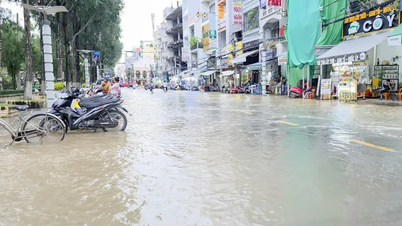
After the recent floods, many areas in Quang Tri province were flooded for days, garbage and animal carcasses piled up, domestic water sources were polluted, and there was a potential risk of disease outbreaks.
Dr. Nguyen Ngoc Anh, Deputy Director of the Center for Disease Control (CDC) of Quang Tri, said that after the flood, the risk of outbreaks of diseases such as diarrhea, pink eye, skin diseases, dengue fever, etc. is very high. The Quang Tri Health Department immediately deployed environmental treatment, water source disinfection, and food hygiene and safety for people after the flood receded.
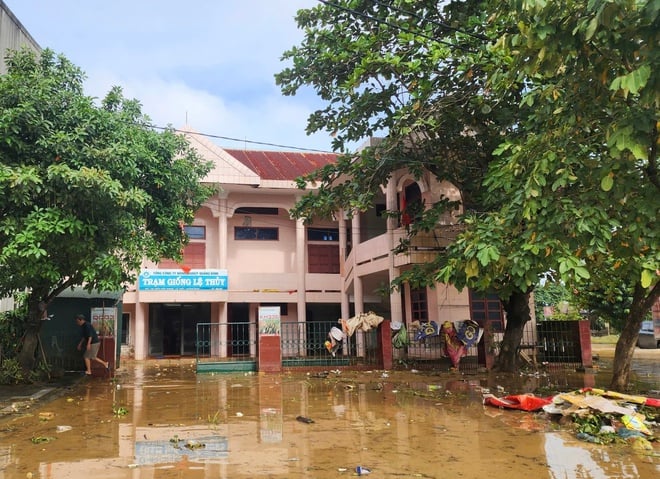
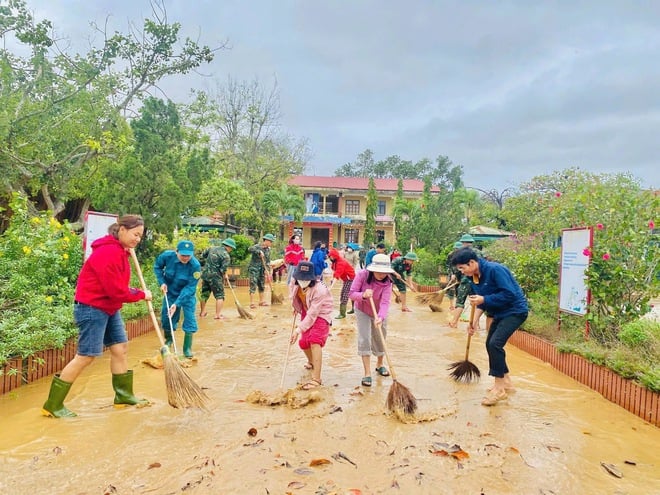
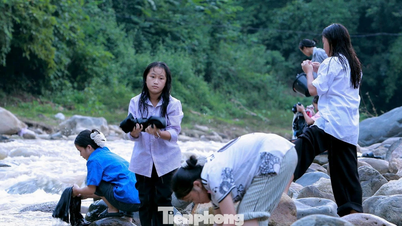
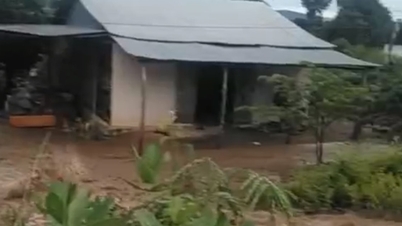
Floods brought mud and garbage into residential areas and schools.
As soon as the flood ended, the Le Thuy Regional Health Center coordinated with local authorities and mass organizations to carry out environmental sanitation, collect waste, and treat domestic water sources in deeply flooded areas. Commune health stations proactively made plans to treat the environment, prepared medicines, chemicals, and disinfection equipment, and were always ready to respond if an epidemic broke out.
Mr. Tran Van Hop, resident of Dai Phong village, Le Thuy commune (Quang Tri) said that the area where he lives was deeply flooded for many days. After the flood, garbage piled up in residential areas, polluted water sources, mosquitoes breed, and pose a potential risk of disease outbreaks.
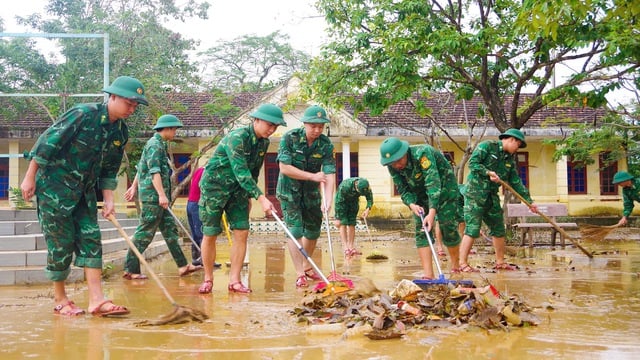
Soldiers help people clean up the environment after the flood.
"We were instructed by health officials on how to treat well water, sprinkle lime powder around the house, collect garbage and livestock carcasses to avoid pollution. This reduces the risk of disease arising after floods," Mr. Hop shared.
In the southern part of Quang Tri province, many low-lying areas were also flooded for a long time, disrupting people's lives. The Hai Lang Regional Medical Center also directed specialized departments to monitor the environment and epidemics in the area after the flood.
Monitoring work is carried out daily, with the motto "where the water recedes, the environment is treated there", to promptly detect and prevent the risk of disease outbreaks after floods.
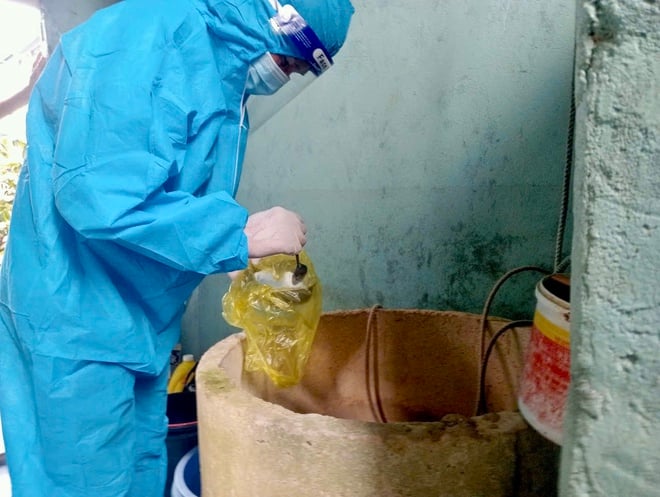
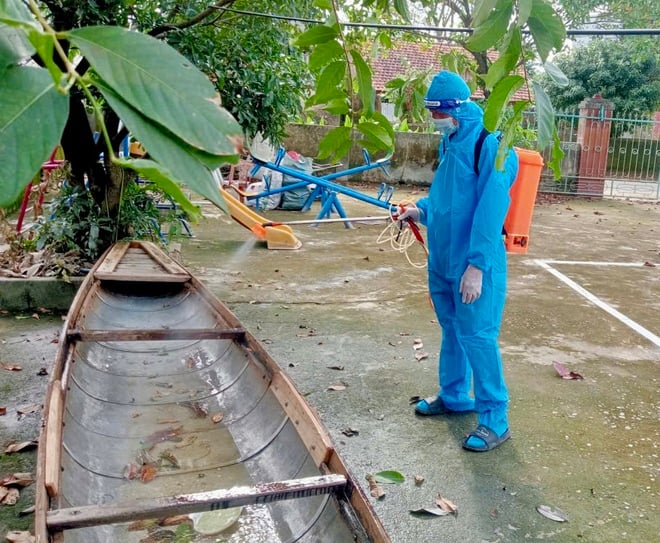
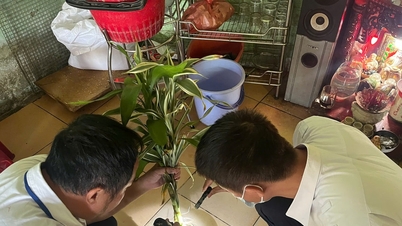
Medical staff support people in treating water sources, disinfecting and sterilizing long-term flooded areas.
Health workers coordinate with local authorities to guide people in collecting and treating waste, animal carcasses, disinfecting domestic water sources and monitoring hygiene quality in residential areas, schools... Health units also closely monitor people's health, especially infectious diseases such as diarrhea, pink eye, dengue fever...
Currently, Quang Tri CDC has provided more than 3 tons of ViCHLORinE (Cacium hypochlorite), nearly 900kg of Cloramin B chemicals to regional medical centers. At the same time, a rapid response team has been established to support the locality when an outbreak occurs.
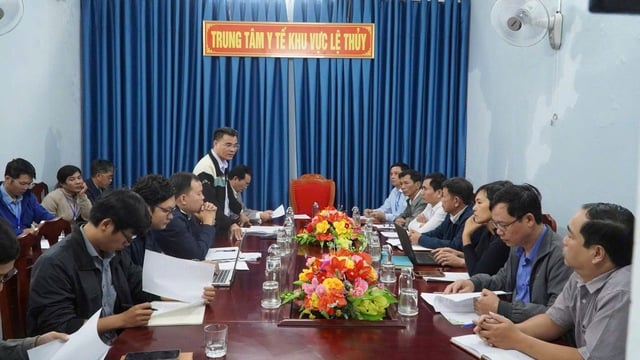
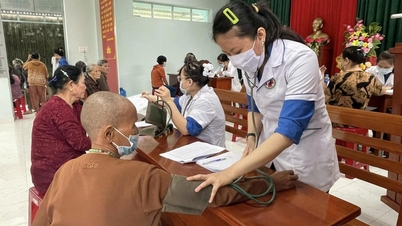
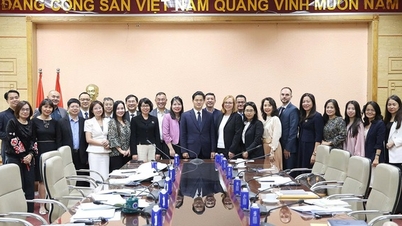
The Ministry of Health's working delegation inspected and supervised epidemic prevention and control work after floods in Le Thuy commune, Quang Tri province.
Disease prevention and control work after floods in Quang Tri is being implemented and controlled effectively. This is an important foundation to protect public health, stabilize people's lives and be ready to respond to extreme weather developments in the coming time.
Source: https://suckhoedoisong.vn/nganh-y-te-quang-tri-phong-chong-dich-benh-sau-mua-lu-169251114111041501.htm
![[Photo] Unique architecture of the deepest metro station in France](https://vphoto.vietnam.vn/thumb/1200x675/vietnam/resource/IMAGE/2025/11/14/1763107592365_ga-sau-nhat-nuoc-phap-duy-1-6403-jpg.webp)
![[Photo] Unique art of painting Tuong masks](https://vphoto.vietnam.vn/thumb/1200x675/vietnam/resource/IMAGE/2025/11/14/1763094089301_ndo_br_1-jpg.webp)


![[Photo] Special class in Tra Linh](https://vphoto.vietnam.vn/thumb/1200x675/vietnam/resource/IMAGE/2025/11/14/1763078485441_ndo_br_lop-hoc-7-jpg.webp)














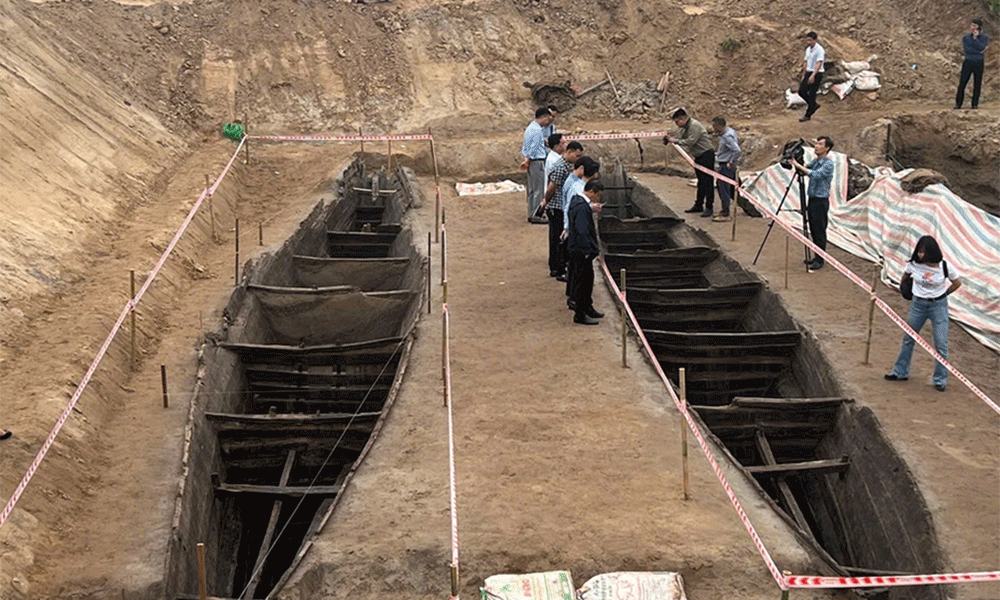
![[Photo] Deep sea sand deposits, ancient wooden ship An Bang faces the risk of being buried again](https://vphoto.vietnam.vn/thumb/1200x675/vietnam/resource/IMAGE/2025/11/13/1763033175715_ndo_br_thuyen-1-jpg.webp)













































![Dong Nai OCOP transition: [Article 3] Linking tourism with OCOP product consumption](https://vphoto.vietnam.vn/thumb/402x226/vietnam/resource/IMAGE/2025/11/10/1762739199309_1324-2740-7_n-162543_981.jpeg)



Comment (0)