

On this occasion, the artist shared about his love for music , the challenges he faced, his aspirations to contribute to his homeland, and his desire to inspire the younger generation to love classical music.
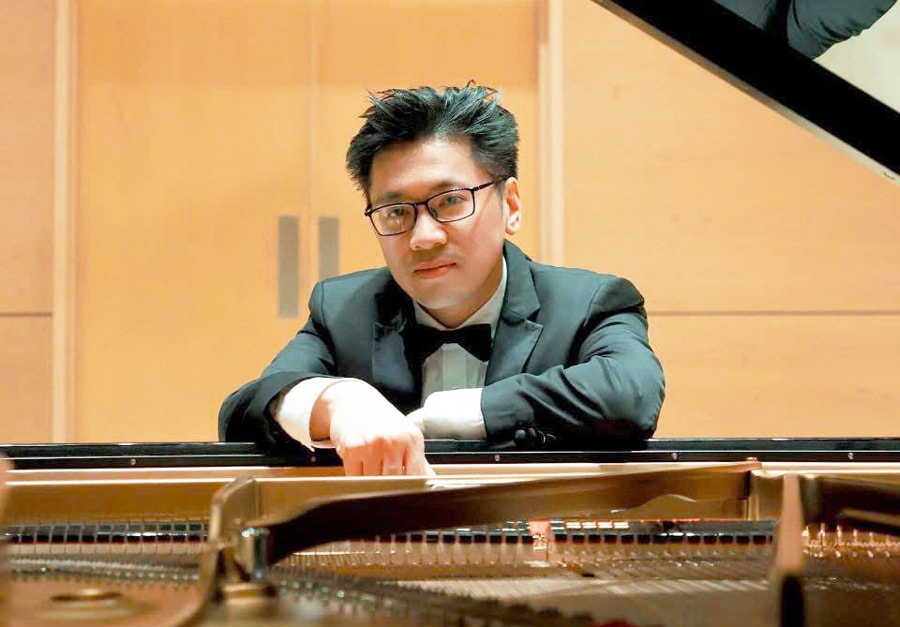
- This return also marks the second time the artist has performed Franz Liszt's 12 masterpieces, "Transcendental Etudes," in Vietnam. Could you share your feelings about this?
- For me, every time I return to Vietnam to perform, it brings special emotions. This time, I'm bringing you 12 of Liszt's "Transcendental Etudes," which I performed in 2022, and the CD recording of the entire work that was previously released by Ratte Records.
“Transcendental Etudes” is a tremendous challenge for any pianist. It is one of the most extraordinary achievements in piano history. Each piece is a world of its own, encompassing the beauty of nature, legends, memories, and the depths of the human soul. This time, I explore the sharp beauty of sound at deeper levels of meaning and artistry.
Although I have performed this work many times in many places, I was deeply moved when I performed it in Hanoi on May 8th. Perhaps my homeland made me feel it more profoundly. As I performed the final chords, I thought about the ups and downs my nation has gone through. It made me even more eager to contribute to my homeland through art.
- Is that why you make time to return to Vietnam to perform every year?
- I've always believed in the principle of "drinking water and remembering the source." My hometown is where I was nurtured from the very beginning of my artistic journey. The Vietnam National Academy of Music is where I received my foundational training, where my teachers guided me, and where my serious love for music was formed. I sincerely wish to bring the highest quality and most refined artistic performances to the public in my hometown. As long as listeners are truly moved by my music, I feel that what I do is meaningful.
Every time I return, I feel the sacredness of the word "Homeland." After long journeys, my hometown always provides me with renewed energy, giving me strength, compassion, and a desire to continue striving for success.
- How did music come into your life, and what significance has that journey had in your life?
- I was born into a family with an artistic tradition, so from a young age, my parents guided me towards learning piano. The learning environment was quite strict but also full of love. Actually, talent isn't always visible from a young age. What's more important is whether the love for music is strong enough. For me, that love has grown over the years. The more I learn and experience, the more I realize that music isn't just a profession, but a way of life.
This path has been full of challenges. There have been periods of loneliness, pressure, and great sacrifices. I've dedicated most of my life to my instrument, practicing in happiness, in sadness, in hope, and even in moments of exhaustion. But when you give so much, music also brings back so many precious things. What makes me happiest is that music has the power to connect people. A beautiful concert is when the artist and the audience enter a space where only emotion and listening remain.
- You've won many prestigious international awards. How have those competitions impacted your career and artistic thinking?
- When I was younger, competitions were very important experiences for me, helping me learn so much, from stage presence to the ability to handle pressure. But the further I went, the more I realized that competing isn't about winning at all costs. Competitions are like train stations on an artistic journey. How far you go depends on your aspirations, discipline, and self-improvement. Judges sometimes look not only at the current results but also at the potential for growth in an artist. Therefore, for me, each competition is an honest "mirror" to reflect on where I stand in relation to the world.
Later, while pursuing my PhD with a full scholarship in New Zealand, I came to understand even more that the artistic journey is limitless. Studying Liszt helped me realize that behind the glamour of his music lay a profound humanistic depth and a great personality. This made me even more eager to delve deeper into his research and performances.
- What are your views on the development and training of classical music for the younger generation in Vietnam today?
- I believe that music education in Vietnam has strengths in technique and foundation. Many young people today receive very thorough training. However, to become a true artist, besides technique, learners need to develop independent thinking and a personal voice. Art cannot simply stop at playing the right notes. The important thing is that the artist understands what they want to say through music. I think today's young generation has many opportunities to connect with the world. What is essential is maintaining perseverance, discipline, and a genuine love for art.
I always hope that the programs I create when I return to Vietnam will inspire young people who love music, so that they believe that Vietnamese people can absolutely step out into the world with their talent, courage, and hard work.
- We would like to express our sincere gratitude to pianist Luu Hong Quang!
Source: https://hanoimoi.vn/nghe-si-piano-luu-hong-quang-mong-muan-dong-gop-cho-que-huong-bang-nghe-thuat-841318.html



































































































Comment (0)