

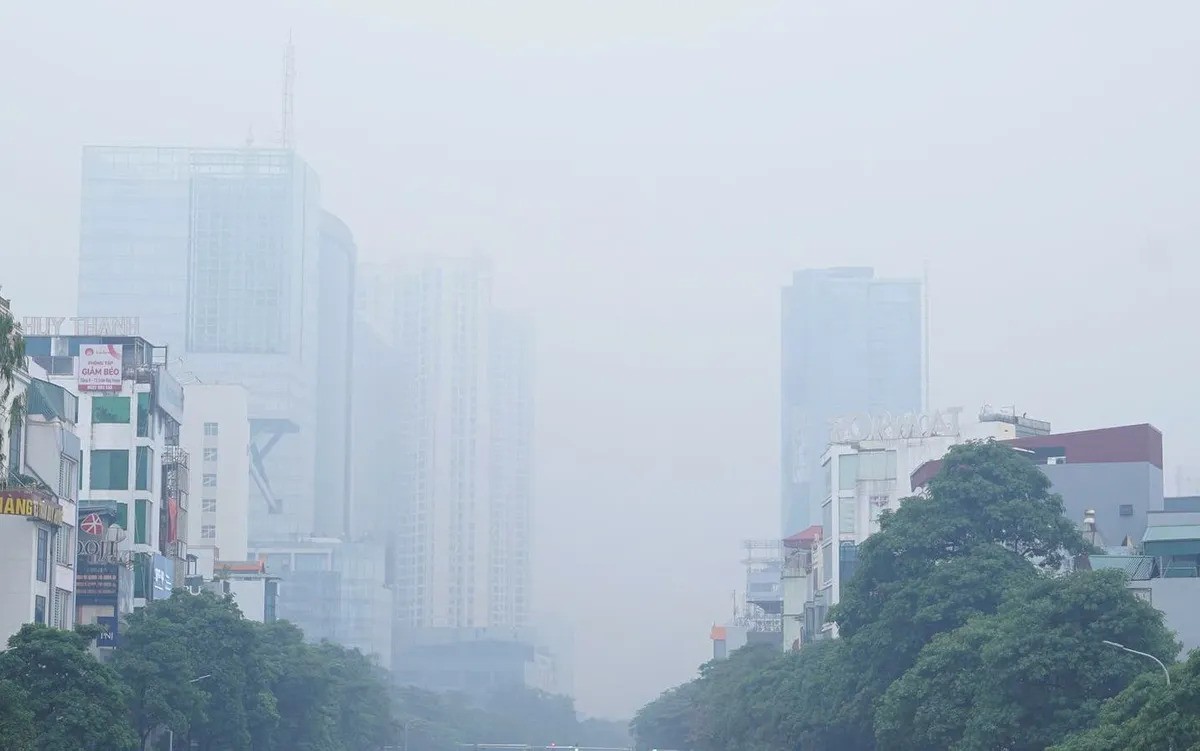
Many measuring points recorded AQI at bad level, approaching very poor.
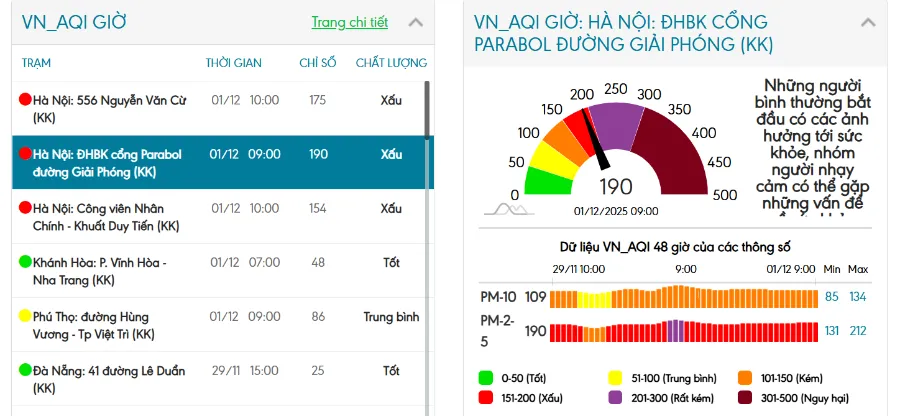
According to the Northern Environmental Monitoring Center, Department of Environment, at 8:00 a.m., the air quality index (AQI) at station 556 Nguyen Van Cu was at 179; Bach Khoa University station (Parabol gate, Giai Phong street) was up to 192 - almost reaching the purple level - very poor level (201-300); Nhan Chinh Park - Khuat Duy Tien station was at 144.
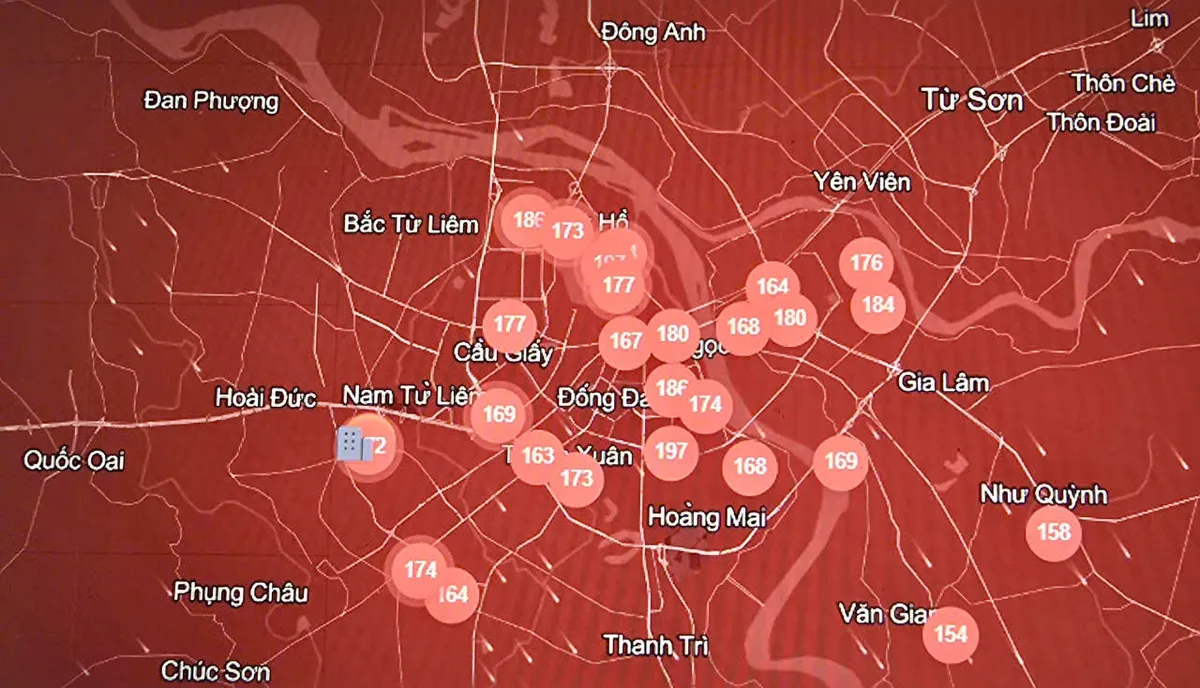
As of 10:00 a.m. this morning, monitoring results still recorded that the air quality index (AQI) at these locations in Hanoi had decreased slightly but was still at a bad level (red). Specifically, at the University of Science and Technology station it was still at 190; and at the 556 Nguyen Van Cu station it was 175. Particularly at the Nhan Chinh Park - Khuat Duy Tien station, the AQI index increased to 154.
According to the forecast of the Ministry of Agriculture and Environment , in the coming days, the risk of PM 2.5 fine dust concentration is likely to increase, the air quality index (AQI) will exceed 150, directly affecting public health and economic and social activities.
Mr. Le Hoai Nam, Deputy Director of the Department of Environment, said that according to the results of air quality monitoring by the Ministry of Agriculture and Environment in localities across the country, air pollution in our country is mainly PM 2.5 fine dust pollution. Monitoring results show that in Hanoi, fine dust pollution is very complicated and at a high level.
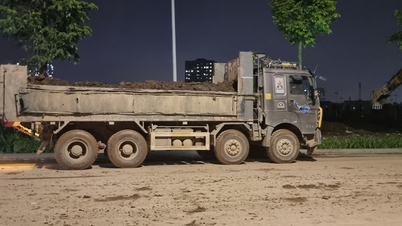
The cause of air pollution is due to the growing number of factories and industrial zones, which is one of the reasons for smoke, dust and toxic emissions such as CO, CO2, SO2... At that time, the production process causes widespread air pollution. In addition, in agriculture, the abuse of pesticides, chemical fertilizers and straw burning activities are also the causes of severe air pollution.
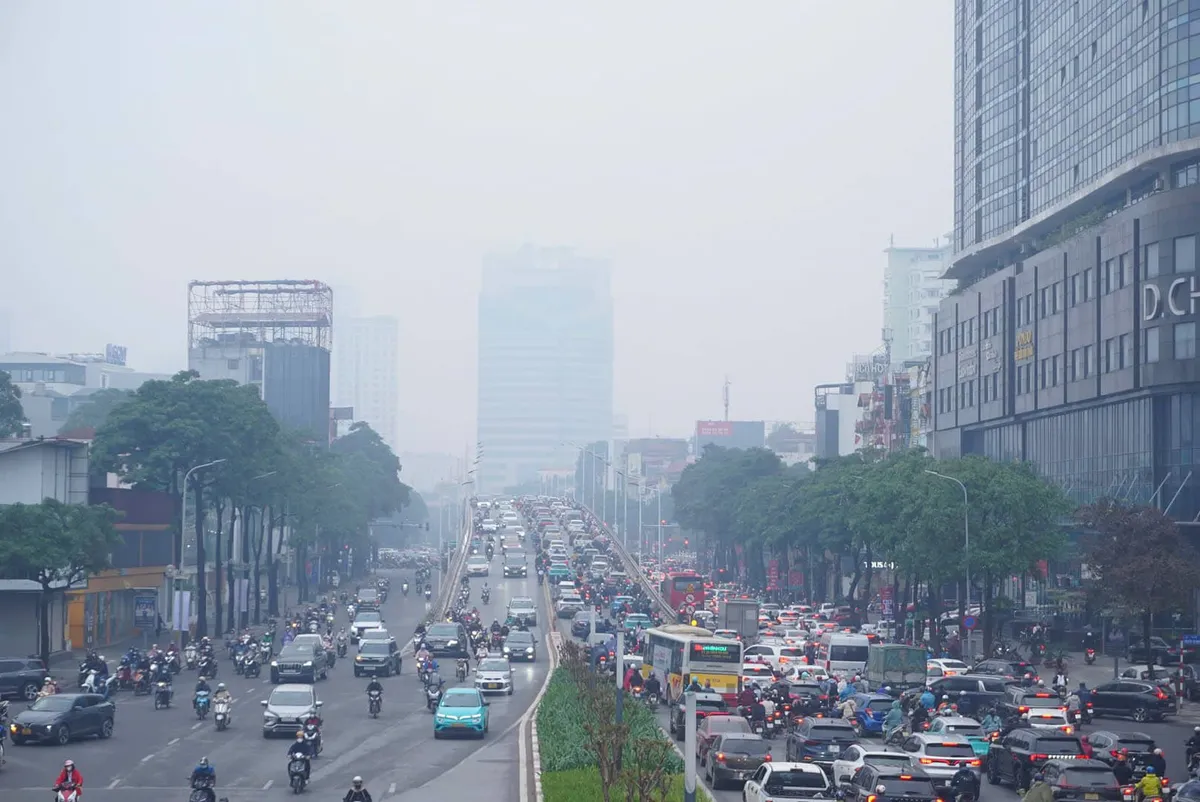
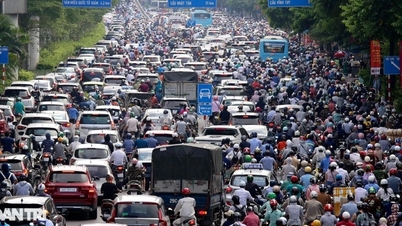
In addition, the amount of traffic is dense, so the amount of emissions such as CO, NO2, SO2, VOC... from cars and motorbikes discharged into the environment is quite high. Especially for old vehicles, the amount of emissions is even greater.
Air pollution affects people's health
According to research experts, AQI is an air quality index, reflecting the level of pollution from 0 to over 300. Good air quality ranges from 0 to 50, while measurements above 200 are considered hazardous, above 300 are considered dangerous, everyone is at risk of being affected, especially children, the elderly, pregnant women and people with respiratory diseases.
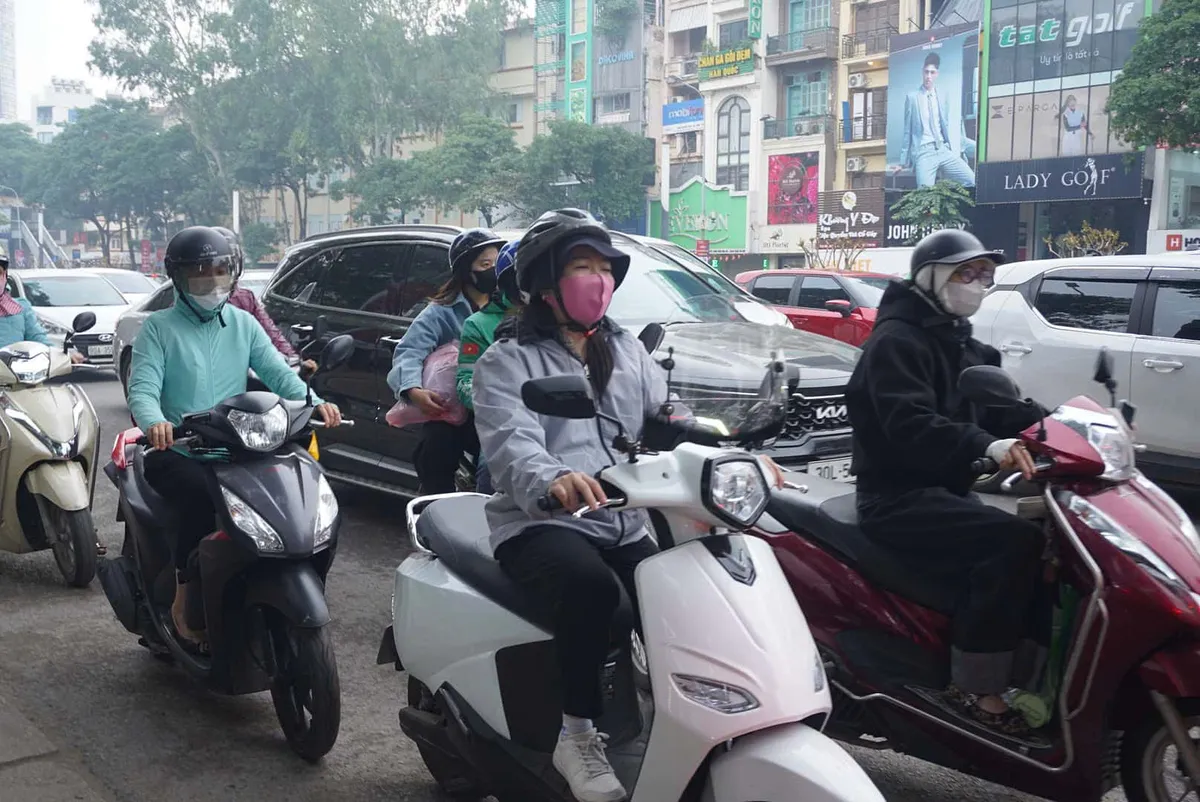
PM2.5 fine dust can easily penetrate the human body through the respiratory tract, penetrate deep into the lungs, enter the blood, causing a number of dangerous diseases. People who are regularly exposed to fine dust may experience health problems such as sneezing, runny nose, difficulty breathing, dry eyes... Long-term exposure will increase the rate of reduced lung function, chronic bronchitis, increase the risk of stroke, cardiovascular disease and cancer.
Assessing the health impact, Dr. Doan Du Manh, Vietnam Vascular Disease Association, said that fine dust penetrates deep into the airways, damages the lining of the trachea and bronchi, and goes straight into the alveoli, causing inflammation and fibrosis. The elderly, children, pregnant women and people with underlying respiratory diseases are susceptible to recurrent sinusitis, sore throat, and even severe bronchopneumonia.
Ms. Nguyen Thi Thu Hang, Tuong Mai Ward, Hanoi said that in the past 2 days, air pollution has clearly affected her health. Even though she wears a mask when going out, she still feels stuffy, often has headaches and stuffy nose.
Mr. Nguyen Minh Hien, Hai Ba Trung, Hanoi shared: "I still maintain the habit of exercising outdoors in the morning, but this morning I had to exercise later because of the thick fog and polluted air."
To protect health, experts recommend that when the air quality index reaches hazardous levels (AQI 301-500), people should minimize going out, temporarily stop outdoor activities and switch to indoor activities. Close doors to avoid exposure to pollution. If forced to move, people should wear specialized masks that filter fine dust and protective glasses. After returning home, cleaning the nose and throat with saline and washing the face helps remove dust. People should temporarily stop jogging and cycling outdoors and switch to indoor exercise to avoid inhaling large amounts of toxic gases during strenuous exercise.
Air pollution covers a wide area
Not only Hanoi, the results of measuring stations in some provinces also recorded bad air quality this morning such as Thang Long 2 Industrial Park (Hung Yen) 170; Bac Giang Inter-Agency Area 154; People's Committee of the old Hai Duong City 153; Nam Cao Park (Phu Ly) 153; Thai Binh Bridge (Hung Yen) 189.
The heavy air pollution in recent days also coincides with the warning issued by the Ministry of Agriculture and Environment on November 25, 2025, about implementing urgent measures to respond to the air pollution forecast in late November and early December in Hanoi and neighboring provinces.
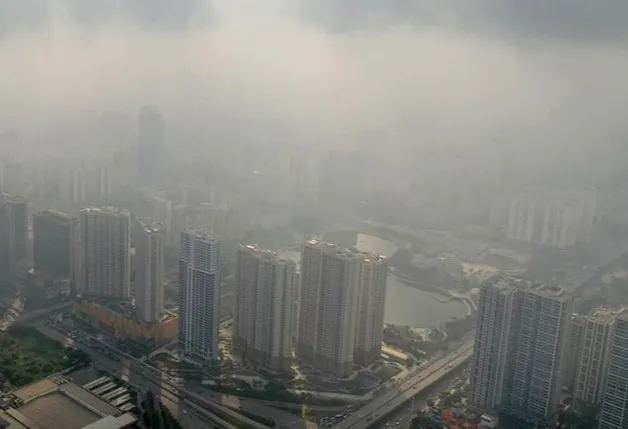
According to monitoring data from the national environmental quality monitoring system and hydrometeorological forecasting, in the next 10 days, the Northern region, especially Hanoi and neighboring provinces, will experience unfavorable weather patterns (temperature inversion, windless, fog), reducing the ability to diffuse pollutants in the air environment, leading to the risk of increased concentration of accumulated PM2.5 fine dust (AQI exceeding 150), directly affecting economic, social activities and public health.
Source: https://baolaocai.vn/nguyen-nhan-nao-khien-ha-noi-o-nhiem-khong-khi-top-dau-the-gioi-post887963.html


![[Photo] National Assembly Chairman Tran Thanh Man receives First Vice Chairman of the Federation Council of the Federal Assembly of the Russian Federation](/_next/image?url=https%3A%2F%2Fvphoto.vietnam.vn%2Fthumb%2F1200x675%2Fvietnam%2Fresource%2FIMAGE%2F2025%2F12%2F02%2F1764648408509_ndo_br_bnd-8452-jpg.webp&w=3840&q=75)





























































































Comment (0)