

After four seasons of operation, VinFuture has affirmed its prestige in the international scientific community thanks to its outstanding vision and comprehensive evaluation criteria. To date, many outstanding scientists have been honored at this award, including 6 scientists who have received the Nobel Prize.
Specifically, Professor Drew Weissman and Dr. Katalin Karikó were awarded the 2023 Nobel Prize in Physiology or Medicine, Dr. Demis Hassabis and Dr. John Jumper received the 2024 Nobel Prize in Chemistry, Professor Geoffrey Hinton was honored with the 2024 Nobel Prize in Physics, and most recently, Professor Omar M. Yaghi received the 2025 Nobel Prize in Chemistry.

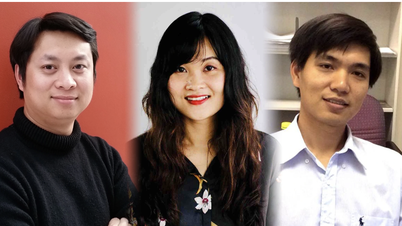
Professor Drew Weissman and Dr. Katalin Karikó. (Photo: VinFuture)
In 2023, Dr. Katalin Karikó and Prof. Drew Weissman, recipients of the first VinFuture Main Prize, were honored with the 2023 Nobel Prize in Medicine for their work on nucleoside modifications, which helped develop mRNA vaccines against COVID-19.
These innovations pave the way for the development of effective COVID-19 vaccines, while enhancing the stability and reducing the immunogenicity of mRNA.
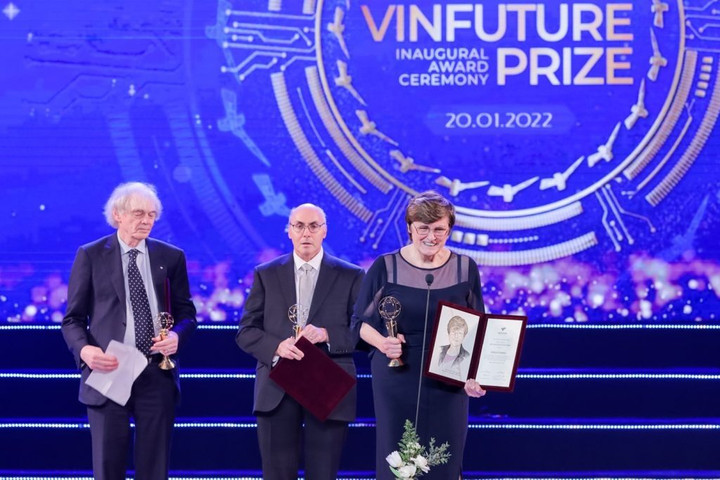
This is considered an important milestone in the development of mRNA platforms as a treatment option for serious human diseases. (Photo: VinFuture)
The work not only provides a powerful defense against the COVID-19 pandemic, but also promises advances in vaccine development for diseases such as HIV, cancer, autoimmune disorders and genetic diseases, with the potential to save billions of lives in the future.
Dr. Demis Hassabis (UK) and Dr. John Jumper (USA) were awarded the 2024 Nobel Prize in Chemistry for creating an AI model to predict protein structure. Previously, Dr. Hassabis and Dr. Jumper received the VinFuture Special Prize for Scientists in Emerging Fields 2022.
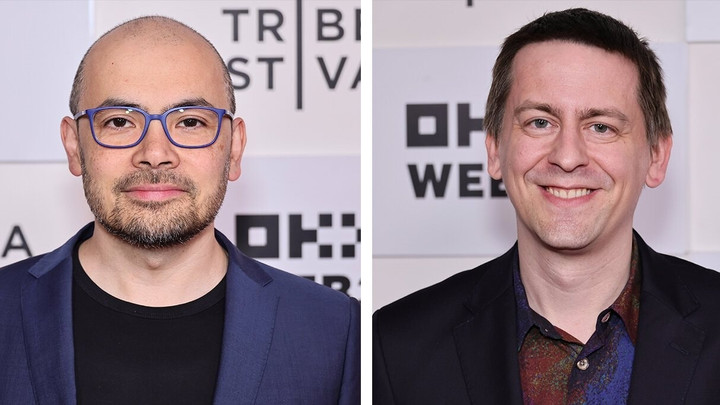
Dr. Demis Hassabis (UK) and Dr. John Jumper (USA). (Photo: New York Times)
An AI model called AlphaFold2, published in 2020, has helped scientists predict the structures of nearly 200 million identified proteins. AlphaFold2 is currently used by more than two million people in 190 countries, helping to advance many important scientific applications.
Thanks to this model, researchers can learn more about the problem of antibiotic resistance and create images of enzymes that can break down plastic.
In particular, AlphaFold2 has shortened work processing time from several years to just a few days, even a few minutes, helping to speed up the process of solving important problems in life.
This work also provides a rich database of structures of more than 200 million proteins, becoming a valuable resource for thousands of scientists worldwide .
In awarding the VinFuture Special Prize 2022, the Prize Council highly appreciated this work as a breakthrough in applying artificial intelligence to protein decoding, opening a revolution in protein structure modeling and promoting important developments in the fields of biomedicine, medicine and agriculture .

Professor Geoffrey E. Hinton. (Photo: VinFuture)
Professor Geoffrey E. Hinton, a British-Canadian cognitive psychologist and computer scientist, is widely recognized for his pioneering research in artificial intelligence (AI). Professor Hinton is one of five scientists who won the main prize of VinFuture 2024.
Professor Hinton, along with his colleague John J. Hopfield, was awarded the 2024 Nobel Prize in Physics for their groundbreaking discoveries and inventions that enable machine learning using artificial neural networks. This marked a milestone in the field of artificial intelligence.
The work that Professor Hinton used developed some of the foundations of machine learning, a branch of computer science that helps AI effectively mimic human behavior.
Notably, the work that helped Professor Hinton win the Nobel Prize was originally completed in the 1980s, when the concept of AI was still far from what it is today.
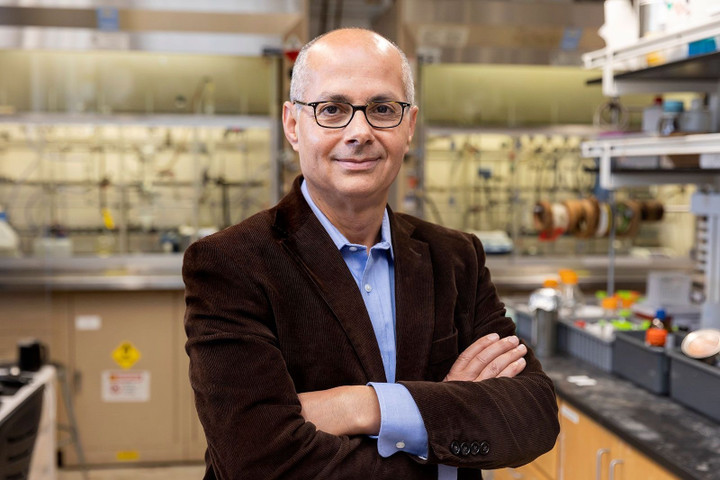
Professor Omar M. Yaghi. (Photo: Daily Guardian)
Professor Omar M. Yaghi, a Jordanian-American chemist, is known as the "father of bonding chemistry" and the inventor of metal-organic frameworks (MOFs) and covalent organic frameworks (COFs).
Professor Yaghi was awarded the 2025 Nobel Prize in Chemistry, along with two scientists, Susumu Kitagawa and Richard Robson, for their award-winning work entitled “Development of metal-organic frameworks (MOFs), opening up a new direction in the field of materials chemistry.
This work has huge potential in solving global problems such as clean water scarcity, energy storage, and chemical catalysis.
Previously, Prof. Yaghi was honored at the first VinFuture Prize (2021) for his pioneering work in discovering MOFs materials, in the Special Prize category for "Scientists researching new fields".
VinFuture 2025 Science and Technology Week, taking place from December 2-6, 2025 in Hanoi.
With the theme "Together we grow - Together we prosper", this year's series of annual international events continues to affirm VinFuture's mission in connecting knowledge, inspiring the desire to serve and elevating Vietnam's position as a center for promoting science and innovation in the world.
The VinFuture 2025 Award Ceremony took place on the evening of December 5 at Hoan Kiem Theater.
Source: https://vtcnews.vn/nha-khoa-hoc-nao-gianh-giai-thuong-vinfuture-duoc-trao-nobel-ar990424.html


![[Photo] National Assembly Chairman Tran Thanh Man receives First Vice Chairman of the Federation Council of the Federal Assembly of the Russian Federation](/_next/image?url=https%3A%2F%2Fvphoto.vietnam.vn%2Fthumb%2F1200x675%2Fvietnam%2Fresource%2FIMAGE%2F2025%2F12%2F02%2F1764648408509_ndo_br_bnd-8452-jpg.webp&w=3840&q=75)

















































![[Photo] General Secretary To Lam and his wife attend the 50th Anniversary of Laos National Day](https://vphoto.vietnam.vn/thumb/402x226/vietnam/resource/IMAGE/2025/12/02/1764644139308_1.jpeg)



















Comment (0)