

The biggest welfare policy for the people.
The directives of the General Secretary and President have received enthusiastic support from experts, businesses, and the people. Dr. Nguyen Van Dien, Head of the Political Economy Department (Regional Political Academy II), assessed this as a strategic viewpoint of the Party and the State. Since the 8th Central Committee Resolution of the 13th Party Congress, when the Party discussed social security issues, matters related to workers' housing, rental housing, healthcare, and education have all received attention. Currently, the view that rental housing is a pillar, as identified by the General Secretary and President, can be considered a milestone marking a shift in thinking in social security work and its superiority: changing from the nature of home ownership as an accumulated asset to the right of use. In a prosperous and strong society, everyone must have the right to use housing and accommodation.
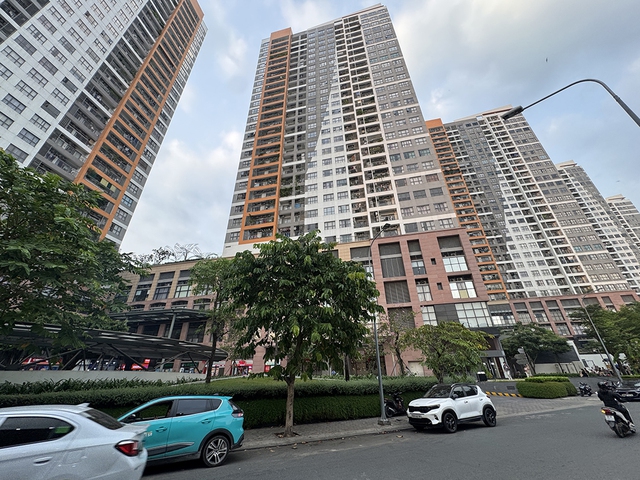
General Secretary and President To Lam directed that priority be given to developing rental housing, considering it a strategic pillar.
PHOTO: DINH SON
"Especially in the post-merger context, the scale of urban areas and economic centers has expanded significantly, and the demand for housing for experts and migrant workers has increased even more. When the state plans a concentrated rental housing area, it will create a clean, orderly, and well-organized living environment. Along with investing in improving healthcare, education facilities, schools, hospitals, etc., this is the best welfare and social security policy for people, workers, and migrants that rapidly developing localities currently need, such as Dong Nai City and Ho Chi Minh City in the Southeast region," emphasized Dr. Nguyen Van Dien.
Lawyer Truong Anh Tu, Chairman of TAT Law Firm, also believes that the noteworthy aspect of this directive lies in its closer approach to the actual living needs of society. For many years, housing policy in Vietnam has almost implicitly assumed that the biggest goal was to help people own homes. This thinking was appropriate in the early stages of the market, when real estate prices had not yet been driven too far apart from income and the ability to save. However, when house prices in many large cities are increasing much faster than the rate of increase in workers' income, continuing to view home ownership as almost the only measure of social security may cause policies to become increasingly detached from reality. Not everyone needs to own a home immediately, but everyone needs the right to a stable life.
This will certainly be expedited following the directives of the General Secretary and the President.
Through housing development policies, the State promotes the development of infrastructure, urban areas, and housing, thereby creating favorable conditions and encouraging businesses to participate. Currently, housing development has received attention from the Government, which has created many good policies to facilitate the development of housing segments suitable for all social classes, including social housing and the National Housing Fund for developing rental housing. In the spirit of the directives of the General Secretary and the President, we will certainly accelerate the implementation of good policies and effective management solutions for the development of social housing and rental housing, control the market, control speculation (taxes, credit), and regulate prices appropriately for the people.
Dr. Nguyen Van Dinh, President of the Vietnam Real Estate Brokers Association
This will "eliminate" the practice of profiteering in the housing sector.
Lawyer Truong Anh Tu analyzed that one of the biggest paradoxes of urban areas today is that those who directly operate the city's economy are finding it increasingly difficult to live in the city itself. Workers, migrant laborers, young people starting their careers, and the lower-middle income group are facing immense pressure regarding housing costs, while access to commercial housing is becoming increasingly distant. In some areas, house prices have far exceeded the labor force of an entire generation. At that point, the issue is no longer simply about real estate, but about the urban development structure and the ability to retain the workforce. If we continue to focus solely on developing housing for sale, including social housing, the risk of policy distortion will only increase.
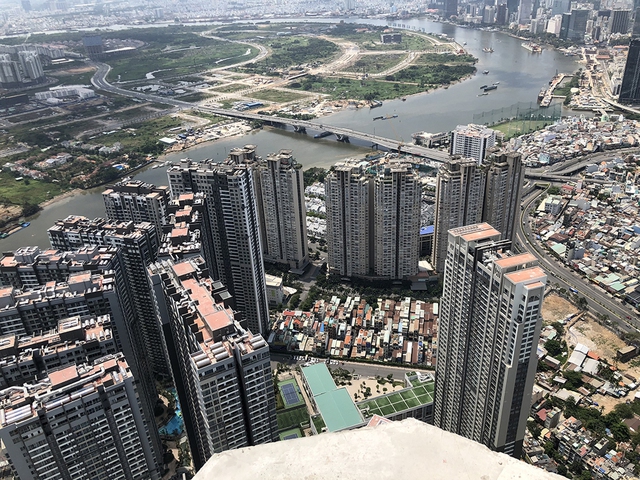
According to experts, the most pressing need of the people is to have stable, affordable housing so that they can work with peace of mind and commit to living in the city in the long term.
PHOTO: DINH SON
"In reality, there have been many cases recently where people have tried to legitimize their eligibility to buy social housing not entirely for genuine housing needs, but for the expectation of future asset value appreciation or profit. A housing policy that focuses solely on ownership rights can easily turn social welfare into a race to accumulate wealth. Meanwhile, those who truly need support often only need a stable place to live, work, and maintain their lives," said Mr. Truong Anh Tu.
Lawyer Truong Anh Tu affirmed that the core of the rental housing model is to more closely address the real housing needs rather than investment needs. Poor workers or migrant workers often don't need an apartment to accumulate assets, but rather a living space that is safe, stable, and affordable so they can commit to living in the city long-term. Society also needs to gradually change the perception that renting is a temporary or unsuccessful state. In many developed countries, the rate of long-term renters is very high, but this does not reduce the quality of life or social stability. In developed countries, the majority of people tend to rent rather than view housing as an asset to accumulate. Therefore, the important thing is not whether or not to own, but the ability to access housing that suits their income and is protected by a stable legal system. Urban welfare cannot be measured solely by the rate of home ownership. A worker may not yet own an apartment; But if they can rent decent housing with adequate infrastructure, a stable contract, and a reasonable price, then that is still a very real form of housing.
Meanwhile, the rental housing market in Vietnam still operates primarily on a small-scale, spontaneous, and unprofessional model. The majority of workers and migrant laborers still live in cramped, substandard accommodations lacking basic living conditions, social infrastructure, fire safety, and effective protection mechanisms in case of disputes. If rental housing is to be identified as a national strategy, it cannot simply stop at building more apartments; more importantly, it must establish a professional rental ecosystem capable of building long-term trust among the population.
Mr. Tran Quoc Dung, Vice Chairman of the Vietnam Real Estate Association, acknowledged that over the years, housing prices in major cities have increased much faster than the average income of the people. For the majority of workers, migrant workers, or young people just starting their careers, home ownership is becoming an unattainable goal. Meanwhile, their urgent need is for stable, safe, and affordable housing so they can work with peace of mind and commit to the city in the long term. The strong development of rental housing will also help to curb speculation, resale, or exploitation of social housing policies, as has happened in the past. In reality, many localities have discovered that social housing has fallen into the hands of the wealthy, being bought and sold for profit, while those with genuine needs cannot afford it. If housing is developed under a long-term rental model, the beneficiaries will be more aligned with the goal of social welfare, meeting the needs of workers and low-income earners. At the same time, this also helps the real estate market develop more balanced, reducing the mentality of chasing ownership at all costs. "Rental housing is a popular trend in many developed countries. A modern economy needs a flexible workforce that can easily move between jobs. When there is a quality rental housing system, workers will have more financially suitable options instead of having to bear the pressure of long-term home loans," Mr. Dung explained.
The government contributes capital alongside businesses to build houses.
To put the directives of the General Secretary and President into practice, drawing on international experience, Dr. Nguyen Van Dien suggested that the state first needs seed capital. The state could collaborate with real estate development enterprises, participating with public land under its management. Instead of auctioning that land for commercial housing, the state could contribute capital to enterprises to build rental housing for 30-40 years. Such joint ventures would allow the state to regulate prices appropriately. Enterprises would not profit from outright purchase and resale as before, but would instead generate profits from operating the shops and amenities within the rental area. The investor's commitment to operating, maintaining, and managing the building also contributes to the quality of the construction.
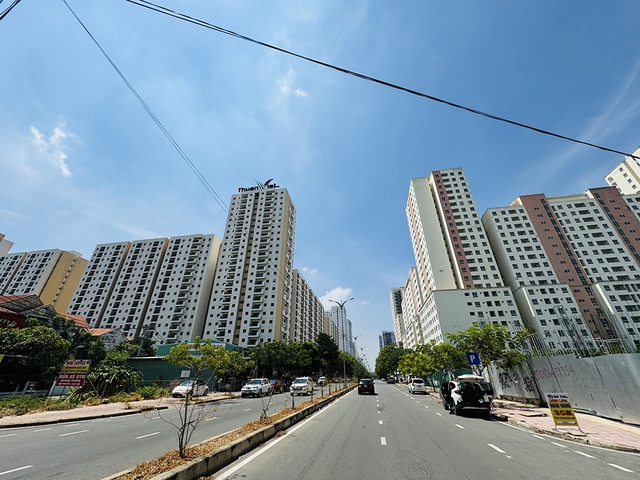
Rental housing is also an important way to build a healthy real estate market that is affordable for the people.
PHOTO: DINH SON
Next, focus on financial solutions. Investors are reluctant to spend a large sum of money only to receive small rental income. Therefore, it is necessary to establish housing development funds or rental housing development funds in provinces and cities, gradually expanding to a national housing development fund. This fund would provide loans to businesses for developing rental housing at low interest rates. For example, with the current inflation rate at 4%, businesses could borrow at a slightly higher interest rate, around 4.5% per year. Compared to interest rates of 8, 9, or 10% per year, this would be much more attractive to investors.
This should be accompanied by solutions regarding tax, fee, and levy tools. The government needs to study and develop property laws, taxing second homes and beyond to curb speculation. These tools will also contribute to building a sufficiently strong fund for rental housing development, increasing the actual supply on the market, ensuring that immigrants, workers, experts, etc., all have stable, reasonable housing, allowing them to settle down and develop with peace of mind.
"Only when people have stable housing can they work with peace of mind, contribute with peace of mind, have children, invest in their children's education, and care for the elderly and all their relatives. This is a very humane policy, demonstrating the high sense of responsibility of the Party and the State. At the same time, it is also a policy that reflects strategic thinking appropriate to the current development situation of the country as well as global trends," emphasized Dr. Nguyen Van Dien.
Mr. Tran Quoc Dung also agreed that for this policy to be effectively implemented, many solutions need to be deployed simultaneously. First, there must be a change in policy thinking, viewing rental housing as a long-term urban social infrastructure, not simply a real estate business. The State needs to plan and allocate suitable land in large cities, industrial zones, and export processing zones to develop rental housing; at the same time, there should be sufficiently strong incentives regarding land use fees, credit, taxes, and investment procedures to attract businesses to participate. In addition, it is necessary to form enterprises or investment funds specializing in developing and operating long-term rental housing. This model requires large capital and a long payback period, so a stable credit policy with appropriate interest rates is essential. A clear legal framework regarding rental prices, lease terms, and the rights and obligations of tenants is also needed to reassure people about long-term rentals, gradually changing the mindset that renting is only a temporary solution. More importantly, rental housing needs to be developed in conjunction with transportation infrastructure, schools, healthcare, essential services, and community spaces to ensure a good quality of life for workers.
If implemented properly, this will not only be a social welfare solution but also an important direction for building a healthy, sustainable real estate market that is more affordable for the majority of people in the coming period.
Rental housing is an effective option in many developed countries.
The model of developing rental housing has been successfully implemented in many countries around the world. Singapore, for example, allocates 100% of state-owned land for rental housing construction. They have financial resources to maintain, renovate, and repair these rental housing areas to suit low-income earners. Recent graduates can also access rental housing to live and work in the city. Similarly, in Germany, the government collaborates with businesses to build rental housing funds, and through the legal system, the government strictly controls rental prices, maximizing the protection of tenants' rights. In Vienna, Austria, the government considers rental housing an essential public service for residents and immigrants moving to the capital region for work. Currently, over 60% of Austrians rent housing from the state or private companies. They are provided with high-quality apartments and houses at reasonable prices.
Dr. Nguyen Van Dien, Head of the Department of Political Economy (Regional Political Academy II)
Source: https://thanhnien.vn/nha-o-cho-thue-la-tru-cot-chien-luoc-185260520220808713.htm




























































































Comment (0)