

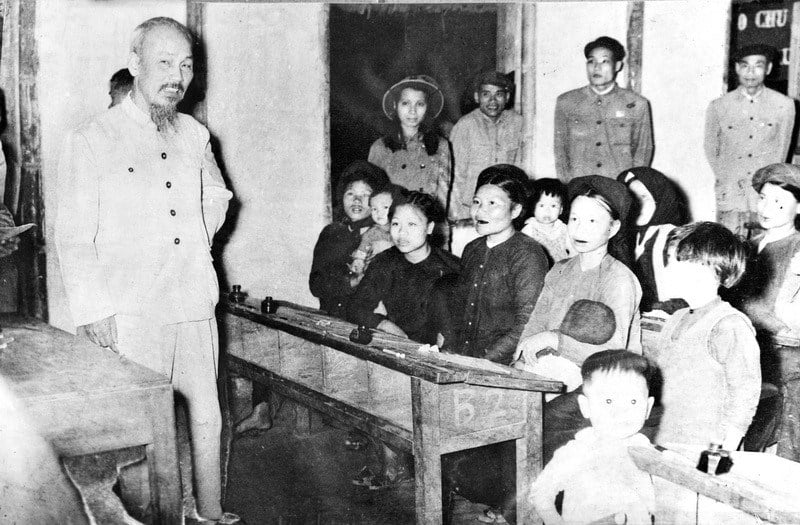
Ho Chi Minh's cultural philosophy and modern implications
Firstly, as early as 1943, President Ho Chi Minh gave the most comprehensive definition of culture: “For the sake of survival as well as the purpose of life, humans created and invented languages, writing, ethics, laws, science , religion, literature, art, tools for daily life in clothing, food, housing and methods of use. All of those creations and inventions are culture. Culture is the synthesis of all living methods and their manifestations that humans have produced to adapt to the needs of life and the demands of survival” (Ho Chi Minh: Complete Works , vol. 3, p. 458).
In this identification, President Ho Chi Minh pointed out the main elements of culture, both spiritual culture and material culture, the goal of culture, the two deepest characteristics of culture are "creativity and invention", and the ways of using culture by people for the purpose of life.
However, there is a very important content that some research works seem to have not paid attention to because they only focus on the first part of the above definition. That is the content: "To adapt to the needs of life and the demands of survival". The word "adaptation" shows a very profound perception of President Ho Chi Minh about culture. To survive and for the purpose of life, as affirmed by President Ho Chi Minh, humans create culture, and at the same time to meet the needs and demands of survival, culture helps humans "adapt" to life.
Obviously, adaptation is the ability of culture to regulate the needs and demands of life, meaning that culture helps people create harmony, avoid collisions, conflicts, contradictions, and deviations between people and life, that is, with nature, with society, with the community, with other people and often with themselves. "Adaptation" is essentially a concrete manifestation of the role of culture in social life.
Second , according to President Ho Chi Minh, to build a national culture in the most comprehensive sense, it is necessary to focus on the following five contents: “1. Building psychology: Spirit of independence and self-reliance; 2. Building morality: Knowing how to sacrifice oneself, benefiting the masses; 3. Building society: All careers related to the welfare of the people in society; 4. Building politics: Civil rights; 5. Building the economy” (Ho Chi Minh: Complete works, ibid. , vol. 3, p. 458).
Through this identification, we see that culture covers all areas of national life, from building national spirit, educating social ethics, implementing social policies and ensuring social security and welfare, building democratic political institutions, ensuring people's mastery to economic development, creating a material foundation for society.
According to Professor Cao Xuan Huy, President Ho Chi Minh's approach to culture is comprehensive, interdisciplinary, combining the "holistic" thinking of the East with the "particular" thinking of the West. The outstanding feature of this approach is the development of the definition of culture. President Ho Chi Minh affirmed that culture spreads and penetrates deeply into all areas of life to form, develop, and shape the self-awareness, mettle, character, and self-mastery of the nation, creating an ethical foundation, forming humane relationships in the behavior between people and nature, society, and themselves.
From that vision, President Ho Chi Minh pointed out that culture not only makes people "know how to enjoy the happiness they deserve", but also directly participates in "supporting the righteous and eliminating evil" and "correcting bad habits" .
The above two tasks are the regulatory role of culture. Truly profound, when talking about “work for people” in his Testament , President Ho Chi Minh emphasized “this is a fight against what is old and corrupt, to create new and fresh things” (Ho Chi Minh: Complete Works, op. cit ., vol. 15, p. 617). That is to say, this is a fight against anti-values and anti-culture to nurture cultural values.
As President Ho Chi Minh affirmed, it is a “giant battle”, in which there is both struggle and a great, arduous, persistent, and regular process of regulation, to both fight and build. Only political struggle without cultural regulation, through culture, the above cause will hardly achieve sustainable and profound results. Currently and many years from now, we are facing that challenge.
Third , “Culture lights the way for the nation”, a famous argument about the role of culture in Ho Chi Minh’s thought. This is a viewpoint that affirms the enlightening role of culture, which means that culture must play a role in guiding and adjusting the movement, change, and fluctuations of society in important areas, such as politics, economics, and society to lead life to develop in the right direction and in accordance with the objective laws of history. Reality shows that life is always moving and changing constantly, even with unpredictable fluctuations, which does not mean development , “Culture lights the way for the nation” is the adjustment and orientation to create development and minimize complex, negative fluctuations that can lead to instability or counter-development.
When the great poet Nguyen Trai wrote in his work Binh Ngo Dai Cao : "Using great justice to defeat cruelty/Using benevolence to replace violence" , he was not only talking about Vietnam's political victory, but also contained the affirmation of the role and endogenous strength of the national personality and Vietnamese cultural values.
When President Ho Chi Minh wrote the work "Reforming the way of working" in the early years of the resistance war against French colonialism, he viewed life from a cultural perspective, and specifically, he stood from the regulatory function of culture to "reform" the way of working and working style of cadres in the political system that was forming but had appeared bad things, bureaucracy and distance from the people - specific manifestations of anti-culture and lack of culture.
Thus, right in the thesis "Culture lights the way for the nation to go" contains four inseparable elements: Enlightenment, orientation, guidance and regulation .
Through the above presentation, we have gradually recognized the role of culture in regulating the movement and development of society, as the short and concise affirmation of the Director General of UNESCO: "Development needs to acknowledge culture's central position and role in regulating society". However, a question is raised: Where does that regulation come from, by what factors in culture itself? The answer will be sought in the internal structure of culture.
Inheritance, transformation and social regulatory role of culture
Talking about culture is talking about the products and cultural activities of human beings in the process of existence and development since the dawn of human history until today and forever. Those cultural products are classified by relative nature, including material culture and intangible culture.
However, its absolute nature is: Cultural products created by humans are always endless, increasingly rich, diverse, never interrupted or ended, and looking vertically at history, they are always changing, always appearing new, strange products, both inheriting and denying what came before. That characteristic occurs throughout the history of cultures, from the smallest cultural manifestations to large, great cultural works and achievements. This can be seen through some evidence in the daily culture of Vietnamese people as follows:
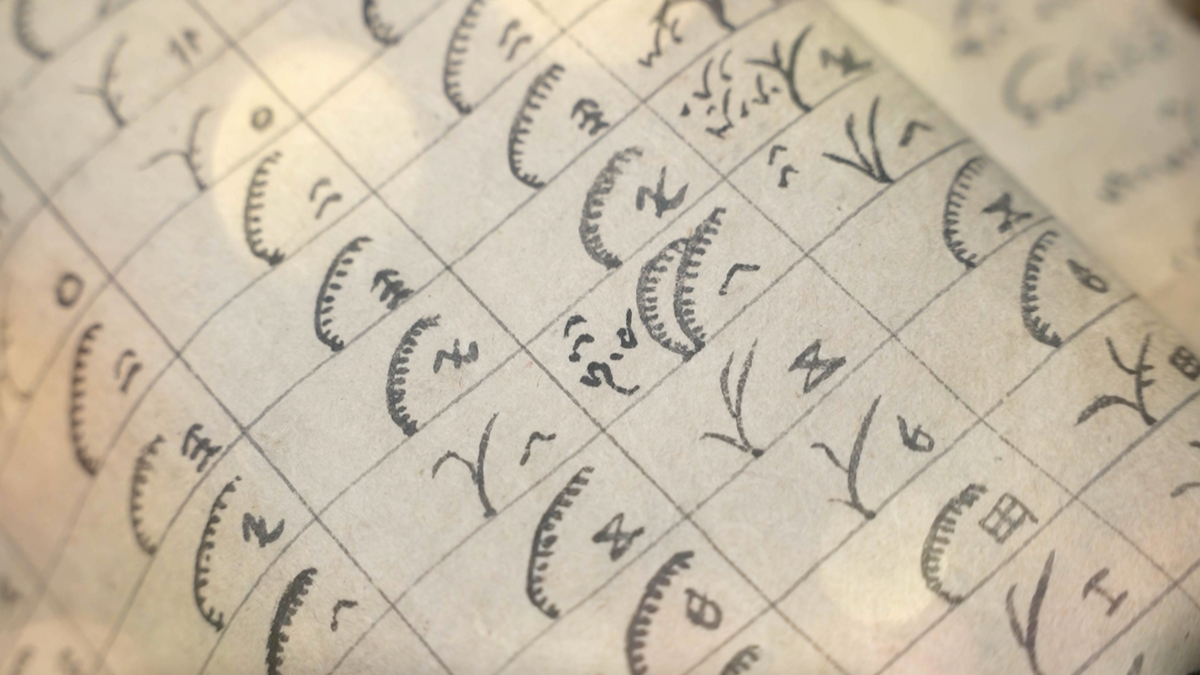
In ancient times, Vietnamese people wore loincloths, dyed their teeth black, and had tattoos. During the feudal period, the elders wore turbans and silk ao dai. Educated people wrote Chinese characters, then Nom characters, and behaved and educated their children according to Buddhism, then converted to Confucianism. During the French colonial period, people shaved their black teeth into white teeth, wore modern ao dai, replaced wooden clogs with clogs and high heels...; a part of the urban population was fascinated by New Poetry, novels of the Tu Luc Van Doan group, discussed free love, opposed feudal etiquette, and cried for the "pine hill with two graves"...
Nowadays, cultural features have changed, people wear modern clothes, use computers, smartphones, talk about globalization, access modern science and technology, the fourth industrial revolution... Another evidence is that our country's history has created about 8,000 traditional festivals, and today, there is the emergence and development of new festivals, not to mention a series of foreign festivals that are being "imported" quite massively into Vietnam.
No matter how fast and strong the changes are, the Vietnamese people still retain their Vietnamese character, which is difficult to mix with other ethnic groups, even when they live abroad. Writer Nguyen Dinh Thi observed this and called it the "blue sky" of the Vietnamese community. Perhaps, in the constant changes of cultural products and creative activities, there exists a hidden core element that forms the shape of a culture. That is the cultural identity of each ethnic group and nation.
That identity is formed by the spiritual and mental needs of the Vietnamese people. The hidden shape in those cultural products and creative activities is like a thread that runs through time and space, and is very sustainable.
For example, the role and status of Vietnamese women in cultural history. There are thousands and tens of thousands of cultural products that show a very diverse image of women, but the common denominator of products with cultural value is the affirmation, praise, honor, and protection of the beautiful image of Vietnamese women, even when expressing the pain of women to the end, as typified by Nguyen Du's Tale of Kieu . That viewpoint and sentiment is in the value system of Vietnamese culture from ancient times to today and tomorrow...
(To be continued)
Source: https://baovanhoa.vn/van-hoa/nhan-dien-van-hoa-trong-tu-tuong-ho-chi-minh-184949.html


![[Photo] National Assembly Chairman Tran Thanh Man receives First Vice Chairman of the Federation Council of the Federal Assembly of the Russian Federation](/_next/image?url=https%3A%2F%2Fvphoto.vietnam.vn%2Fthumb%2F1200x675%2Fvietnam%2Fresource%2FIMAGE%2F2025%2F12%2F02%2F1764648408509_ndo_br_bnd-8452-jpg.webp&w=3840&q=75)





































![[Photo] General Secretary To Lam and his wife attend the 50th Anniversary of Laos National Day](https://vphoto.vietnam.vn/thumb/402x226/vietnam/resource/IMAGE/2025/12/02/1764644139308_1.jpeg)





















Comment (0)