

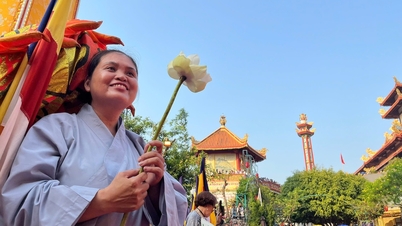
The atmosphere here is even more serene; the gentle scent of incense and the ringing of bells bring a sense of calm to the heart, allowing one to find peace and tranquility amidst the bustling spring days.
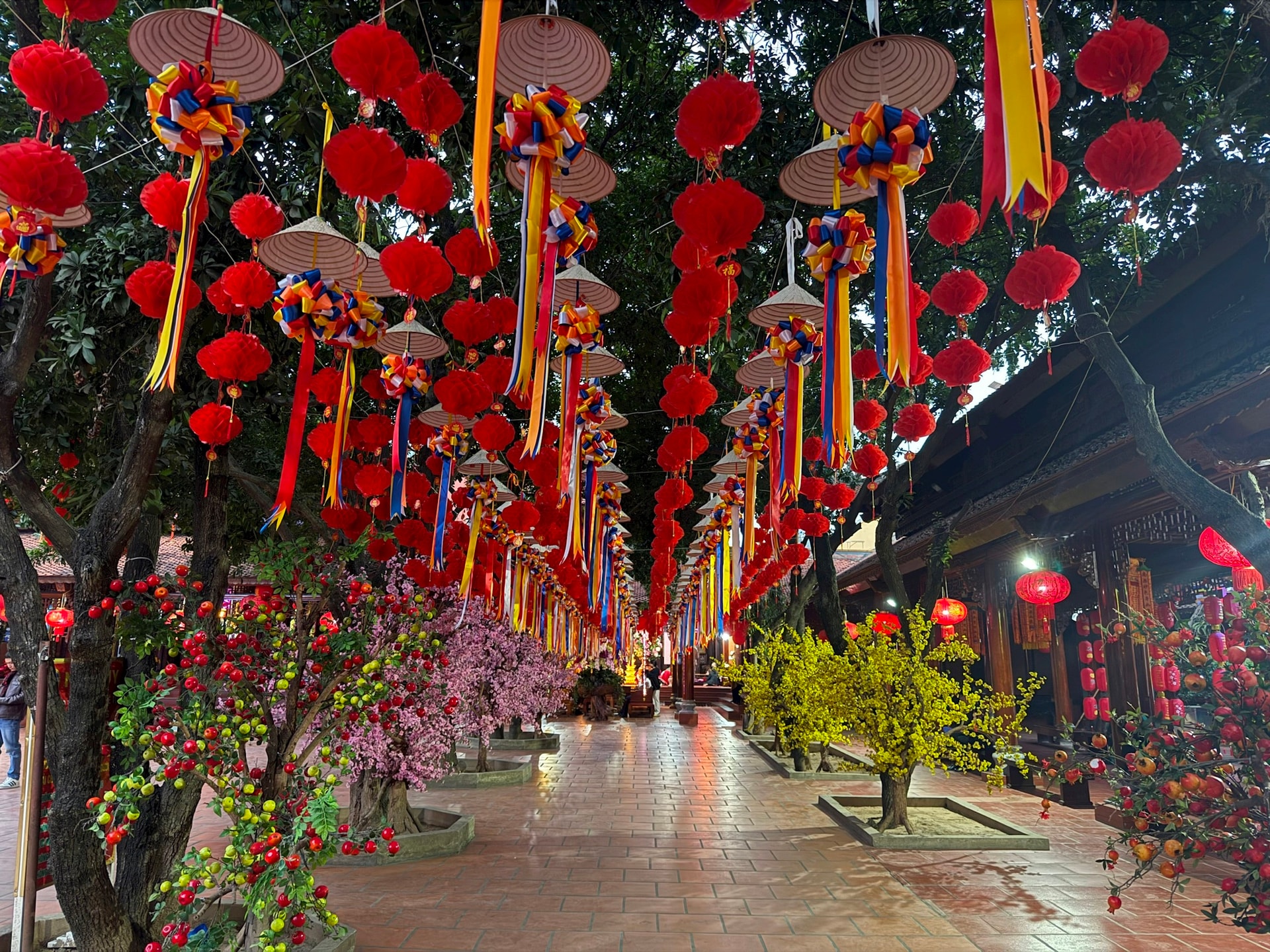
At Phuc Khe Pagoda (also known as Ngoi Pagoda, Ha Dong Ward), Buddhists and locals visit in a solemn and orderly atmosphere. For many years, the pagoda has persistently built a model of a "civilized pagoda": saying no to burning votive paper, no offering prayers to ward off bad luck, no fortune-telling, and offering free parking...
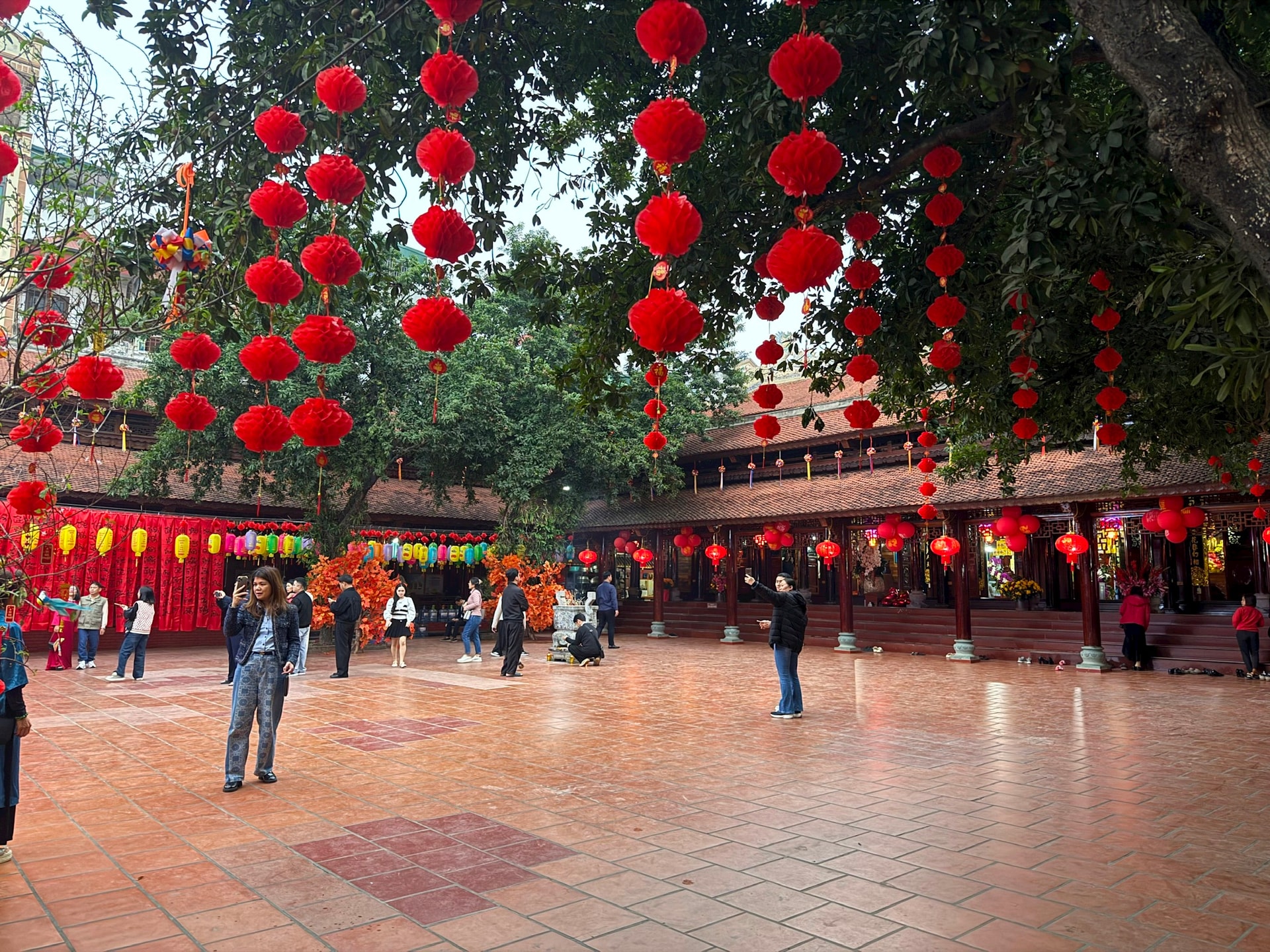
Right from the entrance, the loudspeaker system constantly reminds people not to offer money, votive paper, incense, or candles as offerings. As a result, the temple grounds are clean and free from thick incense smoke, scattered rice and salt, and litter. Visitors to worship Buddha and other deities maintain a polite and respectful attitude towards the spiritual space, and donations are placed in designated areas instead of being scattered across the altars.
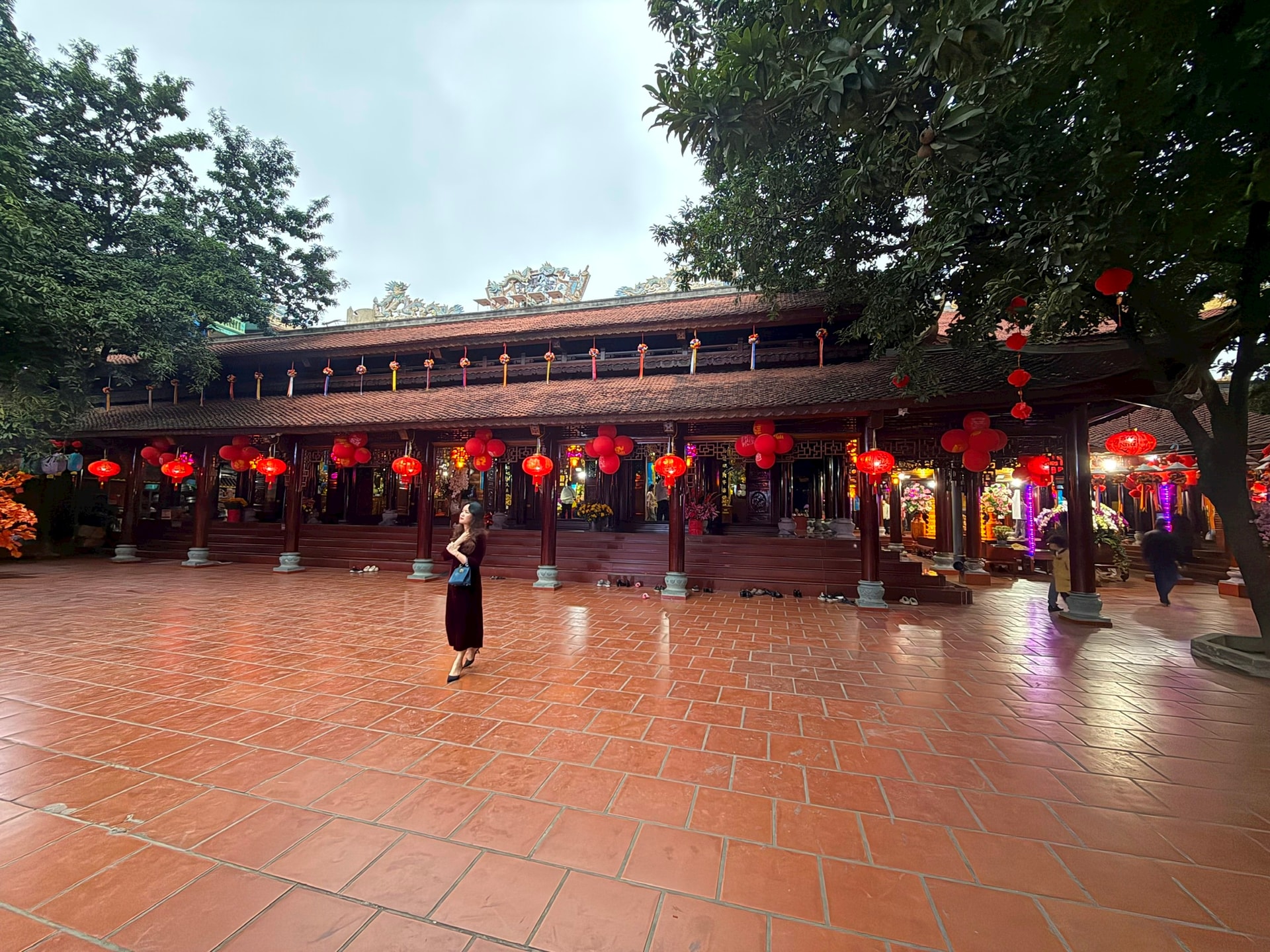
A representative from the temple stated that the custom of burning paper money and offerings is not part of Buddhist teachings. Burning paper money is not only wasteful but also poses a fire hazard and harms the environment. The temple hopes that Buddhists will come to worship with sincere hearts, instead of preparing wasteful offerings; the merit of merit stems from sincerity and good deeds of each individual.
Buddhist follower Nguyen Thi Hoi (Kien Hung ward) shared that she has been voluntarily doing volunteer work at the temple for about 6 years. According to her, thanks to the persistent efforts of the abbot, the practice of not burning incense or votive paper has gradually become a habit.
"Many people, after being explained the situation, changed their behavior. Instead of buying votive offerings, they sent money to the temple for charity. During the 2025 flood relief effort alone, the temple organized 4-5 relief trips. These are practical and meaningful actions that need to be widely promoted," Ms. Hoi said.
In contrast to the image above, not far from Ngoi Pagoda, the historical and cultural relic site of the communal house, pagoda, and stele of Lady La Khe (Ha Dong ward) presents a different picture. Outside the relic site, numerous stalls offering parking and food services are clustered together, creating a noisy and bustling atmosphere. Parking fees are not publicly displayed and are often charged at a flat rate of 10,000 VND per motorbike.
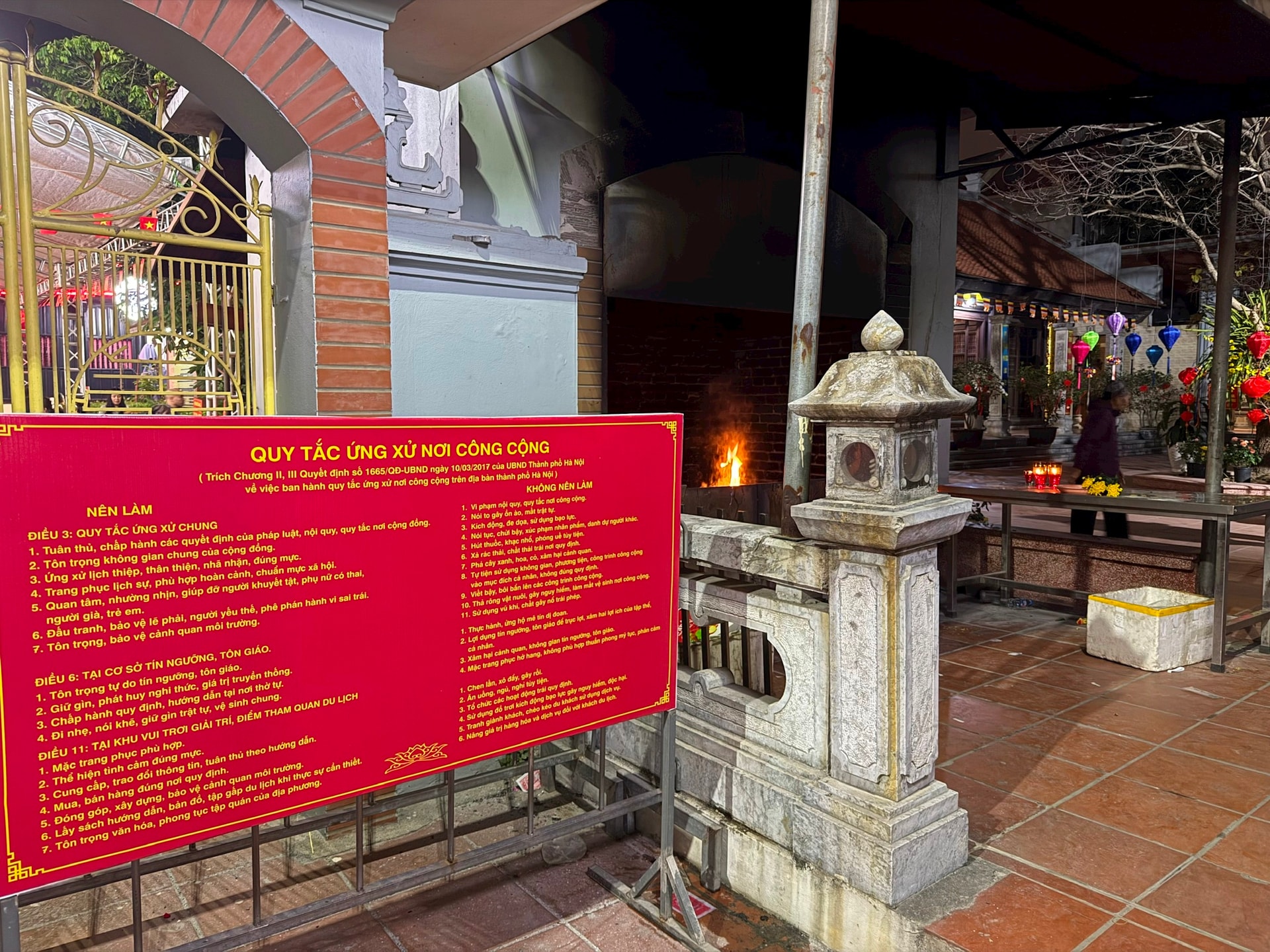
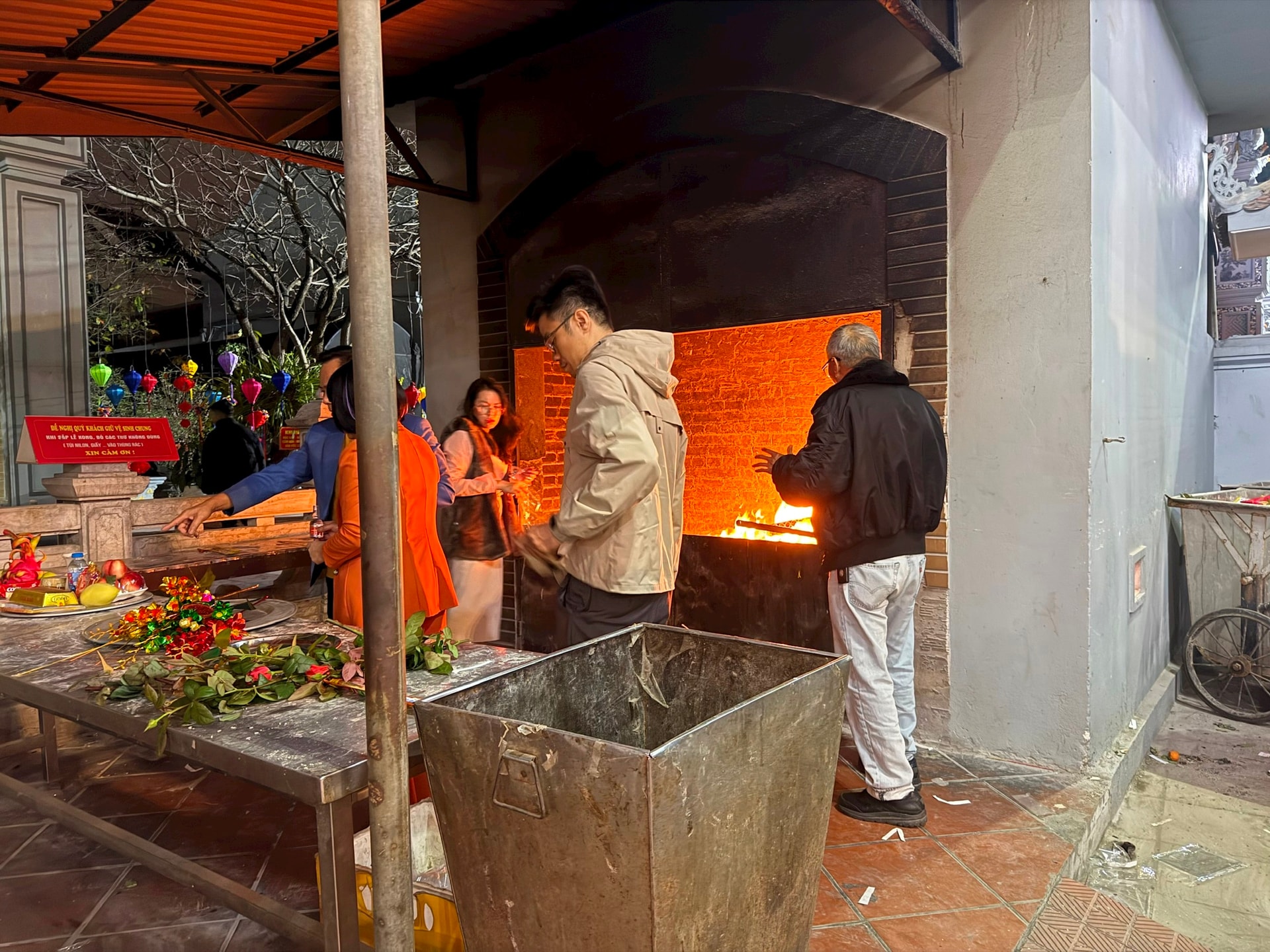
Despite the management having posted numerous public conduct guidelines and used loudspeakers to discourage the burning of votive paper and incense, the practice of burning votive paper and placing offerings on altars still persists.
Waste from the stalls, especially used napkins, is generated in large quantities, somewhat affecting the landscape. In the area where people write prayers, there are even signs advertising palm reading, diminishing the inherent solemnity of a spiritual site.
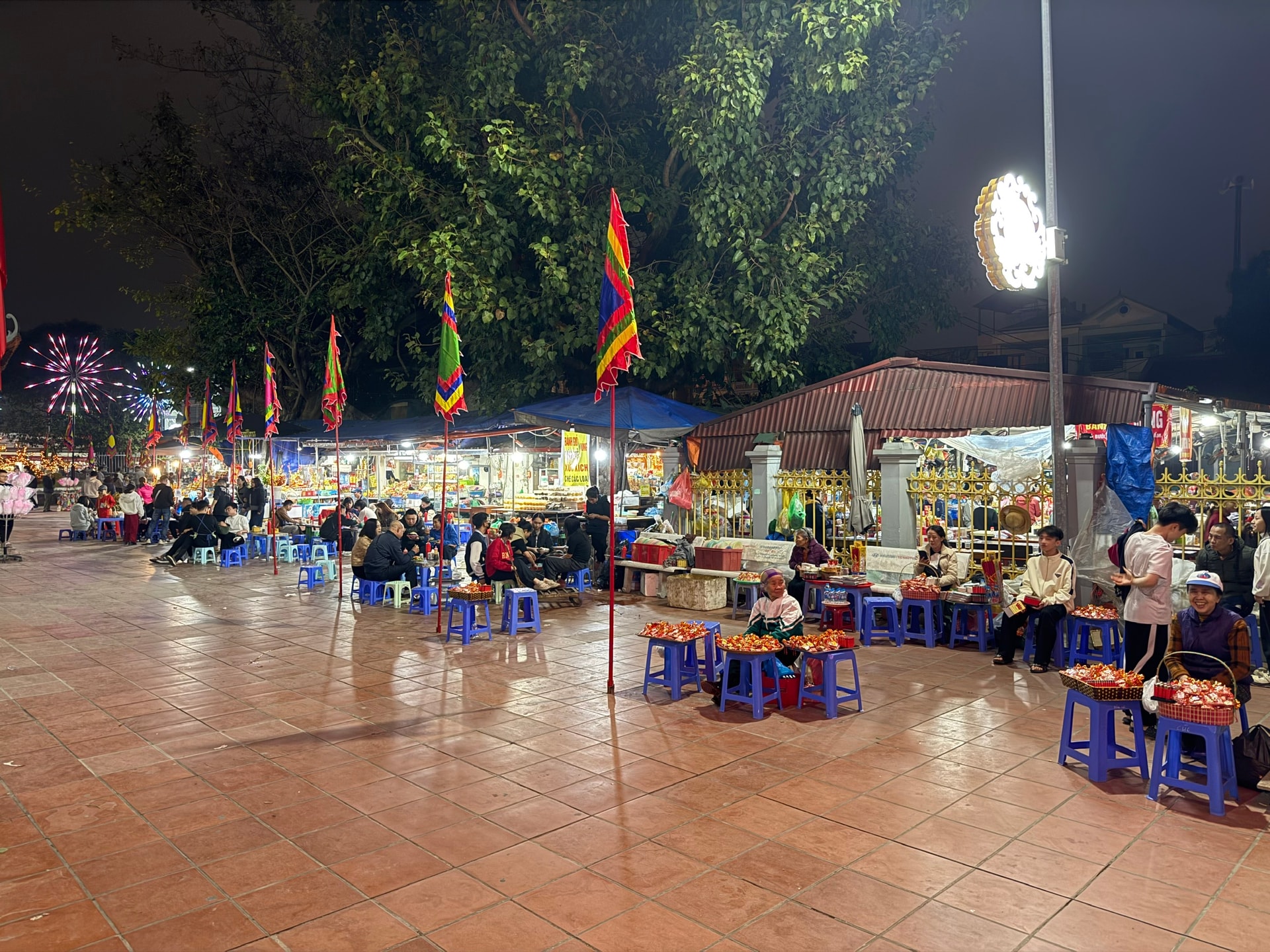
In reality, alongside positive examples like the one at Phuc Khe Pagoda, there are still shortcomings that need to be addressed at many historical sites. The festival season has only just begun, requiring the management boards of these sites and local authorities to intensify inspections, raise awareness, and promptly address violations, so that these spiritual and cultural spaces truly become places that guide people towards goodness, peace, and a civilized way of life.
Source: https://hanoimoi.vn/nhan-len-net-dep-le-chua-dau-xuan-734110.html


















































































Comment (0)