

Requirements arising from reality
Currently, Hai Phong possesses a port infrastructure with great potential, including approximately 50 port enterprises and more than 70 berths.
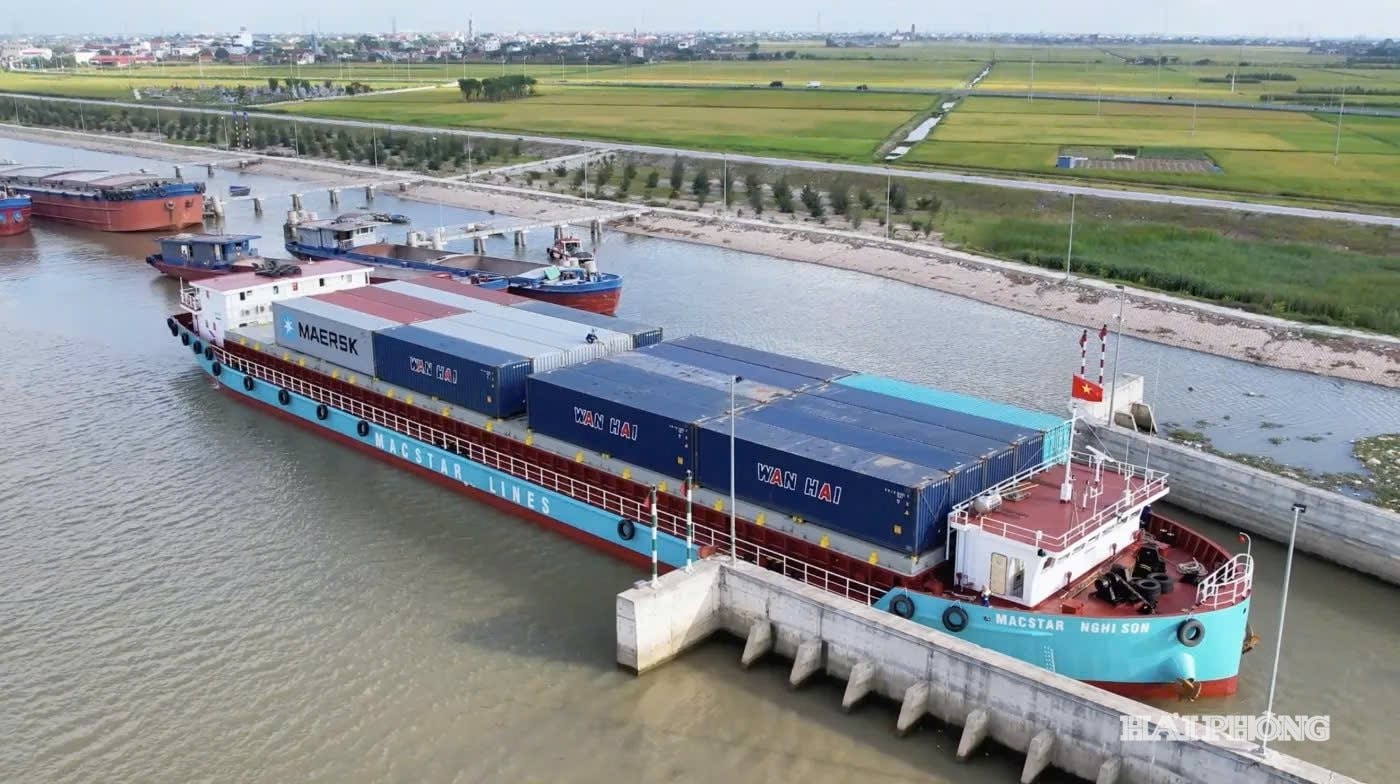
In particular, the network of waterways, formed from the Cam River, Van Uc River, Luoc River to Kinh Thay River, along with more than 300 inland waterway ports and wharves, creates a massive system for receiving and transshipping bulk and container cargo. However, in practice, its operation is facing a significant imbalance.
According to the Department of Industry and Trade, more than 70% of goods passing through Hai Phong seaport still rely on road transport. This not only puts significant pressure on transportation infrastructure, increasing congestion and deterioration, but also leads to high logistics costs and large carbon emissions.
Given that logistics costs in Vietnam account for approximately 16-20% of GDP – higher than Thailand (15.5%) and Singapore (8.5%) – optimizing costs is a pressing issue. According to Mr. Do Huy Hoang, Director of OAE Logistics Company, shifting from road to waterway transport is not only an economical choice but also a crucial requirement of the green economy. Based on actual data, inland waterway transport costs save 20-25% compared to road transport. More importantly, this method has extremely low emissions. A single coastal vessel can replace hundreds of tractor-trailers, reducing CO₂ emissions by 15-20 tons per 200 km journey, and cutting emissions by over 70% compared to road transport.
The shift to inland waterway transport is an urgent "green" solution. According to the Hai Phong Logistics Association, waterway transport has the capacity to carry large volumes of goods, consumes less energy per unit of cargo, and significantly reduces greenhouse gas emissions compared to road transport. When goods are connected via waterway ring roads No. 1 (connecting Phu Tho ) and No. 2 (coastal route), the "door-to-door" transport model will be optimized, creating a sustainable link in the modern logistics chain.
Efforts to transition to green
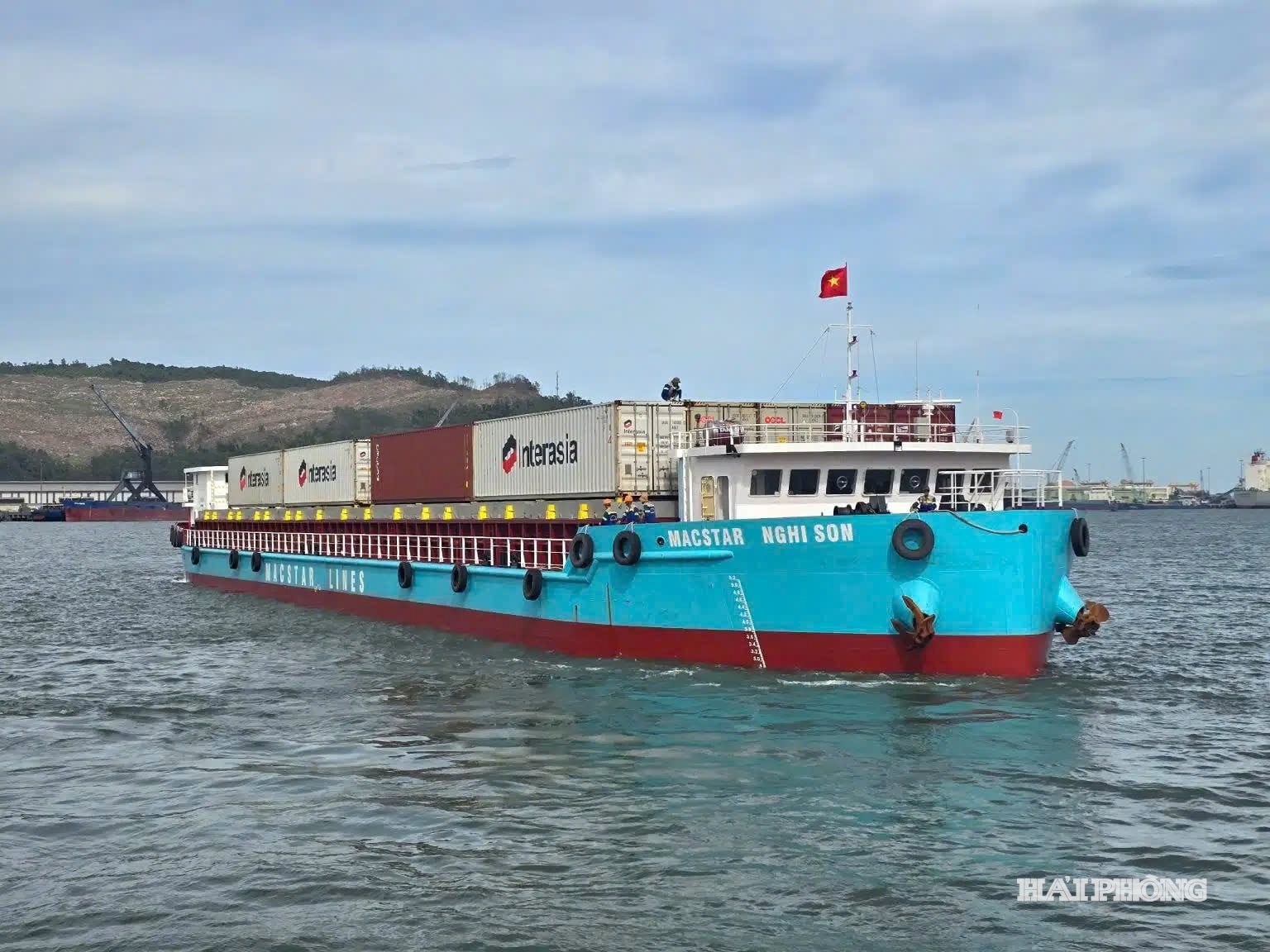
In the context of globalization and increasingly stringent environmental standards, the logistics business community in Hai Phong is striving for significant transformation. Among them, Macstar Coastal Container Transport Joint Stock Company (part of Macstar Group) has aggressively developed inland and coastal container transport routes connecting Hai Phong with Ninh Binh, Thanh Hoa, Ha Tinh, and Da Nang.
In particular, to realize its Net-zero goal, Macstar Group signed a strategic cooperation agreement with the Vietnam Maritime University at the end of March 2026 to research and develop inland waterway vessels using battery energy. This is a groundbreaking step, demonstrating the company's strong commitment to reducing carbon emissions and building a sustainable logistics ecosystem.
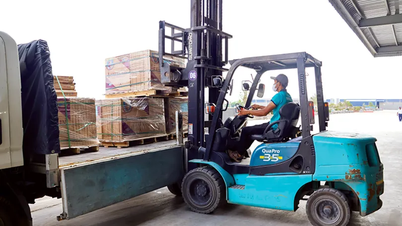
However, Hai Phong's logistics sector still faces many challenges. According to Nguyen Minh Duc, Vice Chairman of the Hai Phong Logistics Association, although there are about 250 businesses operating in the industry, most are still small-scale, operate independently, and lack supply chain linkages, making it difficult to compete with multinational corporations. The city also lacks large-scale logistics centers that meet international standards (such as the GLC centers of Viconship or Yusen).
To address bottlenecks and promote a green economy, Hai Phong has implemented several specific strategies. The city has planned 2,000-2,500 hectares of land for the development of modern logistics centers. According to the detailed plan for the development of Hai Phong seaports for the period 2021-2030, with a vision to 2050, the goal by 2030 is to meet a cargo throughput of 175.4-215.5 million tons with a synchronized and modern port system. According to Assoc. Prof. Dr. Le Thi Huong Giang, Deputy Head of the Port Engineering Department, Faculty of Engineering (Vietnam Maritime University), to achieve this goal, logistics needs to be developed based on three pillars.
Regarding "hard" infrastructure, focus should be placed on completing the international standard railway line connecting ports with the national railway system, combined with investment in an inland waterway transport system to ensure seamless inter-regional connectivity. "Soft" infrastructure needs to be implemented through the issuance of specific, flexible policies and mechanisms to attract large domestic and foreign corporations to invest in the logistics chain. As for human resources, it is necessary to utilize the existing high-quality workforce (accounting for approximately 20% of the industry's workforce nationwide) to train and enhance skills in modern supply chain management.
Developing the economy through inland waterway transport is not only economically significant but also a crucial step in Hai Phong's sustainable growth strategy. When the waterway system is seamlessly connected with high-speed rail projects such as the Lao Cai - Hanoi - Hai Phong line, the city will reduce pressure on road traffic and simultaneously affirm its position as an international logistics gateway.
THU HANGSource: https://baohaiphong.vn/nhieu-tiem-nang-phat-trien-logistics-xanh-543622.html























































































Comment (0)