

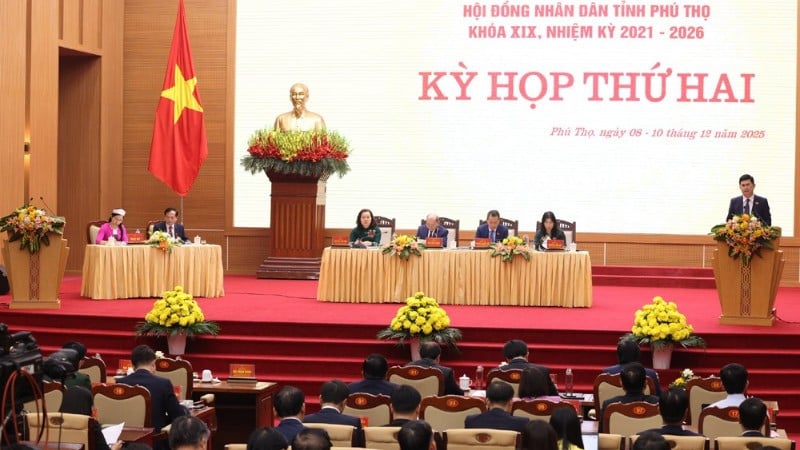
At the question and answer session, delegates focused on groups of issues that delegates and voters in the province were interested in after operating a two-level local government.
Regarding the payment of benefits to non-professional officials at the commune level who cease to work according to Decree 154 of the Government , Director of the Department of Home Affairs of Phu Tho Tran Viet Cuong said that as of December 8, the Department had received 2,011 dossiers from localities for appraisal.
Up to now, 673 dossiers (20.2%) have been appraised and submitted to the Provincial People's Committee to decide on policies for non-professional workers; we strive to complete 100% of the remaining dossiers by the end of December to submit to the Provincial People's Committee.
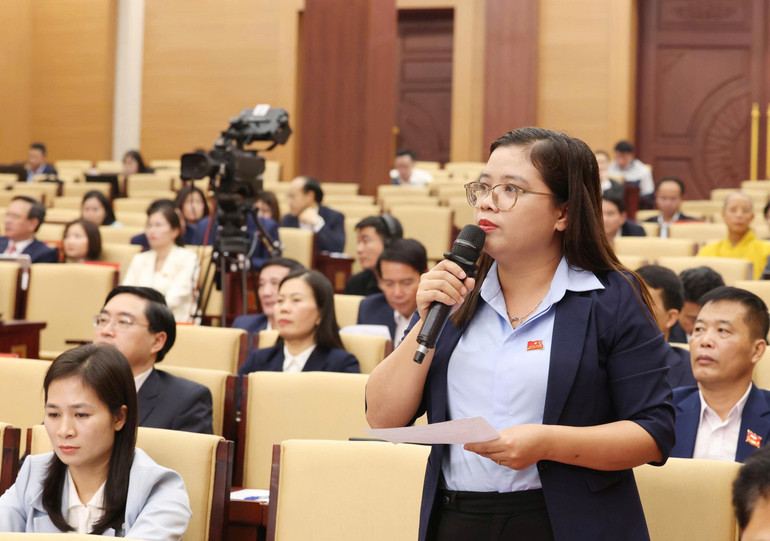
The arrangement and handling of surplus public assets, especially in the regional centers of Hoa Binh and Vinh Phuc, is not effective and economical. If prolonged, it may lead to waste of resources.
Regarding this content, Director of Phu Tho Department of Finance Vuong Thi Bay said that after merging the province, merging communes and not organizing district-level government, the amount of surplus assets is relatively large.
Therefore, the Provincial People's Committee has established working group 496, including leaders of the Provincial People's Committee and related departments, branches, communes and wards, to review and arrange the assets of each agency and unit. Through the review, the whole province has 1,324 real estate facilities that need to be handled and arranged.
The Department of Finance has advised the Provincial People's Committee to report to the Provincial Party Standing Committee to transfer 161 real estate facilities to central agencies located in the area.
At the same time, convert the functional use of 576 facilities to educational, medical, cultural and sports facilities; hand over 121 real estate facilities to the Land Fund Development Center for management and development of exploitation and processing plans, which can be auctioned, leased, or used for more effective purposes.
There are currently 462 real estate facilities attached to communes and wards, which the Provincial People's Committee has assigned to communes and wards for management and handling.
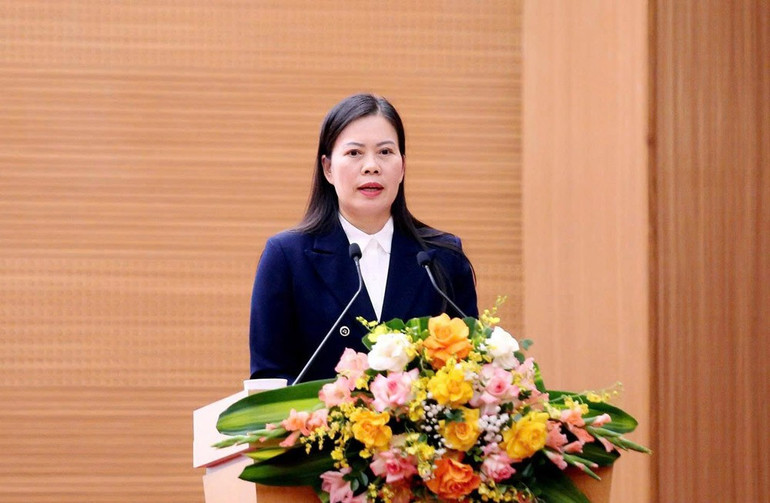
In the coming time, communes and wards will continue to review and, if the functional use can be converted, continue to allow the conversion of functional use for medical, cultural, educational and public activities facilities.
For establishments that are determined to no longer need to convert their functions and use them for other purposes, the communes and wards will be assigned to proactively handle or develop plans to lease, sell assets on land, auction land use rights and other plans that bring the highest efficiency to public assets. The province strives to complete the handling of excess assets after merging provinces and communes by 2026.
Many voters are concerned about ensuring funding for maintaining public lighting systems in some communes and wards in the province, which are facing difficulties due to insufficient funding for operation.
Director of Phu Tho Department of Construction Nguyen Xuan Quang said that right after the merger and reorganization of the two-level government, there were tasks for the district level, tasks for the commune level, and tasks for the provincial level.
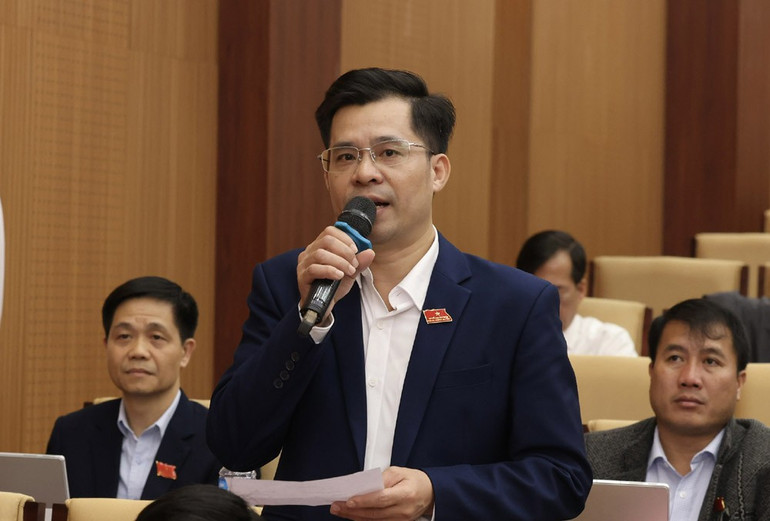
At first, the management agency was not clearly defined, leading to some roads having lighting and others not.
To solve this problem, the Department of Construction has advised the Provincial People's Committee to develop a decision on decentralization of management of infrastructure works and management of public services, including lighting.
Accordingly, for infrastructure works located in the same commune-level area, the wards will hand them over to those wards and communes for direct management; for infrastructure works and public services in two or more localities, they will be handed over to the provincial public service units for management.
Voters are also concerned that after the province's merger, many officials, civil servants, and public employees from Hoa Binh and Vinh Phuc regions came to Viet Tri to work but did not have houses and had to rent, while the progress of social housing projects was still slow.
Regarding this issue, Director of the Department of Construction Nguyen Xuan Quang said that he sympathizes with the cadres, civil servants and public employees in Hoa Binh and Vinh Phuc regions who have to travel to Viet Tri to work.
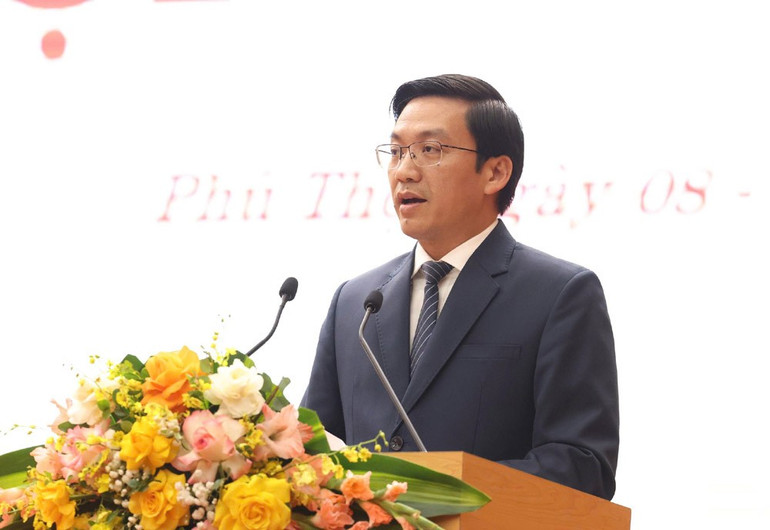
Through review, there are about 4,400 cadres, civil servants and public employees in need of social housing. In addition, there are about 60,000 workers working in industrial zones and clusters in need of social housing.
Currently, the province has 7 completed social housing projects; 9 projects will start construction in 2025 with a scale of 10,635 units. This year, we strive to continue to start construction of 3 more projects with a scale of 1,100 units, including 2 projects in Viet Tri area and one project in Vinh Yen area. It is expected that in the first quarter of 2026, some projects will be eligible for house sale.
Currently, the Department of Construction is continuing to appraise and submit to the Provincial People's Committee for approval of the investment policy, assigning investors to 12 projects with a total of 15,468 apartments, of which, in Viet Tri area alone, there are 6 projects with a total fund of 7,519 apartments.
Also at the question and answer session, delegates focused on questioning a number of issues of concern to voters such as the planning of the province, communes and wards after the merger; urban traffic infrastructure, Viet Tri city area; the increasingly serious environmental pollution in rural areas, especially in craft villages affecting people's lives; the source of construction materials, especially the source of earth materials for the project is still scarce...
Source: https://nhandan.vn/nhieu-van-de-nong-duoc-chat-van-tai-ky-hop-thu-hai-hoi-dong-nhan-dan-tinh-phu-tho-post929025.html




![[Photo] Urgently help people soon have a place to live and stabilize their lives](/_next/image?url=https%3A%2F%2Fvphoto.vietnam.vn%2Fthumb%2F1200x675%2Fvietnam%2Fresource%2FIMAGE%2F2025%2F12%2F09%2F1765248230297_c-jpg.webp&w=3840&q=75)


![[Video] Rapidly deploying "Quang Trung Campaign" to build houses for people in flood-hit areas](https://vphoto.vietnam.vn/thumb/402x226/vietnam/resource/IMAGE/2025/12/09/1765292632846_dung00-17-48-20still010-jpg.webp)










































![[Photo] General Secretary To Lam works with the Standing Committees of the 14th Party Congress Subcommittees](https://vphoto.vietnam.vn/thumb/402x226/vietnam/resource/IMAGE/2025/12/09/1765265023554_image.jpeg)


























Comment (0)