

Every morning, while still half asleep, I heard my mother stirring pots and pans in the kitchen, while my father bent over the trellis, picking out the soft, thorny-edged winged beans, still covered with dew. Back then, winged beans were not a luxury food for me; just boiling them and dipping them in fish sauce, garlic, and chili was enough to fill our empty stomachs.
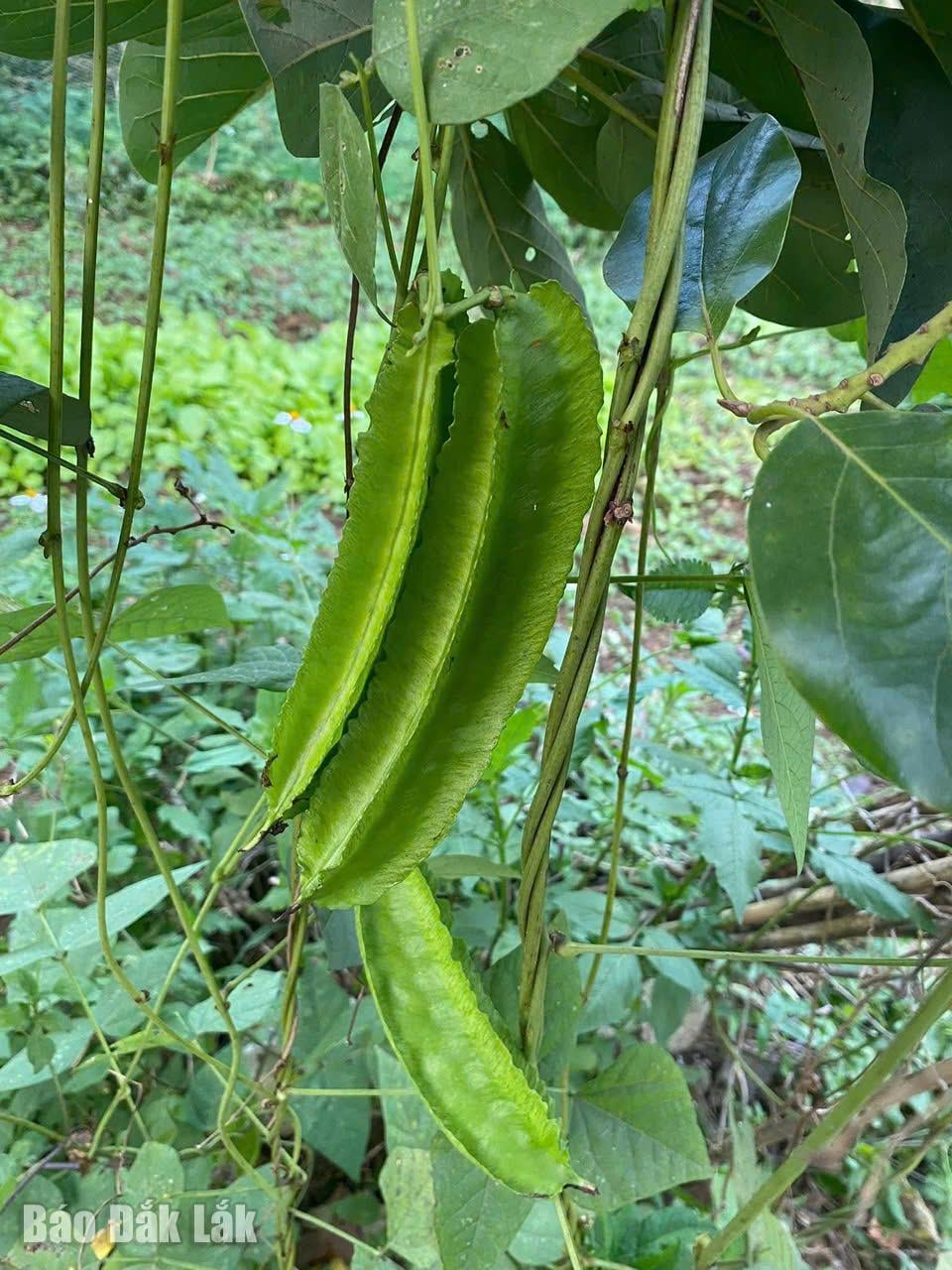 |
| Winged beans are a delicious and nutritious vegetable. Photo: Gia Nguyen |
On sunny days, the winged bean trellis looks like a green roof, bustling with sparrows perching and flying. But what I like best is when it starts to rain. When a gust of wind blows from somewhere, the winged bean trellis leaves tremble like young hands holding each other. My mother often looks up at the sky and says, “It’s going to rain, come inside!” But I like standing under the eaves, watching each cold raindrop fall on the leaves, listening to them break into a pitter-patter sound. The winged bean trellis after the rain smells of moist soil, the scent of old sunlight lingering in each vine wrapped around the bamboo pole.
Every rainy season, memories come flooding back. I remember the long, drizzling days, water flooding the yard, the chickens running around looking for shelter, and I loved reaching out to catch the raindrops on the tips of the green winged beans. At mealtimes, my mother would stir-fry winged beans with a bit of pork fat, making the whole kitchen smell great. The whole family thought it was the most delicious dish in the world. The winged bean plant, like my family, clings to life to live, to be green, despite the hard soil.
My hometown is in the Central region; growing up and leaving the village, I still carry in my heart the memory of the long bean trellis in the corner of the garden. It is not only a food, but also a place to preserve the first breaths of life.
The Central region - a land where everyone born carries a part of suffering. When the storm season comes, it is not just the wind that blows away the corrugated iron roofs but also the sudden floods that surge up the yard, sweep away the shore, and even the small wishes of the hard-working people. The people of the Central region collect every sunny day to overcome the rainy days. Just like the long bean trellis every year, it keeps bending in the storm, its slender yet sinewy body, silently preserving each small flower bud, waiting for the wind to calm down and the sky to clear up, then it will continue to give green buds.
During the stormy months, my father would tie more rope to the bean trellis with trembling hands, afraid that the storm would break it. Sometimes the storm was so strong that the entire roof would collapse, but the bean trellis still had a few stalks left. My mother picked up a few intact beans and stir-fried them for the meal after the storm. Each person ate a piece, but tears welled up in her eyes.
Loving the people of Central Vietnam is also loving yourself, the children who grew up in the storm. Some lost everything, some lost loved ones, but after the storm they still planted bean roots, replanted vegetable beds, and patched up the corrugated iron roofs to survive.
I rarely have the chance to return to my hometown. Now, the old trellis of winged beans is no longer there, but the smell of the bean leaves after the rain is still in me - the smell of a poor but warm childhood, of days when I feared storms and then overcame them. I am no longer the child who hid under the eaves watching the rain, but every time I see a rainstorm pouring through the street, I see a lush green trellis of winged beans shaking in the wind, as if calling me back. Where the long rainy seasons have become a way of life, where the winged bean trellises still silently grow after each storm.
Source: https://baodaklak.vn/van-hoa-du-lich-van-hoc-nghe-thuat/van-hoc-nghe-thuat/202512/nho-gian-dau-rong-mua-giong-bao-01a083c/













































































Comment (0)