

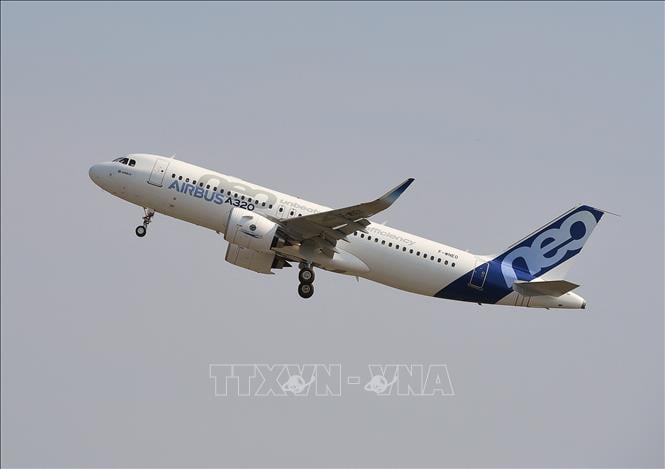
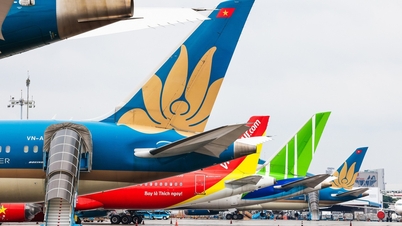
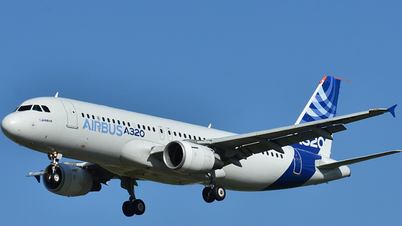
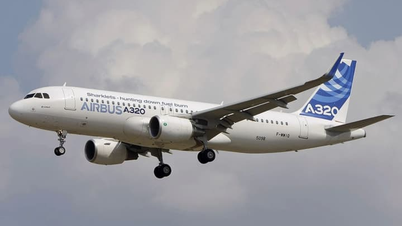
Dozens of airlines from Asia to the US said they have completed emergency software upgrades required by Airbus and global aviation regulators after a risk related to the impact of solar storms was discovered after a mid-air incident on a JetBlue A320, in which the plane was recorded losing altitude abnormally.
The unprecedented recall, affecting about half of the global A320 fleet—nearly 6,000 planes—was announced by Airbus just days after a potential link to the JetBlue incident emerged. After consulting with regulators, Airbus issued an eight-page warning to hundreds of airlines on November 29, demanding that the fix be implemented before the next flight, meaning a short-term grounding.
Some airlines said the update was quick. “I was really surprised that it was resolved much faster than I had initially feared,” said Steven Greenway, CEO of low-cost airline Flyadeal (Saudi Arabia).
However, not all airlines were able to complete the update immediately. Colombia’s Avianca said it would suspend ticket sales for some flights until December 8 as it needed more time to implement. In the early stages, many airlines had difficulty determining the extent of the impact because the general announcement did not specify the serial numbers of the aircraft that needed repair. One Finnair passenger said his flight was delayed on the runway for technical inspection.
After more than 24 hours of review, engineers pinpointed the specific aircraft. Many airlines later revised down the number of aircraft affected as well as the repair time, while Airbus initially estimated it would take about 3 hours per aircraft.
The main technical solution is to restore the old software version that controls the plane's nose angle, loaded directly into the system via a separate device placed in the cockpit to prevent the risk of cyber attacks. Some major companies have admitted that they have been behind schedule because they do not have enough data loading devices to handle dozens of planes at the same time.
A small group of older A320s have been identified as needing new computers rather than just software updates. The number of planes affected has been revised down to less than 1,000, well below the original estimate.
Experts say the incident shows Airbus is adopting a more cautious and transparent approach, learning from Boeing's previous 737 MAX crisis.
Airbus CEO Guillaume Faury's public apology is a rare move in the media- and legal-shy aviation industry.
According to analysts, the quick and straightforward response helps Airbus strengthen trust with authorities, customers and passengers in a context where flight safety is always a top priority.
Source: https://baotintuc.vn/xa-hoi/nhung-chi-tiet-moi-lien-quan-toi-viec-khac-phuc-loi-phan-mem-cho-may-bay-a320-20251201110230431.htm
![[Photo] National Assembly Chairman Tran Thanh Man receives First Vice Chairman of the Federation Council of the Federal Assembly of the Russian Federation](/_next/image?url=https%3A%2F%2Fvphoto.vietnam.vn%2Fthumb%2F1200x675%2Fvietnam%2Fresource%2FIMAGE%2F2025%2F12%2F02%2F1764648408509_ndo_br_bnd-8452-jpg.webp&w=3840&q=75)






















































![[Photo] General Secretary To Lam and his wife attend the 50th Anniversary of Laos National Day](https://vphoto.vietnam.vn/thumb/402x226/vietnam/resource/IMAGE/2025/12/02/1764644139308_1.jpeg)




























Comment (0)