

- Combating plastic waste: Ca Mau takes the initiative and takes the lead.
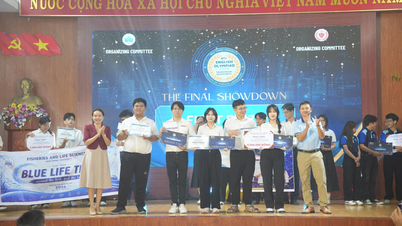
- The fashion show segment featuring recycled waste was unique.
- The school says no to plastic waste.
When people, businesses, and young people dare to think, dare to act, and dare to apply science and technology to solve real-world problems, that will be the foundation for Ca Mau to develop green, sustainable, and achieve a growth target of over 10% in the coming period.
In the southernmost region of Vietnam, people are quietly creating green "rebirths." From plastic waste along the coast and algae growing in shrimp ponds to shrimp heads and shells from seafood processing plants, everything is being re-evaluated with a new mindset: no longer considered waste, but becoming resources for the circular economy , the green economy, and sustainable development.
The common thread among these models is that they not only contribute to reducing environmental pressure but also create new products, new livelihoods, and new value for key industries in Ca Mau.
"Transforming" waste
Every morning, the Song Doc River is bustling with boats docking after long voyages at sea. But along with the holds full of fish and shrimp comes a large amount of plastic packaging, plastic bottles, and other plastic items discarded into the river and sea. These items, with their short lifespans, persist for a very long time in the environment.
Born and raised in the coastal town of Song Doc, Nguyen Trung Tinh (residing in Hamlet 12, Song Doc commune) understands better than anyone the pressure of plastic waste on the environment of his hometown's coastal region. After finishing 9th grade and following his family's work in mechanics supporting the fishing industry, he witnessed the large amount of plastic waste discarded daily after fishing trips.
“ Sometimes, seeing trash floating along the riverbanks and coastlines, I think, if we continue to dump trash like this, what will happen to the rivers and seas?” , Mr. Nguyen Trung Tinh pondered.
With that idea in mind, he boldly persuaded his family to invest nearly 5 billion VND in building a plastic recycling factory. Without formal training, he independently researched recycling processes and utilized his mechanical expertise to improve various pieces of equipment in order to reduce operating costs.
He also connects with scrap collectors, seafood processing factories and enterprises, and scrap yards both locally and internationally to purchase plastic and plastic bags for recycling at his workshop.
Through various stages of sorting, crushing, and processing, plastic packaging that was once considered waste is transformed into raw plastic pellets for production.
Each year, Mr. Tinh's facility collects approximately 200-300 tons of plastic waste, recycling it into over 100 tons of plastic raw materials to produce various products such as plastic bags, baskets, trays, crab nets, etc. Specifically for crab nets, he currently exports an average of 20-30 tons per month to China.
The recycling workshop not only provides an income of over 60 million VND per month for Mr. Tinh's family but also creates regular jobs for 13 local workers.
 Nguyen Trung Tinh's business has expanded its connections, exporting crab nets to China, averaging 20-30 tons per month.
Starting from a small recycling workshop in the coastal area of Song Doc, Nguyen Trung Tinh's model is contributing to the formation of a link in the local circular economy chain. There, waste is not only processed but also "reborn" into new raw materials, new products, and new value for life.
His entrepreneurial journey, starting from plastic waste, is a testament to innovative thinking stemming from practical experience, transforming the threat of environmental pollution into a driving force for green economic development.
 After being sorted and recycled into plastic pellets, plastic waste is further processed into various products for production and daily life.
Awakening the "green gold" in shrimp farms.
In the Dam Doi area – where shrimp ponds stretch along the salty waters – the locals affectionately call Le Thanh Dang, Deputy Head of the Economic Department of Dam Doi Commune, by the familiar name: "Dang the Farmer".
That nickname is associated with his years-long journey of tirelessly searching for a new direction for shrimp farming in his hometown, starting with a species once considered useless: seaweed.
 Mr. Le Thanh Dang is the originator of the model of growing seaweed in shrimp ponds.
Previously, algae growing densely in shrimp ponds was always considered an "enemy" of shrimp farmers. People tried to remove it, even using chemicals to kill it, believing that the algae affected the water environment and the growth of shrimp.
However, during his studies and research at Can Tho University, Dang realized that seaweed not only helps balance the ecosystem but can also become an economic resource if exploited properly. That idea followed him back to his hometown and began with quiet experiments in shrimp ponds in Dam Doi.
From 2021-2022, he implemented an improved extensive shrimp farming project combining black tiger shrimp with golden seaweed cultivation in the local area. The results exceeded expectations, with a more stable pond environment, reduced water treatment costs, better shrimp growth, and an economic increase of approximately 20% compared to the traditional model.
What many households appreciate about this model is that after harvesting, the seaweed can be dried and sold to traders, creating an additional source of income amidst the fluctuations in shrimp farming. From there, seaweed, once considered a "harmful weed," gradually became a "gift from nature" in the shrimp ponds of many households.
Mr. Ngo Van Mol, residing in Tan Phong B Hamlet, Dam Doi Commune, said: "Growing seaweed in shrimp ponds brings many double benefits: it helps filter the water, creates a natural food source for shrimp, and provides shelter for shrimp during the hot season."
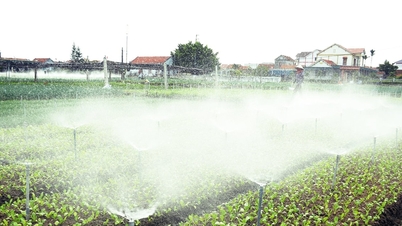
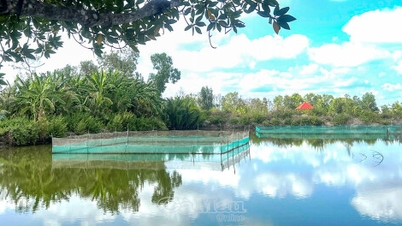
 The model of cultivating Thai seaweed by Mr. Ngo Van Mol, Tan Phong B hamlet, Dam Doi commune.
Not stopping there, Mr. Dang continued to collaborate with universities and businesses to research and expand the seaweed cultivation model in an improved direction; at the same time, he campaigned to establish cooperatives, supporting people with floating rafts, seaweed seedlings, and seaweed cultivation techniques to build a sustainable supply chain.
| Besides contributing to the ecological balance, this type of seaweed also brings significant commercial value. Dried seaweed is currently being purchased by the Dam Doi Seaweed Agricultural Service Cooperative in collaboration with a company at a price of 7,000-8,000 VND/kg, creating additional livelihoods for people in the aquaculture areas of Ca Mau. |
Behind the green seaweed rafts gradually covering the shrimp ponds lies the image of a dedicated official quietly starting from small beginnings to pave a more natural path for shrimp farming in Ca Mau. From a species once considered worthless, seaweed has now become "green gold" in high-tech shrimp ponds and lagoons, contributing to greener, cleaner ponds and creating more livelihoods for the people of Ca Mau.
When shrimp heads and shells are opened, it creates a circular economy.
If seaweed is a gift from nature, then seafood by-products are a "problem" created by humans themselves in the development of the seafood processing industry.
At seafood processing plants in Ca Mau, tons of shrimp heads and shells are separated daily from the production line. Previously, they were considered waste products that put pressure on the environment. But now, these by-products are opening up a new direction for the circular economy in the seafood industry.
Since 2019, Vietnam Food Joint Stock Company, located in Hoa Trung Industrial Park, Luong The Tran Commune, has been one of the pioneering enterprises implementing the deep processing of shrimp by-products.
From shrimp heads and shells, the company applies technology to extract chitin – a key ingredient in the production of chitosan. Chitosan is then used in many fields such as agriculture (organic fertilizer for crops), industry (hydrolyzed water treatment), and even medicine (gelatin for bee pupa shells).
 Mr. Quan Hong Thin, Deputy Director of Vietnam Food Joint Stock Company (far right), inspects the shrimp head processing input workshop at the company.
Mr. Quan Hong Thin, Deputy Director of Vietnam Food Joint Stock Company, said that shrimp heads and shells usually account for about 45% of the weight of raw shrimp. Each year, the company collects about 30,000-40,000 tons of shrimp shell by-products from within and outside the province to process into organic products for agriculture, aquaculture, and daily life.
Utilizing by-products not only helps businesses reduce waste treatment costs but also creates products with higher economic value, while contributing to reducing environmental pressure on the seafood processing industry.
With a humane business concept that contributes to environmental protection, Vietnam Food Joint Stock Company's shrimp head and shell processing and extraction projects have won numerous prestigious awards and certifications both domestically and internationally.
| Notable examples include the European Award in the "Future of Nutrition" category for a model that creates value from shrimp by-products; and the regional-level certification for outstanding rural industrial products in 2024, awarded by the Department of Local Industry and Trade, for a product line including hydrolyzed protein, hydrolyzed squid extract, hydrolyzed shrimp powder, and astaxanthin… |
 One of the products extracted from shrimp heads and shells is used to make pet food and aquaculture feed at Vietnam Food Joint Stock Company.
These results show that the innovative approach linked to deep processing technology is opening up many new values for the fisheries industry, not only enhancing the value of by-products but also contributing to promoting green growth and sustainable development in the locality.
What is valuable is that these models stem from very real needs: waste treatment, utilization of by-products, cost reduction, creation of new products, increased income, and environmental protection. This is precisely the spirit of the circular economy, green economy, and innovation that Ca Mau is striving for.
According to Dr. Quach Van An, Deputy Director of the Department of Science and Technology, the role of the science and technology sector is to identify, support, standardize, and replicate effective models. For models with potential, continued support is needed for quality testing, technical process refinement, trademark protection, traceability, market connectivity, and access to programs supporting technological innovation, innovative startups, and the development of the circular economy.
As perspectives shift, the circular economy is no longer a distant concept, but is becoming a reality in every factory and production model in Ca Mau. There, science and technology don't just start in large laboratories, but begin with everyday things: how to make waste more useful, how to utilize by-products more effectively, how to produce cleaner products, how to improve sales, how to minimize environmental damage... all of which bring great value and contribute to green development in this southernmost region of Vietnam.
Trong Nhan
Source: https://baocamau.vn/nhung-cuoc-tai-sinh-xanh-a129068.html






















































































Comment (0)