Fifty-one years since the reunification of the country, a time when the nation is stepping into a new era , these large-scale projects not only aim to improve basic infrastructure but have also risen to the level of iconic structures, enabling the country to stand shoulder-to-shoulder with the world's leading powers.
From these paths, we continue to write the story of Vietnamese pride…
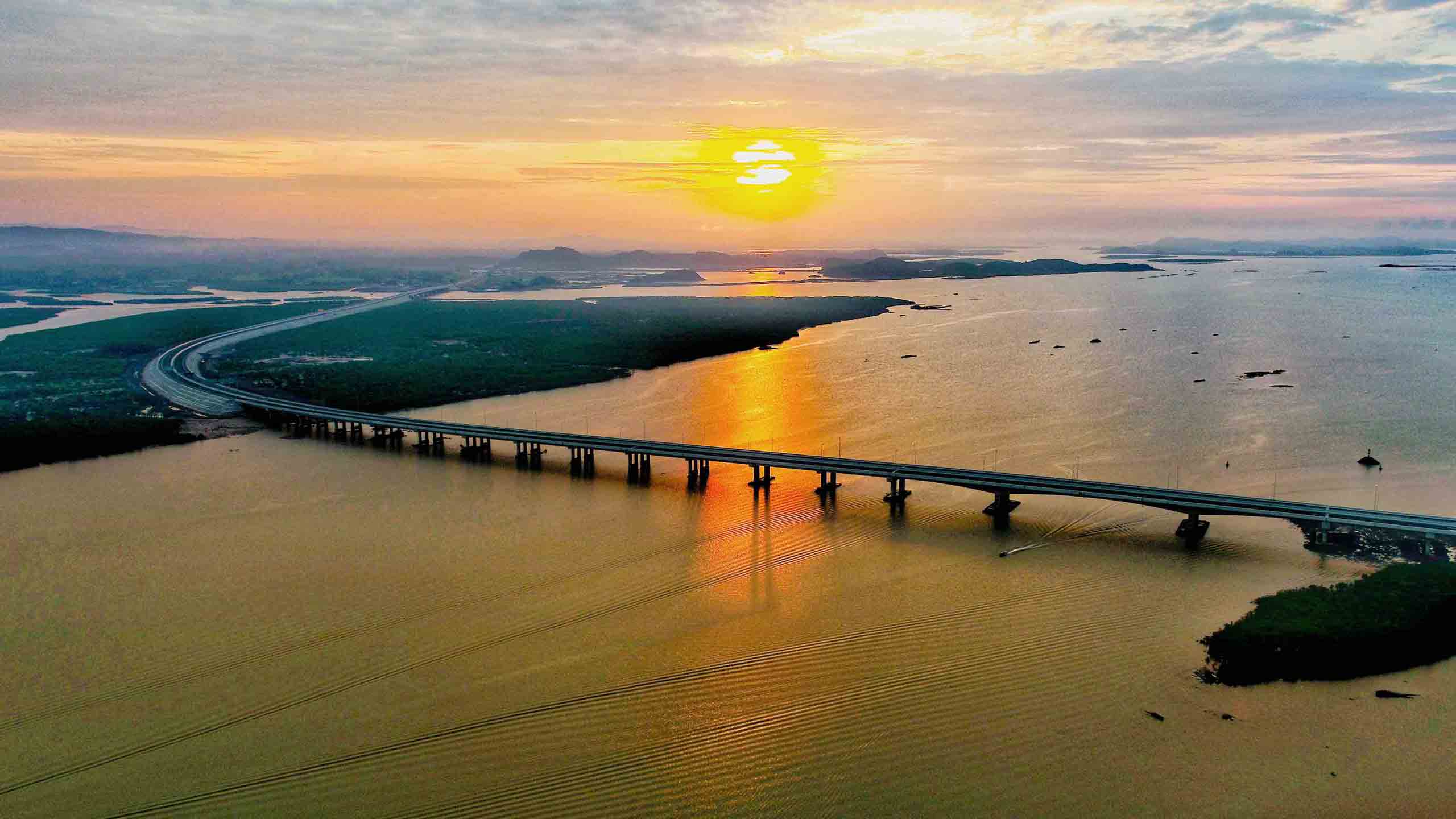
This afternoon (April 29th), the nearly 200km-long expressway stretching from Quang Ngai to the Cu Mong tunnel ( Dak Lak - formerly Phu Yen area) will officially be completed. Joining in the joyful atmosphere of the April 30th holiday, these brand-new roads, completed after thousands of days and nights of hard work by engineers and workers on the construction site, are ready to welcome the first vehicles.
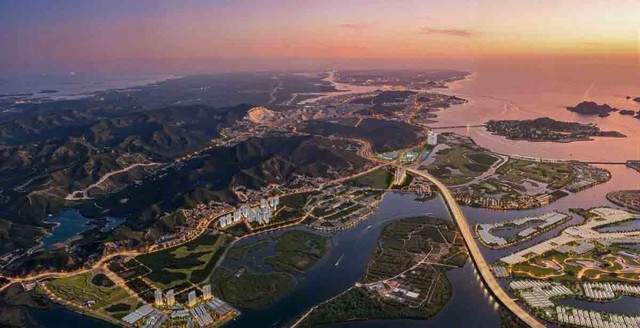
Vinhomes Global Gate Ha Long is positioned as the "New Hanoi " on the World Heritage Bay, creating a comprehensive standard of living, working, relaxing, and entertainment for a multi-generational elite community of domestic and international residents.
PHOTO: TL
Connecting the two key projects, the Quang Ngai - Hoai Nhon section (88 km long) and the Hoai Nhon - Quy Nhon section (over 70 km long), shortens the journey from Quang Ngai to the old gateway of Phu Yen from over 4 hours to just over 2 hours. Many people have been waiting for this moment to begin their journey.
Checking his tires one last time in preparation for his trip to Quy Nhon to "remove the asphalt" from the new highway, Mr. Tran Van Tuan (40 years old, residing in Quang Ngai), a driver with over 15 years of experience on the Central Vietnam route, excitedly said: "Previously, the approximately 180 km stretch from Quang Ngai to the old Phu Yen gateway was a nightmare for drivers, having to 'crawl' through numerous residential areas from Mo Duc, Duc Pho to Tam Quan, Phu My. Vehicles moved sluggishly at only 50-60 km/hour due to the large volume of mixed traffic, and passed through many intersections with densely packed houses and markets. Long traffic jams at Nhong Pass or in the towns along the old Binh Dinh area sometimes caused vehicles to queue for the entire afternoon."
"Driving on highways means endless miles of road filled with the fear of speed traps and densely populated residential areas. Every time you step on the gas, you have to be cautious because of the honking of trucks and the chaotic flow of traffic. Then there are the sharp curves, narrow stretches of road, and dusty conditions on long journeys lasting ten hours or more – it's incredibly stressful. For drivers like us, nothing is better than having new, well-maintained roads to drive on. In these times of high demand but high fuel prices, using the highway is the best option; it saves both time and fuel," shared Mr. Tran Van Tuan.
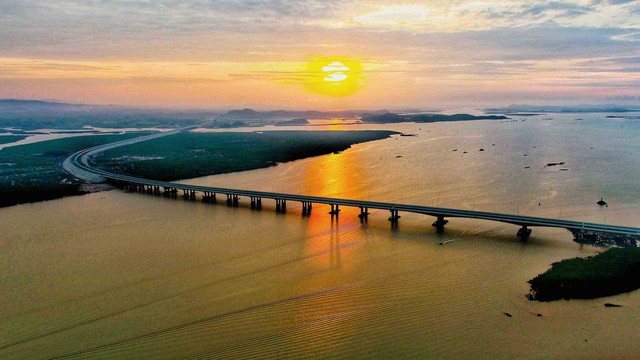
Modern infrastructure projects, from roads and railways to aviation, are increasingly affirming Vietnam's stature.
PHOTO: NH
In that sense, the nearly 200 km of expressway along the central coast is a major boost for the logistics system, directly connecting economic zones, industrial parks, and especially major seaports like Quy Nhon with neighboring localities.
In particular, the completion of tunnel number 3 on the Quang Ngai - Hoai Nhon route, with a record length of 3.2 km, marks a significant milestone affirming the remarkable maturity of Vietnam's infrastructure engineering industry. While 20 years ago, the Hai Van 1 tunnel required the complete guidance of foreign experts, today, at this key project, from surveying and design to construction using the modern Austrian NATM tunneling technology, everything is mastered by the hands and minds of Vietnamese people.
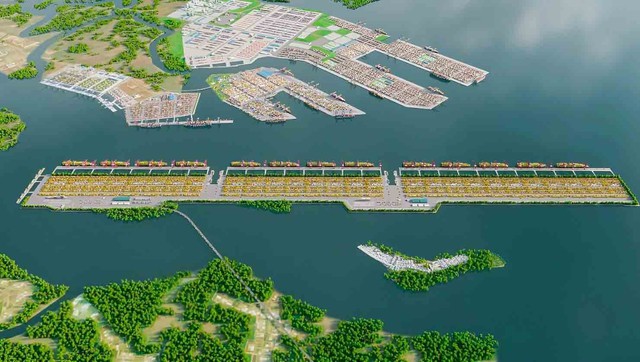
Perspective view of the Can Gio International Transshipment Port.
PHOTO: TL
The successful completion of Tunnel No. 3 – the longest tunnel through the mountains along the entire North-South Expressway Phase 2 – on the extremely complex and unpredictable geological terrain of Central Vietnam, even ahead of schedule, has proven that Vietnamese bridge and road engineers are no longer in the position of "apprentices" but can now independently forge roads through mountains, writing a new chapter in the history of conquering nature to connect the nation's transportation arteries with the intelligence and courage of the Vietnamese people.
Another "mega" transportation project that commenced during this important holiday was the Ho Chi Minh City Metro Line 2 (Line 2), specifically the Ben Thanh - Thu Thiem section. Following the success of Line 1, the commencement of the section crossing the Saigon River, connecting the old city center with the Thu Thiem peninsula, holds significant importance.
This is not just an ordinary elevated or underground train line, but a vital artery connecting the two most important centers of Ho Chi Minh City: the historical core (Ben Thanh) and the future financial center (Thu Thiem). Implementing a metro project that runs underground through a densely populated urban area, beneath the Saigon River, requires the most complex construction techniques. Therefore, the project is seen by experts as an extremely difficult "test" of the coordination and technological application capabilities of Vietnamese engineers in dealing with weak geological conditions and the pressure of high water levels.
The success of this project also confirms that we have the capability to undertake highly complex urban underground construction projects, on par with those in major cities like Tokyo, Seoul, or London .
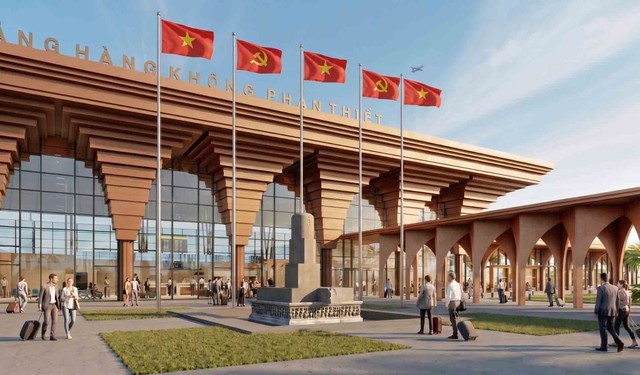
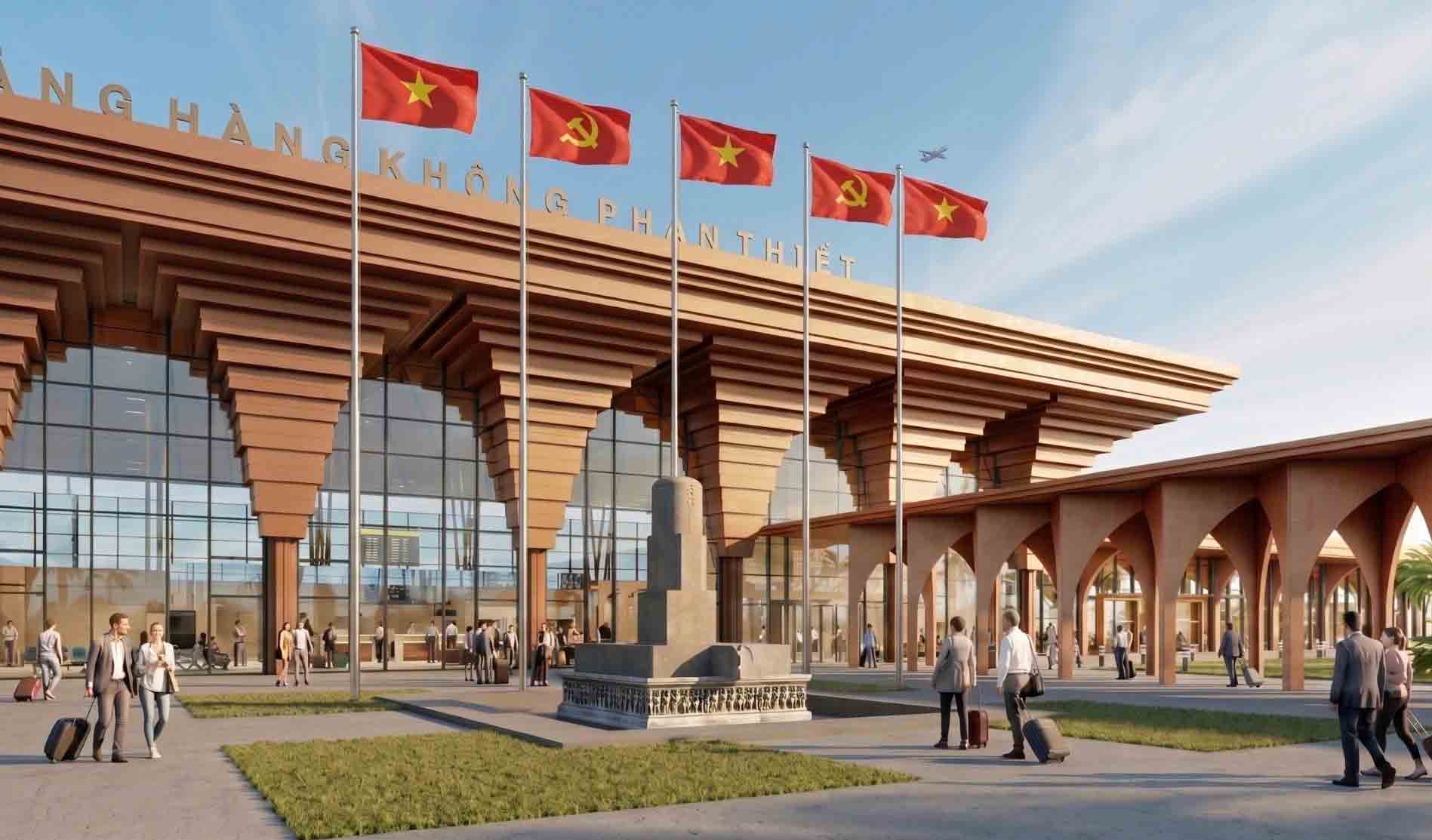
Phan Thiet Airport is not just a stopover point, but also a place where heritage takes flight.
PHOTO: TL
Prior to this, Vietnamese pride was strongly rekindled just before the April 30th holiday when the first high-speed railway line in the country officially commenced construction on April 12th. The 120km line connecting Hanoi, Bac Ninh, Hai Phong, and Quang Ninh laid the first brick for a historic milestone in Vietnam's realization of the high-speed rail dream – a symbol of developed nations. The choice of a design speed of 350 km/h, the highest in current world high-speed rail standards, also demonstrates Vietnam's readiness to embrace the most modern technology.
Moreover, this project is also a symbol of innovation and groundbreaking thinking. The image of the high-speed train gliding at 350 km/hour through heritage areas is not only a source of technical pride, but also proof of a modern, dynamic, and vibrant country, fully capable of conquering the technological heights of humanity.
...to mega-projects that are changing the face of the country.
The highlight of this holiday season's groundbreaking ceremonies is undoubtedly Ho Chi Minh City, where a series of mega-projects symbolizing the new era are being launched simultaneously.
The most prominent project is the Can Gio International Transshipment Port. This is the "soul" of the strategy to transform Ho Chi Minh City into a coastal city. Granting the investor approval decision to the consortium of investors including Vietnam Maritime Corporation (VIMC), Saigon Port, and MSC, the world's largest container shipping company, not only initiates an infrastructure project but also launches an entire international-scale logistics ecosystem. The project's greatest significance lies in "awakening" the Can Gio area, transforming it from a purely agricultural suburban area and biosphere reserve into a global trade gateway.
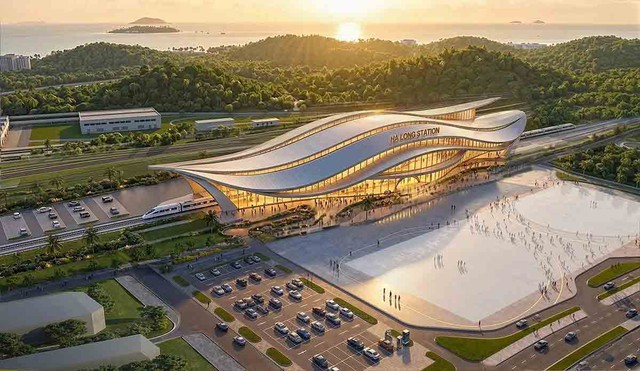
Perspective view of the high-speed railway station in Ha Long.
PHOTO: TL
In the field of urban development, the Central City Square project (Component Project 4) in the core of the Thu Thiem new urban area, covering an area of over 20 hectares, has also officially commenced. This is the most important item in the Central Square and New Administrative Center complex.
With a projected total investment of thousands of billions of VND for the square and riverside park area alone, the project is expected to be the largest community space in Vietnam, hosting international-level political and cultural events. Upon completion, it will be the new "heart" of the city, harmoniously connecting historical identity with the modernity of a smart city.
With a capacity equivalent to 10 national stadiums, this place is not only a venue for major political events but also an iconic architectural landmark. The combination of a modern plaza and a lush green riverside park creates an absolutely open space where people can truly "touch" the historic Saigon River. This is also the final piece to complete the picture of Thu Thiem as a continental-level financial and cultural center.
Located at the northwestern gateway, in Xuan Thoi Son commune, Vingroup will today commence construction of the 880-hectare International University Urban Area. This project not only marks a significant transformation in the urban landscape of the Northwest area of Ho Chi Minh City but also contributes to positioning the area as a new sustainable development hub. Strategically situated on a regional connectivity axis, the project is directly connected to the Southern Key Economic Zone via National Highway 22, Ring Road 3, and the Ho Chi Minh City - Moc Bai Expressway. In the near future, when Metro Lines 2 and 3 connecting to the project become operational, the International University Urban Area will become a new growth engine, elevating the position of the Northwest area of Ho Chi Minh City on the regional economic map.
The project is expected to become a model of a world-class knowledge park city in Asia, a hub for the academic community, startups, and elites, thereby promoting the knowledge economy and creating long-term growth momentum for the entire region in the new development phase.
A few days earlier, Vinhomes, a subsidiary of Vingroup, also launched the Global Gate Ha Long project, a city of wonders in the heritage bay of Quang Ninh, covering an area of 6,200 hectares with a total investment of VND 456,639 billion, equivalent to nearly USD 18 billion. To date, Global Gate Ha Long is the largest real estate project in the country, more than twice the size of Vinhomes Can Gio (Ho Chi Minh City) and six times the size of the project on Vu Yen Island (Hai Phong). Notably, Vinhomes Global Gate Ha Long is envisioned as the first city in the world to meet ISO 37125 standards – the latest international standard for sustainable urban development. Combined with its location on the Heritage Bay, the project creates a living ecosystem that is green in environment, clean in air, and balanced in physical and mental health.
Based on three core pillars: Connectivity - Regeneration - Excellence, and nearly a dozen high-class amenity ecosystems, Vinhomes Global Gate Ha Long aims to create a truly livable "urban wonder" – where growth goes hand in hand with sustainability, amenities go hand in hand with health, and the living experience is at the center.
Meanwhile, the aviation sector also marked a landmark project when the Lam Dong Provincial People's Committee and Sun Group Corporation held a groundbreaking ceremony for the Phan Thiet Airport project – the civil aviation component. This event not only marks a new era of air connectivity for the Mui Ne - Phan Thiet region and the South Central region, but also the first time an airport in Vietnam has been built with the philosophy: Architecture is not just for admiring, but also for feeling the layers of meaning of the captivating Champa civilization. From here, each flight taking off will carry the identity and aspirations of this land to the world.
A declaration on the capacity for development in the new era.
Dr. Tran Viet Anh, Vice Rector of Hung Vuong University, commented: "A series of world-leading expressways, airports, seaports, and metro projects will impact all aspects of socio-economic life. The first and most noticeable impact will be the reduction of logistics costs, shorter travel times, and increased regional connectivity. As bottlenecks are gradually removed and the flow of goods and services is unblocked, the competitiveness of businesses and the economy will be enhanced. This is the 'soft infrastructure' for long-term growth. Furthermore, large-scale projects will trigger a spillover effect of investment across all sectors, from industrial real estate and satellite cities to logistics services, forming new value chains."
Notably, according to Dr. Tran Viet Anh, the majority of projects launched during this period involve or are spearheaded by the private sector. This reflects a clear shift in investment vision and structure: from dependence on the state budget to a public-private partnership (PPP) model with private sector leadership. The role of the private sector lies not only in capital but also in modern, flexible management thinking, rapid implementation speed, and access to international technology and standards. This rise aligns with Vietnam's major strategic direction: developing the private economy into the most important driving force of the national economy.
"The wave of groundbreaking ceremonies for major projects around April 30th is not just about infrastructure, but also a declaration of Vietnam's development capacity in the new era. Vietnam has moved beyond the basic foundation-building stage and entered a period of high-quality, large-scale, and symbolic investment. In this, the private sector has risen to become the pillar of development. All these factors clearly show that Vietnam is shaping itself not just as a low-cost manufacturing destination, but as a dynamic, competitive economy with a long-term vision in the region," commented Dr. Tran Viet Anh.
Expanding on this perspective, Dr. Dinh The Hien, Director of the Institute for Applied Informatics and Economics Research, pointed out that current large-scale projects are no longer localized but aim for regional connectivity. A new ring road or expressway not only serves a single province/city but connects the entire key economic region, opening up development opportunities for neighboring localities and creating conditions for the formation of new growth poles outside traditional urban areas. Similarly, the formation of a megacity will be a driving force for attracting investment, especially high-quality FDI.
With comprehensively planned transportation, service, and technology infrastructure from the outset, megacities have become attractive destinations for international businesses not only in real estate but also in manufacturing, trade, retail, healthcare, education, and entertainment. Currently, foreign businesses are always seeking "new growth poles" with large land reserves, good infrastructure, and a civilized living environment. Megacities that meet these criteria have the potential to attract a strong investment value chain, helping localities increase budget revenue and form a sustainable economic ecosystem.
"I believe this will be a turning point in the next 10-20 years. Satellite megacities will become integrated centers for living, working, manufacturing, and services, contributing to reducing the burden on the city center and creating new growth drivers," Dr. Dinh The Hien anticipates.
Iconic structures contribute to enhancing the national image.
While in the past, Vietnam focused on solving the problem of "having roads to travel on and bridges to cross," it has now entered a new phase: constructing iconic, world-class projects. Many projects not only meet functional needs but also aim for aesthetic and architectural value; national symbolism and regional and global competitiveness. These modern, large-scale projects also contribute to enhancing the country's image in the eyes of international investors.
Dr. Tran Viet Anh , Vice Rector in charge of Hung Vuong University
Megacities will be the driving force for Vietnam's breakthrough.
This is a historic opportunity, but it's not a one-size-fits-all approach. If done correctly, focusing on a few key core areas, infrastructure and mega-city projects will become the leverage to propel Vietnam forward, raise living standards, attract foreign investment, and restructure the entire national urban development model. This will be the driving force for us to rise to the top of Southeast Asia and enter the top 20 economies in the world.
Dr. Dinh The Hien , Director of the Institute for Applied Informatics and Economics Research
Source: https://thanhnien.vn/nhung-dai-cong-trinh-thay-doi-dien-mao-dat-nuoc-185260428191631365.htm






























































































Comment (0)