

After the reorganization, Ninh Kieu Ward has an area of 5.42km2 with a population of nearly 120,000 people, becoming the most populous administrative unit of Can Tho city. This place converges many tourist attractions that visitors cannot miss.

Ninh Kieu Wharf - a famous tourist and cultural destination of Can Tho city, formed in the 19th century. The wharf is located on the right bank of the Hau River, between the confluence of the Hau River and the Can Tho River, adjacent to Hai Ba Trung Street.
A favorite experience for many tourists is to cruise on the Hau River at night. On the cruise, you can enjoy Western specialties, listen to traditional music and admire the sparkling city lights.
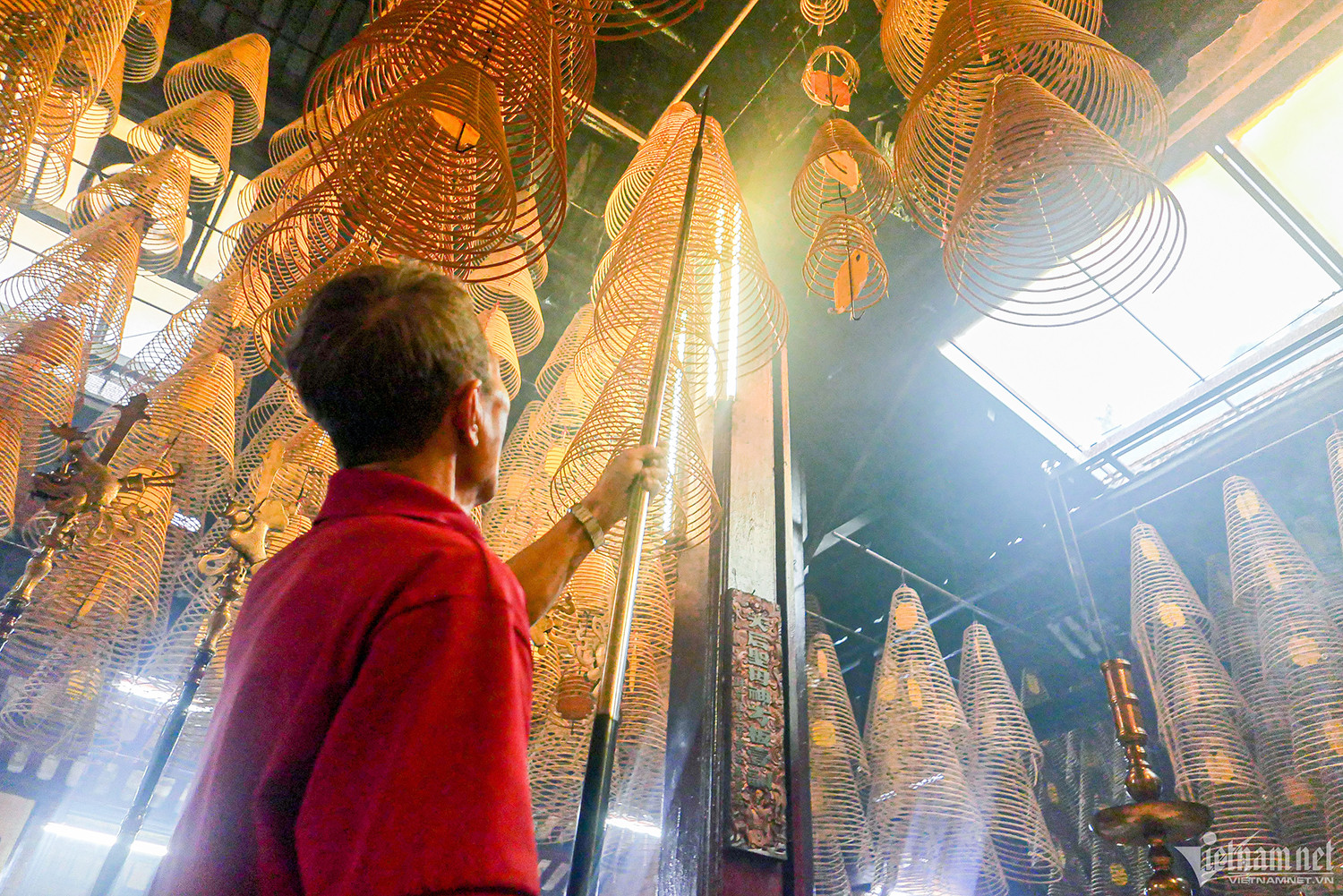
Ong Pagoda (Hai Ba Trung Street) was built by Chinese people of Cantonese origin, China more than 120 years ago, with unique architecture, and is a place for religious activities and cultural exchange.
Unlike some other Chinese pagodas, Ong Pagoda in Can Tho does not have a stele recording the names of those who started construction or the year of its establishment.
The temple was classified as a national historical site in 1993 and is a frequent destination for locals. Some come here to pray for luck in their careers, others for peace in their lives.

Can Tho Market (Hai Ba Trung Street) was established in the early 20th century and is considered the market with the most beautiful architecture in the Mekong Delta, and is also a check-in location not to be missed when coming to Tay Do.
Today, the market has been renovated with a unique design, airy and harmonious space. The market specializes in selling souvenirs, handicrafts, travel accessories, and traditional costumes.

Ninh Kieu pedestrian bridge (also known as love bridge) is 199m long, 7.2m wide, designed with a soft S-shaped curve. The bridge body has 2 expansion points, built with a lotus platform and resting place with a roof system.

Visitors can visit the pedestrian bridge at any time of the day, but the most beautiful times are: early morning when the sunrise rises amidst the misty fog; in the afternoon when the sunset turns the water surface golden; and at night when the cool breeze blows gently, enjoying the panoramic view of the city and Can Tho Bridge - the longest cable-stayed bridge in Southeast Asia, glowing in the lights.

Can Tho Prison Historical Site (Ngo Gia Tu Street) is a prison built by the French colonialists in 1876-1886 under the name "Prison Provinciale" (the largest provincial prison in the West at that time). The building was solidly built, with thick walls, 3.6-5m high, surrounded by iron fences. The guard towers for control were 6m high, with floodlights.
The building is divided into two areas, with 21 collective detention cells (capacity of 30-40 people) and many small cells used for solitary confinement.

Ninh Kieu walking street - one of the city's prominent areas will be expanded and reorganized from this December, aiming to create a rich night cultural and artistic space; prolong the stay of tourists and improve the quality of spiritual life of the people.
In addition to traditional cultural and artistic activities continuing from the previous walking street, the new street will add exchange activities between the audience and artists of various types of reformed opera, folk songs, etc.
Source: https://vietnamnet.vn/nhung-dia-diem-tham-quan-noi-tieng-o-phuong-dong-dan-nhat-can-tho-2467179.html

![[Photo] National Assembly Chairman Tran Thanh Man receives First Vice Chairman of the Federation Council of the Federal Assembly of the Russian Federation](/_next/image?url=https%3A%2F%2Fvphoto.vietnam.vn%2Fthumb%2F1200x675%2Fvietnam%2Fresource%2FIMAGE%2F2025%2F12%2F02%2F1764648408509_ndo_br_bnd-8452-jpg.webp&w=3840&q=75)






















































![[Photo] General Secretary To Lam and his wife attend the 50th Anniversary of Laos National Day](https://vphoto.vietnam.vn/thumb/402x226/vietnam/resource/IMAGE/2025/12/02/1764644139308_1.jpeg)



























Comment (0)