

Most vehicles are compatible with E10 gasoline.
Struggling to push her nearly 20-year-old Air Blade motorbike out of the house to go to the market, Ms. Truong Ngoc Yen, a resident of Cat Lai Ward (Ho Chi Minh City), expressed her concern about whether her motorbike would still be usable after switching to E10 gasoline. "I only use the motorbike to go to the market near my house, once every few days, so I only have to refuel once a month. With the upcoming switch to E10 gasoline, I wonder if the motorbike will be fine and if the gasoline will last a long time?" Ms. Ngoc Yen questioned.
Mr. Bui Hoang An, 50 years old, residing in Dong Thanh commune (Ho Chi Minh City), works as a motorbike delivery driver and is also very worried about his old motorbike. "I earn an unstable income from driving, and I have to worry about family expenses, so I don't have enough money to invest in a new motorbike. I bought this Future motorbike in 2004, and it's still running well, but if I switch to E10 gasoline, I don't know if it will run normally," Mr. An wondered.

E10 gasoline will be widely used to replace traditional mineral gasoline (A92, A95) starting June 1st.
PHOTO: QT
Regarding this issue, Mr. Nguyen Minh Dong, an automotive engine expert, said that newer cars and motorcycles, especially those manufactured from around 2011-2012 onwards, with electronic fuel injection (FI/EFI) and ethanol-resistant gaskets and hoses, can all use E10 gasoline well. However, older vehicles, those that are rarely driven, or those that have been left unused for a long time need to be careful because ethanol strongly absorbs moisture, which can cause difficulty starting the engine or slight hesitation in acceleration.
Mr. Le Trung Tinh, Chairman of the Ho Chi Minh City Automobile Transport Association, also shared: Vehicles unsuitable for E10 gasoline include very old motorcycles using carburetors; cars and motorcycles manufactured before 2000; and classic or collectible vehicles. In addition, some early Chinese motorcycles, "grassroots" vehicles using materials with poor alcohol resistance, old generators, lawnmowers, and motorboats are also incompatible with biofuel.
According to experts, E10 gasoline is simply gasoline blended with about 10% bioethanol (processed and distilled from dried cassava chips, molasses, etc.). This type of fuel has become standard in many countries because it helps reduce emissions, decrease dependence on petroleum, and increase octane rating.
"If a car is driven regularly, the gasoline is constantly being circulated and replaced, so E10 hardly has time to absorb enough water to cause stratification. That's why new cars in Europe, America, or Thailand still run on E10 every day without any serious problems," affirmed Mr. Nguyen Van Hao, a chemical engineer, adding that if the car is operated regularly, properly maintained, and the gasoline isn't left to "age" for too long, E10 can function just as stably as any other modern gasoline.

Most modern cars are well-suited to E10 gasoline, except for very old models.
PHOTO: QT
The "soft phase-out" of outdated and polluting vehicles.
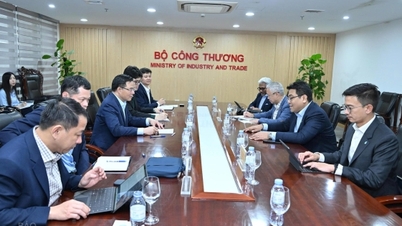
According to Article 4 of Circular No. 50/2025/TT-BCT of the Ministry of Industry and Trade , the roadmap for transitioning to the use of biofuels is clearly and specifically defined. From June 1, 2026, all unleaded gasoline circulating in the market must be blended into E10 gasoline for use in gasoline engines nationwide. This means that traditional RON92 and RON95 gasoline will officially cease to be sold as pure base gasoline. In addition, the blending and use of E5 RON92 gasoline will continue until December 31, 2030, to ensure stability during the transition period and allow businesses and consumers to gradually adapt to the new fuel types.
Commenting on the changing trends in the motorcycle and car market, a leader of a vehicle inspection center in Ho Chi Minh City said that the widespread application of E10 bioethanol fuel could create a phenomenon of "soft phase-out". This expert analyzed: "The high-risk group for E10 gasoline doesn't have precise figures yet, but it's estimated that only about 5-15% of the total number of vehicles in circulation are currently using it, concentrated in older carburetor motorcycles, agricultural vehicles, classic cars, and vehicles with little maintenance. The majority are compatible with E10 gasoline; the issue is the user experience. The group of older vehicles that will still thrive after 2030 includes early-generation Wave Alpha motorcycles, Thai Dream, Sirius carburetor models; older Innova cars, older Vios models… These older vehicles only need to replace the fuel line with ethanol-resistant one, regularly clean the fuel tank/carburetor, and perform better maintenance to still run on E10. Meanwhile, very old vehicles will gradually disappear after 2030. Older two-stroke vehicles like Minsk, Simson; or Cub motorcycles, and cars from before 1995-2000 are the groups most strongly affected. However, E10 gasoline doesn't mean that emissions regulations are becoming increasingly stricter." "With tight maintenance and increasingly high spare parts costs, car owners will naturally proactively replace parts and gradually get rid of their old vehicles."
Mr. Le Van Quyen, the owner of a car garage in Ho Chi Minh City, also commented: By 2030, what will make it difficult for very old cars to survive are increasingly high emission standards, policies restricting old cars from entering city centers, rising environmental fees, and the growing trend of using electric vehicles. "E10 gasoline won't make old cars disappear immediately, but it will contribute to the faster phasing out of very old, dilapidated, or poorly maintained cars over time," Mr. Le Van Quyen remarked.
Regarding concerns about the quality of E10 gasoline, the Ministry of Industry and Trade requires gasoline traders, organizations, and individuals involved in the production, import, blending, and trading of biofuels and biogasoline to fully meet the conditions regarding infrastructure and legal regulations; develop domestic and imported fuel sources to ensure a proactive supply of biogasoline as regulated. The production and trading of raw materials and biofuels must comply with relevant plans and regulations, ensuring product quality according to national technical standards and published standards.
The Ministry of Industry and Trade is also coordinating with relevant ministries and agencies to draft a resolution to be submitted to the Government , which would allow petroleum wholesalers to hire testing services from qualified units as stipulated by law to check the quality of petroleum according to national technical standards. This aims to complete the application process for granting certificates of registration for petroleum blending facilities.
Source: https://thanhnien.vn/nhung-loai-xe-nao-can-luu-y-185260518193559768.htm






























































































Comment (0)