

During my time as a factory worker, I rented a room of just over 10 square meters located deep in an alley, costing 1.3 million dong per month, not including electricity and water. Above the toilet was a low loft near the corrugated iron roof, just big enough to lay a thin mattress. Below it were an old plastic table, a rice cooker, and a mini gas stove.
"As long as there's a place to sleep, that's all that matters."
The alley leading to the boarding house in Di An ward (Ho Chi Minh City) where I rent a room is winding like a labyrinth. On both sides are rows of low, corrugated iron-roofed rooms crammed together so close that people walking opposite have to step aside to avoid each other. The smell of sewage and mold mixed with the heat radiating from the corrugated iron roofs makes the air thick and suffocating from early afternoon.
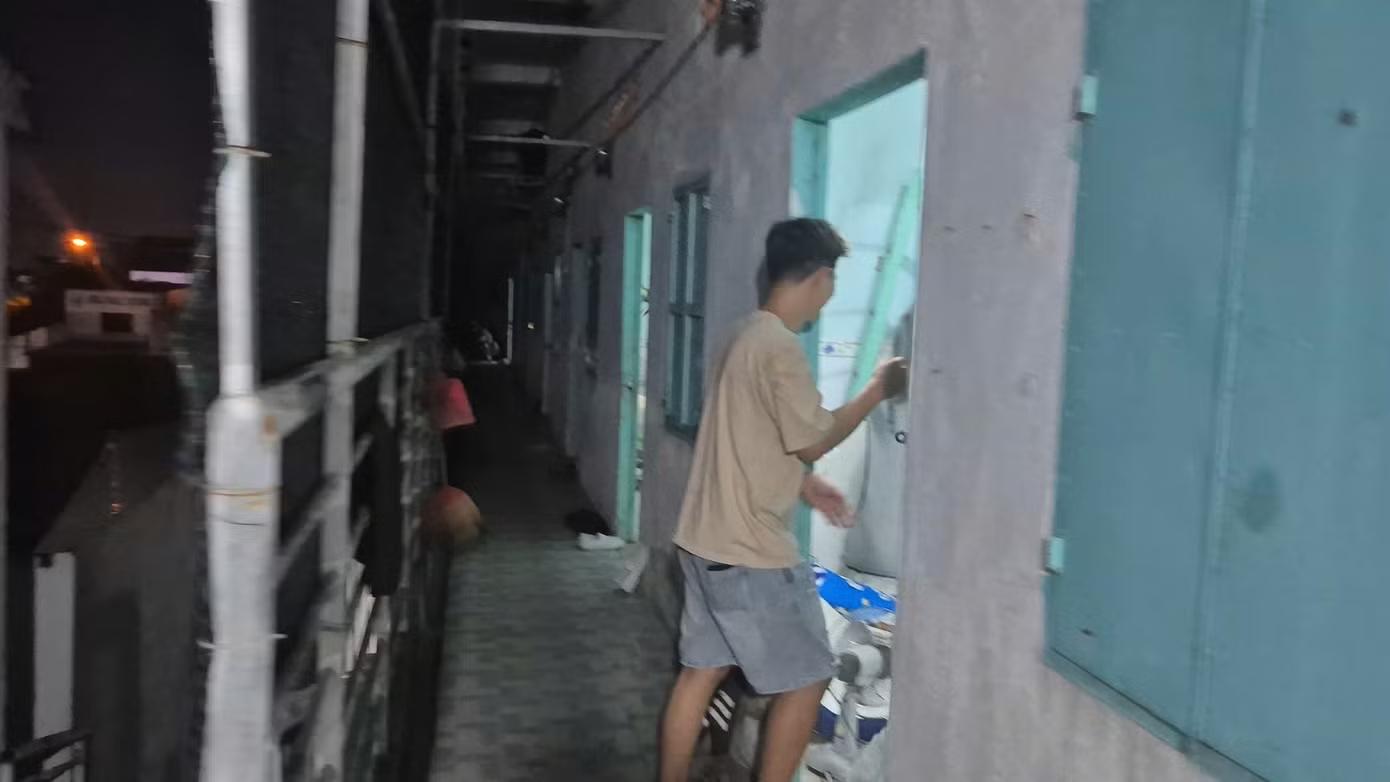
In early May, the eastern region experienced a scorching heatwave. At midday, the room felt like a furnace. After just a few minutes, sweat poured down like a shower. The heat radiating from the corrugated iron roof made my head spin and made it difficult to breathe. Some days, I had to rush to a roadside cafe or a park several kilometers away just to escape the heat.
However, for most of the workers living here, it's perfectly normal. "We've gotten used to it," said Mr. Tu, the tenant next door, with a slight smile. "We go to work at the company during the day, sleep for a few hours at night, and then go back to work the next morning."
Anh Tú, originally from a remote area of Đồng Nai province, works as a mechanic for a company specializing in metal welding. After graduating from a mechanical engineering college, he earns approximately 13 million VND per month after four years of work. With continuous overtime, his income can reach nearly 18 million VND. His wife is a private kindergarten teacher, earning around 5 million VND per month.
"Other places with more space have higher rents. I work all day, so a room just needs a place to sleep and shower. I want to save every penny to send back home and build up for the future," he said.
In the sweltering room, the most valuable possessions were an old, squeaky electric fan and a worn-out telephone. The kitchen corner contained only a few eggs, some vegetables, and a rice cooker faded with age. Anh Tú said his greatest wish was to own a small house. But with house and land prices skyrocketing while workers' wages remained virtually stagnant, that dream was becoming increasingly distant.
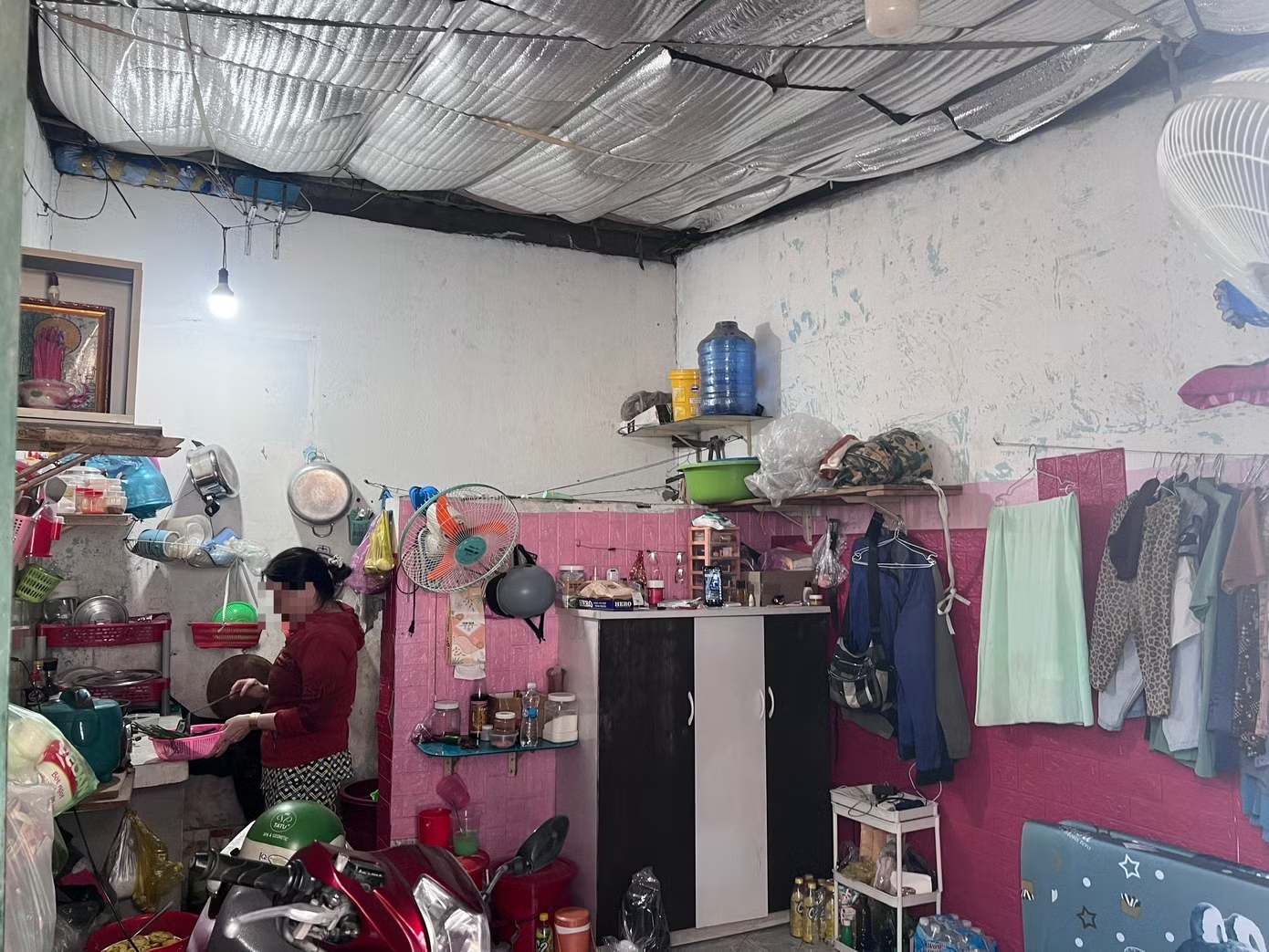
Ms. Minh, a worker I had recently met, took me to her cramped room, less than 9 square meters, in a lodging area near Phu Dinh ferry terminal (Phu Dinh ward, Ho Chi Minh City), which she rented for only 1.1 million VND per month. The road leading to the lodging area was rough and rocky; in sunny weather, dust flew everywhere, and when it rained, it turned into mud. The room was low-ceilinged and unbearably hot. Even with the wall fan running at full power, it couldn't dispel the heat.
"I've lived here for a long time. It's really hot, but it's cheap, so I try to stay. I work all day, and all I need is a place to sleep," she said, then her voice suddenly lowered because this area was about to be demolished, and she didn't know where she would find a place at this price again.
In many workers' dormitories, there is virtually no spiritual life. There are no proper parks, no playgrounds, and no libraries or community centers. After work, laborers simply stay confined to their hot rooms or sit on the porch enjoying the rare night breeze.
The conversations revolved around overtime, gas prices, children's school fees, company layoffs… Occasionally, laughter would erupt, quickly giving way to weariness.
Choose dead fish, stale meat, and wilted vegetables.
In workers' markets, hunting for bargains, buying dead fish, leftover meat, and wilted vegetables is very common. Workers have to carefully budget every penny for their daily meals. As prices rise, their meals become increasingly meager.
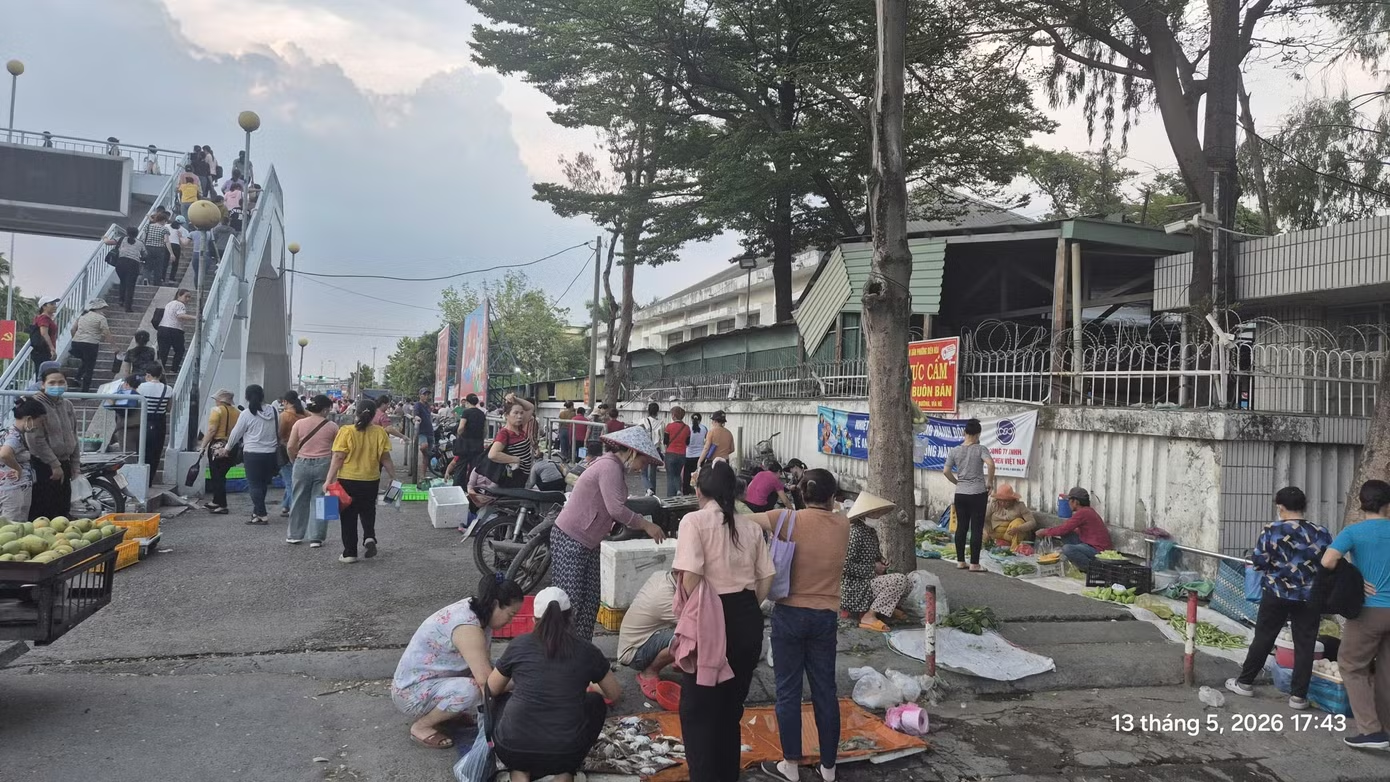
I followed Ms. Lan (a garment factory worker) to a makeshift market near the Song Than industrial zone. It's called a market, but it's really just a few tarpaulins spread out along the roadside, with vegetables, fish, and meat displayed close to the ground. Ms. Lan stood for a long time in front of a pork stall before quietly walking over to buy a bunch of water spinach and a few bruised tomatoes. "Meat is so expensive now. Vegetables are cheaper," she said softly.
At the makeshift market near PouYuen company in Tan Tao ward, Ms. Huong (a footwear factory worker) walked past many stalls before stopping to buy half a kilogram of pre-prepared mackerel at a cheap price, along with a few lightly cooked chicken thighs.
"The food isn't very fresh anymore, but if you marinate it properly, you can still have a decent meal," Ms. Huong said with a smile. That smile, however, haunted me. Because behind that "sufficient food" lay countless meticulous budgeting calculations. Rent, utilities, gas, money sent home... all of it eroded the already meager wages of a factory worker.
Many young people arrive in the city with dreams of a better life. But after years, they still live in cramped rooms, eat meager meals, and live in constant anxiety over rising prices. They work tirelessly in factories during the day, but often their dinner consists only of cold rice, instant noodles, or boiled vegetables with soy sauce.
The sound of children's voices is absent.
The most haunting aspect of workers' dormitories isn't the cramped conditions, the heat, or the lack of basic necessities, but the absence of children's laughter.
Many young couples have to send their children back to their grandparents' homes in the countryside because they cannot afford to support them. Ms. A. (29 years old, working at Tan Thuan Export Processing Zone) calculated that rent and food expenses consume almost all of her income. If she sends her children to a private daycare center, it would cost several million dong more each month – an amount beyond her means.
"There were times when I was video calling and heard my child crying, asking for me, and all I could do was turn away," Ms. A. said, her voice choking with emotion.
Her daughter is only four years old, but she has been living away from her parents for almost two years. Every time she returns home, the little girl clings to her mother. But after only a few days, she packs up and goes back to the factory. "Bringing her here means there's no one to look after her, and sending her to an informal daycare center is unsafe. I love my child so much, but I don't know what to do," Ms. A. said.
I will always remember the story of Mr. Duong, 40 years old, from Thanh Hoa province. He and his wife have been factory workers in Dong Nai for over a decade. Their combined income is over 23 million VND per month, but they have to raise three children, pay rent, school fees, and send money back home to their grandparents to care for their two older children.
"We have to be very frugal to make ends meet," he said with a sad smile. Once, his daughter called and asked, "When are you and Dad coming back to the countryside?" The man was silent for a long time before softly saying to me, "Sometimes I really want to go back, but what would I do to support my child if I went back...?"
In industrial hubs, many parents can only see their children back home with their grandparents through phone screens. Many children have to constantly change schools because their parents change jobs. This fragmented education leads to many children learning slowly, lacking communication skills, and dropping out of school early. Parents' dreams of a better life inadvertently leave a huge void in their children's childhoods.
The anxieties of middle age are also evident in the eyes of workers. As a job seeker myself, I truly felt the helplessness of turning 40. At a textile factory in the Tan Tao industrial park, the HR officer shook their head and returned my application when they saw I was over 40. Many other businesses only recruit workers aged 18 to 35.
According to statistics from the Ho Chi Minh City Employment Service Center, in the first three months of 2026, nearly 33,000 people received unemployment benefits, with those aged 30-45 accounting for more than half. Although businesses still have a high demand for recruitment, the labor market increasingly prioritizes young workers who can quickly adapt to technology and modern production environments.
Ms. Huong (from Ca Mau province) is in a similar state of anxiety. She used to work as a factory worker, but due to a lack of orders, she, like many others, lost her job. She searched for work in various factories but was rejected because of her age.
"At my age, the only jobs I can do are freelance work, domestic help, or ride-hailing services. Getting a job in a factory is practically impossible," she sighed.
On my last night in the boarding house, I lay in the sweltering attic, listening to the clatter of the old fan and the distant sounds of trucks. The screens of mobile phones shone brightly in the neighboring rooms. Perhaps they were calling home to their children or parents, or calculating how much they needed to spend to make ends meet this month.
Outside, the city still shines brightly with lights, and skyscrapers continue to rise. But behind that glitz and glamour lie people silently sacrificing their youth, health, and even family togetherness…
(to be continued)
Source: https://tienphong.vn/nhung-phan-doi-cong-nhan-tro-khu-o-chuot-om-mong-doi-doi-post1844685.tpo






































































































Comment (0)