

Pivot from the field
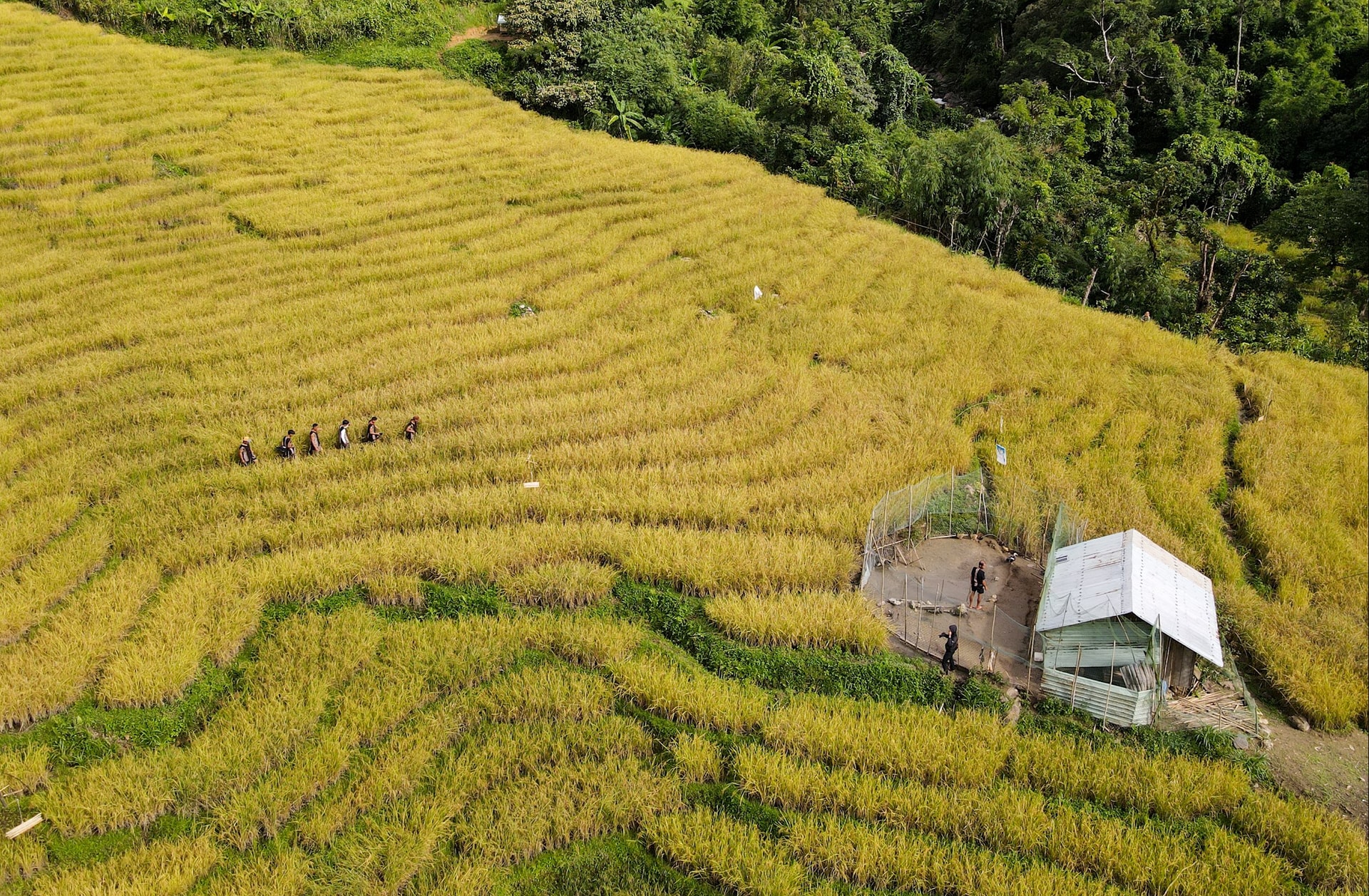
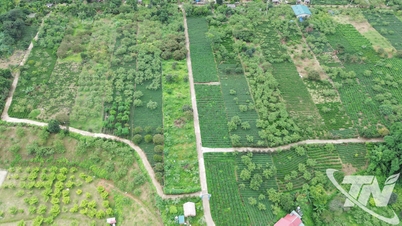
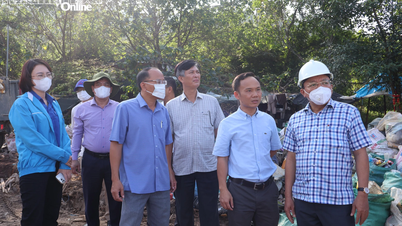
In area C72, village 4, Tra Tap commune, a barren hill area for many years is gradually being transformed by the people into a combined farming model, growing rice on terraced fields, growing vegetables, and raising livestock and poultry. People divide each plot of land, take advantage of nearby water sources and choose suitable varieties, thanks to which the model has initially created a stable livelihood.
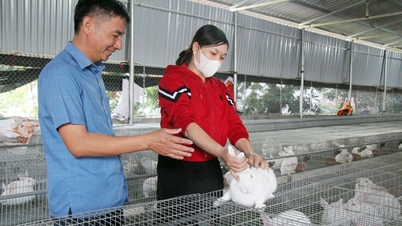
From the capital source of the National Target Program for Sustainable Poverty Reduction, the Commune People's Committee has supported 1,000 breeding chickens for 12 households, implemented in 2 cycles, each cycle lasting 2 months to create a breeding rotation suitable to the conditions of each household.
Mr. Pham Quang Huong, a member of the model, said that people divided each part of the land, taking turns taking care of livestock and crops. The location of the model is in an area less affected by landslides, near a water source, so it is suitable for long-term implementation. "In addition to economic value, land improvement also helps people be more proactive in production, gradually forming stable farming habits instead of the traditional methods of the past," Mr. Huong said.
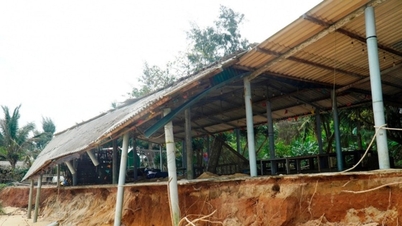
Mr. Le Trung Thuc, Chairman of the People's Committee of Tra Tap commune, said that the locality has faced a lot of pressure since switching to a two-level government model. The dossiers of old projects have to be reviewed from the beginning, the budget transfer process is still stuck, and officials hold many positions, so the implementation progress is inevitably delayed. In addition, the application of unit prices and default prices of the National Target Program for Sustainable Poverty Reduction is not really clear, making the appraisal and dossier preparation process difficult. In addition, natural disasters and landslides in recent times have also significantly narrowed the land fund for production.
However, the commune still strives to put the program into practice. The locality has established 7 projects to support production development with a total capital demand of more than 10.3 billion VND, of which the state budget supports more than 7.8 billion VND. Household groups have started building barns, digging holes, processing the ground and preparing to accept plant and animal varieties for settlement according to regulations.
"The locality chooses a cautious approach. Any project implemented must be effective and suitable to the conditions of each area, thereby creating a stable livelihood for the people," said Mr. Thuc.
Remove bottlenecks
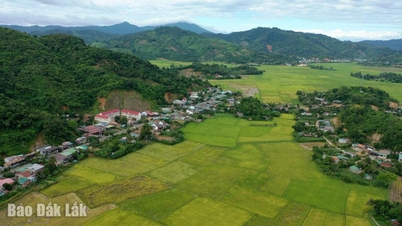
In Tra Leng commune, the allocation and disbursement of career capital under the National Target Program for Sustainable Poverty Reduction is implemented for each project and sub-project, with the total capital plan for 2025 - including transitional capital, reaching more than 18.5 billion VND. Of which, the central budget supports more than 15.8 billion VND and the city budget allocates more than 2.7 billion VND. To date, the commune has disbursed more than 12 billion VND, reaching 64.6%.
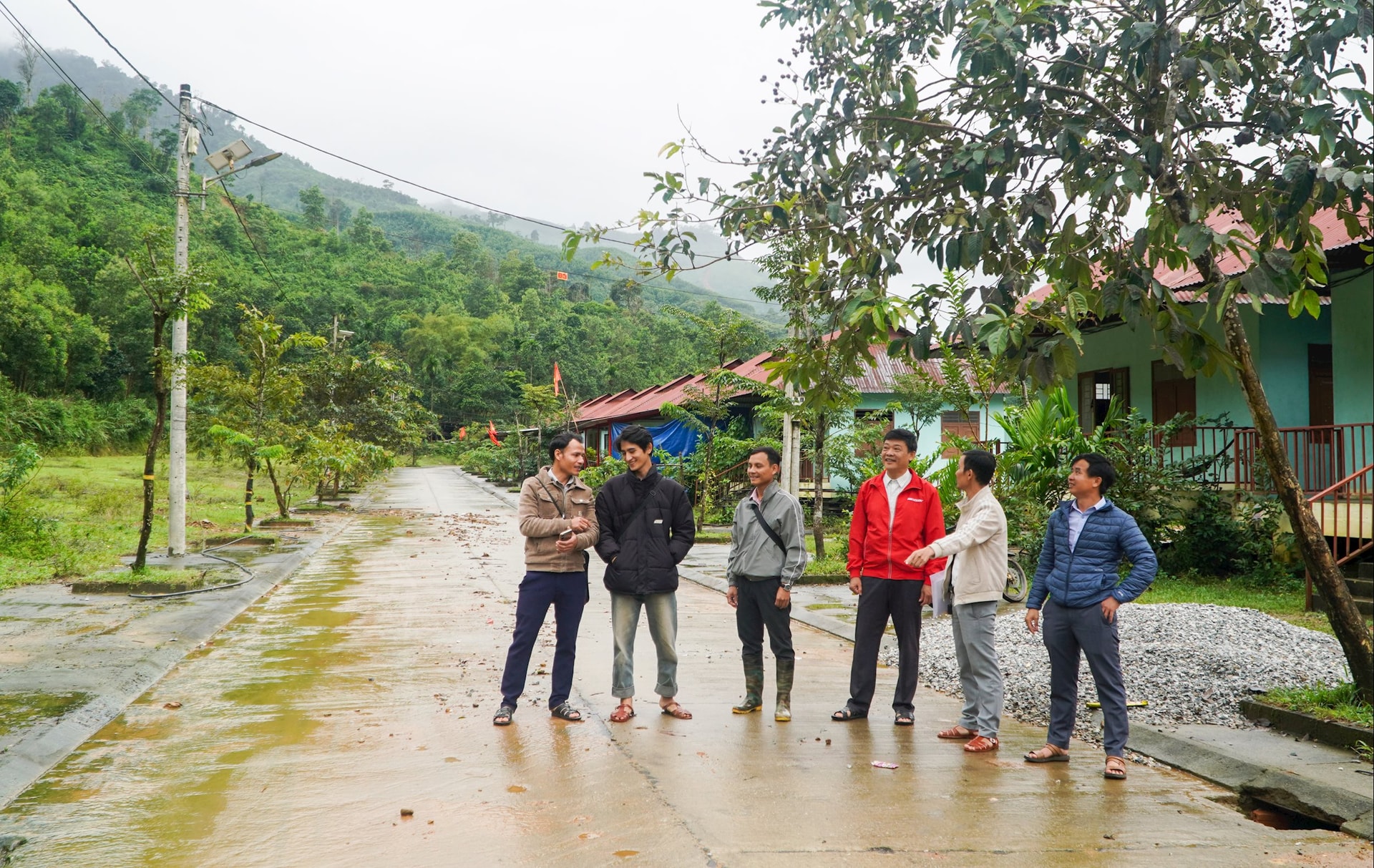
Particularly, 100% of the socio-economic infrastructure investment projects have been disbursed, helping to complete many essential items serving the people's lives and production. Livelihood support projects, poverty reduction models and production development are also being implemented according to the roadmap, although there are still some low disbursement capital due to procedural problems, especially the stages of determining unit prices and selecting beneficiaries.
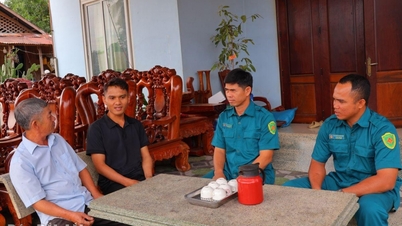
Mr. Chau Minh Nghia, Chairman of Tra Leng Commune People's Committee, said that the unit is focusing on removing bottlenecks in reviewing documents, and at the same time coordinating with specialized agencies of the city to ensure the progress of each project.
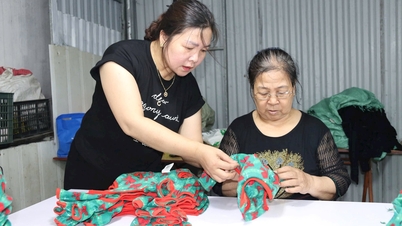
“Many models to support crop cultivation, livestock breeding, and nutrition improvement are being implemented in a way that closely follows people’s needs, prioritizing practical sub-projects that can generate direct income. The locality also focuses on housing projects, and has so far completed the disbursement of nearly 7.5 billion VND, contributing to solving the urgent needs of poor and near-poor households in the area,” Mr. Nghia added.
According to the report of the Department of Agriculture and Environment, the total capital plan to implement the National Target Program on Sustainable Poverty Reduction in 2025 (including capital for the period 2022 - 2024) reached more than 1,060 billion VND; of which the central budget accounted for more than 786 billion VND, the local budget more than 273 billion VND. By November 25, the city had disbursed more than 362 billion VND, reaching 34.2%. The central capital has disbursed nearly 40%, while the local capital is just over 18%.
This shows that the pressure on the grassroots level in the process of allocating counterpart resources after switching to a two-tier government model is quite large. The large volume of documents, the requirement to carefully review each project, and the change of personnel in charge of some units have affected the progress of many items.
A representative of the Department of Agriculture and Environment said that in the coming time, the city will focus on reviewing and classifying commune and village officials to organize training and guidance on program implementation, especially prioritizing newly assigned officials to ensure consistency in the process.
Based on the allocated funding, units must speed up the disbursement process, ensuring the right beneficiaries and support content. At the same time, review the minimum local counterpart capital according to regulations, thereby ensuring that each project and sub-project is completed according to the set goals, contributing to improving the effectiveness of sustainable poverty reduction work throughout the city in 2025.
Source: https://baodanang.vn/no-luc-trien-khai-cac-du-an-giam-ngheo-ben-vung-3312264.html


![[Photo] National Assembly Chairman Tran Thanh Man receives First Vice Chairman of the Federation Council of the Federal Assembly of the Russian Federation](/_next/image?url=https%3A%2F%2Fvphoto.vietnam.vn%2Fthumb%2F1200x675%2Fvietnam%2Fresource%2FIMAGE%2F2025%2F12%2F02%2F1764648408509_ndo_br_bnd-8452-jpg.webp&w=3840&q=75)












































![[Photo] General Secretary To Lam and his wife attend the 50th Anniversary of Laos National Day](https://vphoto.vietnam.vn/thumb/402x226/vietnam/resource/IMAGE/2025/12/02/1764644139308_1.jpeg)

















Comment (0)