


The fields of abundantly fruited chayote are bringing in hundreds of millions of dong in income for farmers in Hop Kim commune.
With the spring vegetable harvest in full swing, the atmosphere in the fields of hamlets such as Doi 3, Dam Gian, Nam Bai, Men Boi, Nam Thuong, etc., is bustling and busy. Ms. Bui Thi Thao, a farmer from Doi 3 hamlet, said: "From 4-5 am, people are already out in the fields harvesting to ensure traders can transport the goods downstream before 10 am. Many households with large areas of land have to hire extra workers to ensure the harvest progresses on schedule."
At this time, the harvesting of zucchini and bitter melon is basically complete, and farmers in the commune are focusing on harvesting luffa gourds – one of the main crops in the area, covering over 65 hectares. Mr. Bui Van Thuc from Nam Bai hamlet shared: From sowing the seeds to harvesting luffa gourds takes about 2 months, and the fruiting period lasts from 45-60 days. This is an easy-to-grow and easy-to-care-for crop with stable yields and is popular in the market, so sales are favorable.
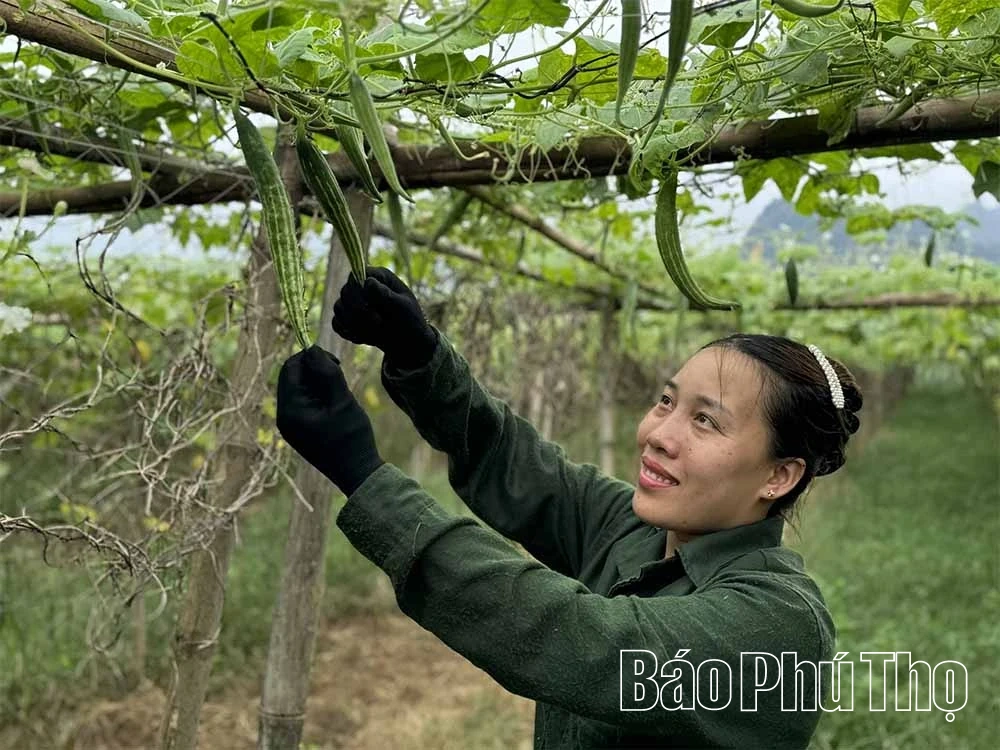
Farmers in Mến Bôi hamlet are delighted as their fruit-bearing vegetables fetch good prices and yield abundant harvests.
Locally, many households have achieved revenues ranging from hundreds of millions to billions of dong from intensive vegetable and fruit cultivation, a prime example being the family of Ms. Bui Thi Thu in Men Boi hamlet. Ms. Thu said: Previously, her family only cultivated on a few acres of allocated land. Recognizing the high economic efficiency of growing vegetables and fruits, she rented more land, expanding the area to 2 hectares.
On this cultivated land, her family hires seasonal laborers to carry out tasks such as sowing seeds, building trellises, caring for the plants, and harvesting. According to Ms. Thu, during peak season, her family harvests over 1 ton of chayote per day, while during off-peak season they achieve 4-5 quintals per day. With an average selling price of about 10,000 VND/kg, each harvest brings in an income of over 300 million VND.
Previously, farmers in the commune had completed harvesting various fruits such as green squash, bitter melon, and cucumbers. With an average selling price of 10,000 VND/kg for bitter melon and cucumbers, and 6,000-8,000 VND/kg for green squash, they generated hundreds of millions of VND in revenue per season.
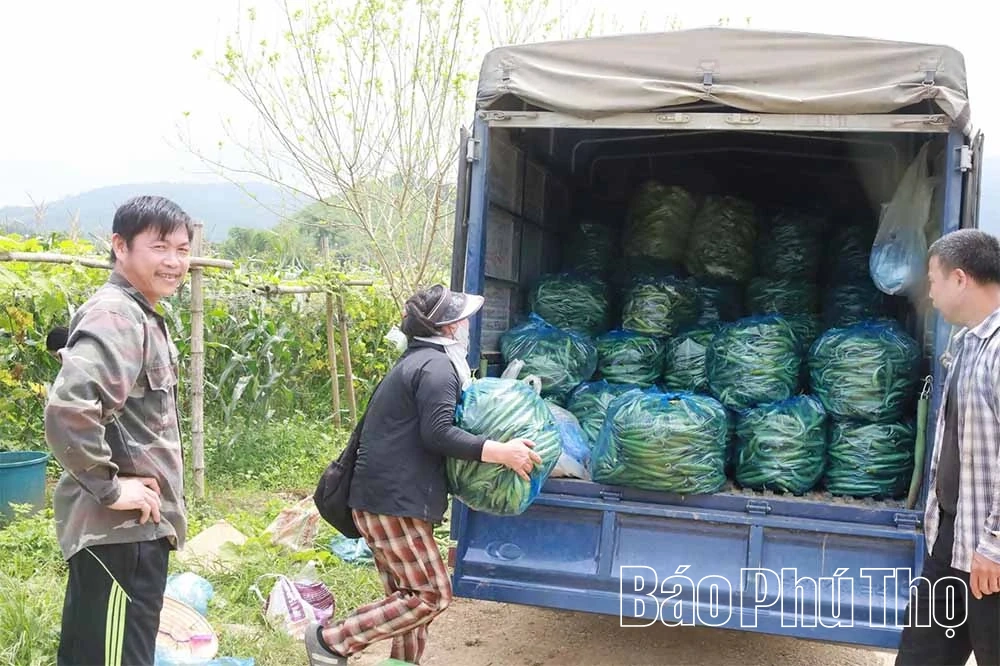
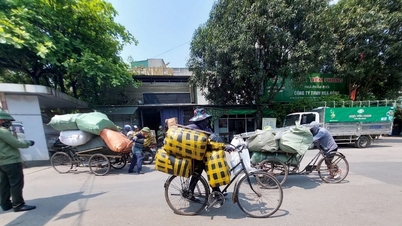
Traders organize the purchase and transportation of agricultural products for the commodity production area of Hop Kim commune.
According to rice farmers in Nam Bai hamlet, in the coming time, after harvesting the rice fields, they will immediately start preparing the land and planting new crops. For households intensively cultivating vegetables and fruits in many hamlets, after the harvest, they will quickly clean up their gardens, reinforce the trellises, and prepare the land for planting. Production efficiency is the driving force promoting intensive farming, increasing crop yields, and changing the crop structure in the locality. Farmers are enthusiastically expanding the area of vegetable and fruit cultivation; renting or borrowing rice fields from households within and outside the commune to increase the scale of cultivation.
Mr. Bui Van Luyen from Nam Thuong hamlet shared: "Seeing many households successfully growing fruit trees, and realizing that leaving the fields idle is wasteful, as 'every inch of land is worth its weight in gold,' I've been growing green squash as an additional crop for the past few years. The yield and price of green squash are stable, so my family's income has improved significantly, and our quality of life has been enhanced."
The movement for intensive farming and multiple cropping has spread to all 23 villages and hamlets, especially those with convenient irrigation systems and alluvial plains along the Boi River. According to Mr. Bui Thanh Hai, Vice Chairman of the Commune People's Committee, the local government is orienting the development of crops suitable to the soil conditions, climate, and market demand. At the same time, they continue to promote and encourage households to utilize their cultivated land, actively practicing staggered planting to optimize land use time, increase the number of crops per year, and ensure the planting season for subsequent crops, preventing land from being left fallow.
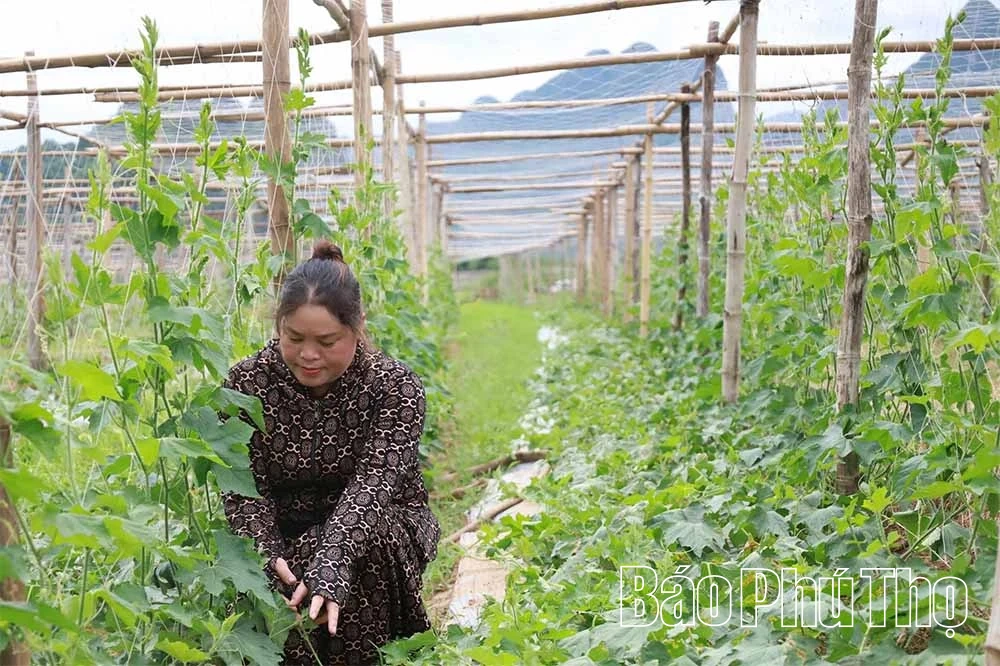
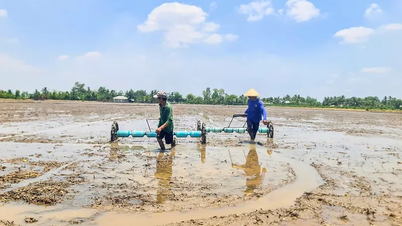
Farmers in Hop Kim commune practice staggered cropping to increase the efficiency of intensive farming.
To achieve high production efficiency, local authorities and specialized agencies focus on guiding farming techniques; establishing appropriate investment norms for seeds, materials, and fertilizers according to different levels of intensive farming; and coordinating with villages to guide people in flexibly applying these techniques to each production area, ensuring good irrigation for the crop season.
With diligent work and a commitment to never letting the land rest, the fields of Hop Kim commune remain lush and green, yielding "sweet fruits" year-round, contributing to the aspiration of farmers to become wealthy. From the fields after the harvest, the people have formed commodity production areas that bring high economic value, effectively exploiting the potential of the land, diversifying the crop structure, and increasing income.
Thanks to intensive farming and intercropping, the average income value of the commune reached 170-200 million VND/hectare of cultivated land; the average per capita income in 2025 is expected to reach 57.4 million VND/person/year; and the multidimensional poverty rate will decrease to 8.76%.
Bui Minh
Source: https://baophutho.vn/nong-dan-xa-hop-kim-khong-cho-dat-nghi-253849.htm



























































































Comment (0)