

Overcoming natural disasters
Thanh Hoa's agricultural production in 2025 will face many challenges. Consecutive storms and floods have caused severe damage, affecting more than 33,492 hectares of rice, of which over 27,000 hectares lost up to 70% of their productivity. Right at the time when the crop season entered its crucial stage, African swine fever broke out in 130 communes, causing more than 61,555 pigs to be destroyed - a figure that shows the great pressure on the province's livestock industry.
Despite the difficulties, Thanh Hoa 's agricultural production in the first 9 months of the year was still maintained thanks to the flexible management of the industry and local authorities. The whole province planted 388,802 hectares, exceeding the set plan, the crop structure was flexibly converted with more than 1,723 hectares of ineffective rice land converted to high-value crops - a restructuring trend taking place strongly in many localities.

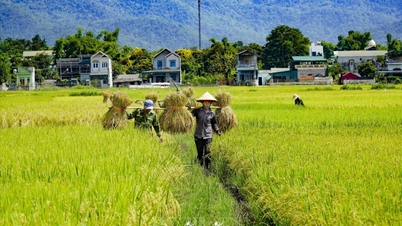
Thanh Hoa's rice production in 2025 is basically successful despite many natural disasters. Photo: Thu Thuy.
According to the Department of Agriculture and Environment of Thanh Hoa, the important highlight of the province's agricultural sector in recent years is the process of land accumulation and concentration. The province has 3,038 hectares of land accumulated for large-scale production, paving the way for high-tech application and attracting investment enterprises. Associated production areas with consumption contracts continue to be maintained stably with a scale of more than 80,000 hectares, helping people feel secure in production and reducing risks from market fluctuations.
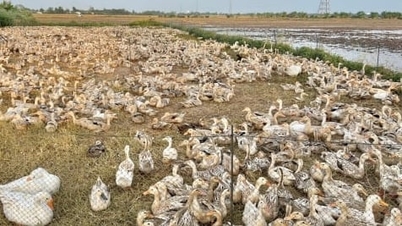
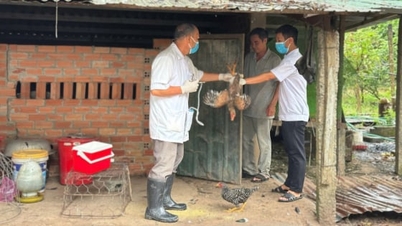
Despite the impact of the epidemic in the first 9 months of 2025, the livestock sector has been maintained. The cattle herd increased by more than 15%, the pig herd increased by 11.4%, and the poultry herd increased by 7.1% over the same period. The output of fresh meat reached 241.6 thousand tons, maintaining the growth momentum thanks to the drastic implementation of biosafety work. Vaccination for livestock reached 102.4% of the plan, and the foot-and-mouth disease outbreak in Thach Thanh (old) was completely handled after only one month - proving the effectiveness of veterinary supervision at the grassroots level.
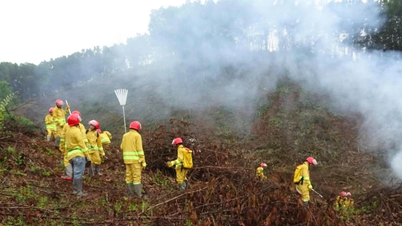
Forestry also contributed positively to the overall picture. In the first 9 months of 2025, the province planted 9,250 hectares of new forests, stably protected 600,836 hectares, maintaining a coverage rate of nearly 54%, close to the annual target. Timber exploitation output reached 820,000 m³, up nearly 8% over the same period. Notably, despite prolonged heat and high risk of forest fires, Thanh Hoa did not have any fires. This is the result of proactively implemented forest protection plans. Forest management was tightened, 171 violations were handled, contributing over 1.8 billion VND to the budget.
Aquaculture shifts towards sustainability
The fisheries sector continues to maintain growth in the context of complex weather and environmental fluctuations. In the first 9 months of the year, the total aquatic product output of the province reached 166,452 tons, up 1.68%, of which 106,012 tons were exploited, mainly from sea fishing. Thanh Hoa currently has 6,555 vessels, of which more than 1,000 are 15m or longer, which are the core force going offshore to stick to the sea. Propaganda and monitoring against IUU fishing have been implemented more closely, helping fishermen gradually get used to complying with regulations and transmitting journey data.

Anti-IUU fishing work has been strictly implemented by Thanh Hoa, helping fishermen gradually get used to complying with regulations and transmitting journey data. Photo: Thu Thuy.
Aquaculture has recorded a clear shift towards improving efficiency and sustainability with a farming area of 19,200 hectares, equal to the plan. Brackish water farming models such as shrimp combined with crab and fish on over 3,200 hectares, clam farming model on over 1,000 hectares, bring high economic value. The province currently has 5,740 fish cages on rivers and coastal areas - a development direction that helps many households in mountainous and coastal areas stabilize their income.
Environmental monitoring and seafood quality testing have been enhanced. More than 700 samples were taken from food businesses, of which 701 met requirements, contributing to ensuring food safety and enhancing the reputation of local seafood.
Aquaculture production not only focuses on increasing output but is also shifting strongly towards sustainable development, good environmental management, compliance with IUU regulations, strengthening chain linkages and applying new techniques. This is the foundation for Thanh Hoa to expand its consumption market and move towards exporting key marine products.
From cultivation, animal husbandry to forestry and aquaculture, Thanh Hoa agriculture has shown strong adaptability to a series of fluctuations in natural disasters, epidemics and markets. Maintaining stable production helps the province have a solid foundation to complete the year's goals and create momentum for sustainable development in the next period.
Source: https://nongnghiepmoitruong.vn/nong-nghiep-thanh-hoa-vuot-song-gio-thien-tai-thich-ung-linh-hoat-d786303.html





![[Photo] Urgently help people soon have a place to live and stabilize their lives](/_next/image?url=https%3A%2F%2Fvphoto.vietnam.vn%2Fthumb%2F1200x675%2Fvietnam%2Fresource%2FIMAGE%2F2025%2F12%2F09%2F1765248230297_c-jpg.webp&w=3840&q=75)
















































![[Photo] General Secretary To Lam works with the Standing Committees of the 14th Party Congress Subcommittees](https://vphoto.vietnam.vn/thumb/402x226/vietnam/resource/IMAGE/2025/12/09/1765265023554_image.jpeg)























Comment (0)