


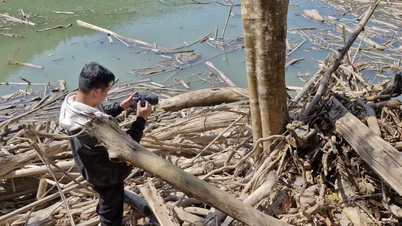
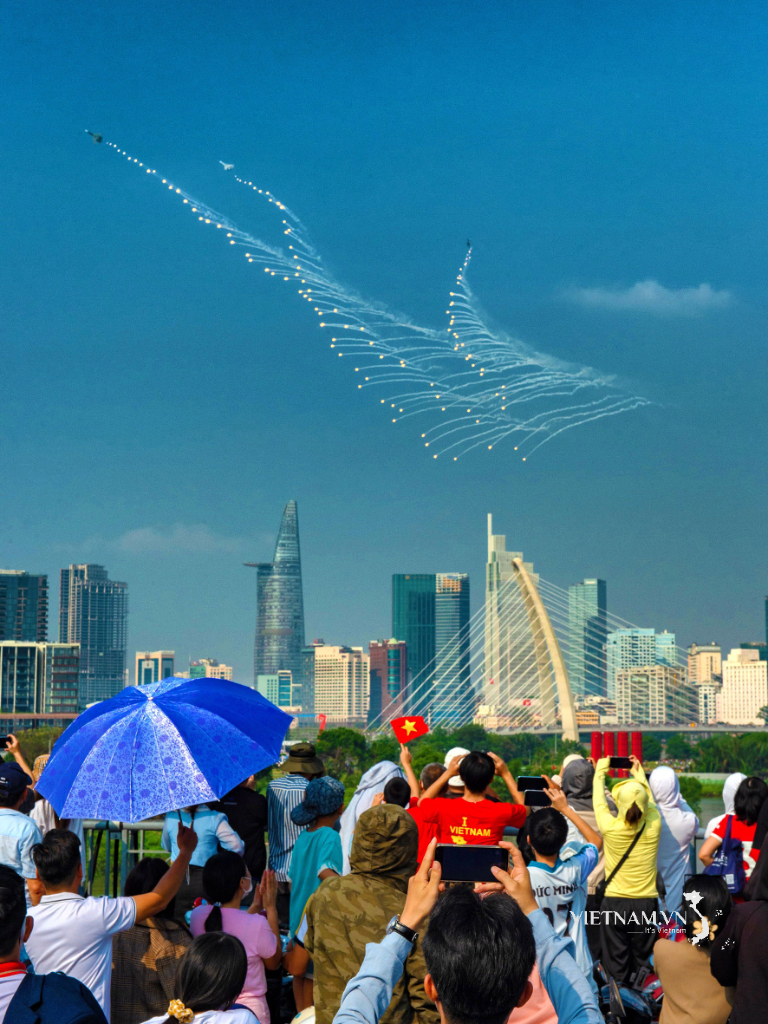
Photos taken by Tuoi Tre newspaper reporters during the A80 incident are frequently targeted by major social media sites - Photo: NAM TRAN
Lawyer Hoang Ha (Ho Chi Minh City Bar Association) shared with Tuoi Tre newspaper that there is a troubling paradox in journalism on digital platforms today.
News organizations invest heavily in infrastructure, pay salaries and royalties to reporters, cameramen, editors, technicians, legal professionals, fact-checkers, field workers, and are responsible for publication and bear the professional risks.
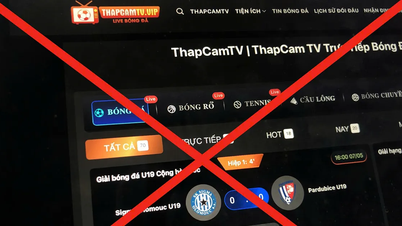
However, as soon as an article is published, a clip is played, or an image is uploaded, many social media sites and pirated platforms immediately repost it, cut out the logo, change the title, add subtitles, reread it using AI, or post it verbatim to attract interaction. Legitimate news outlets incur production costs, while the infringing parties reap the traffic and advertising revenue.
Level of serious violation
According to lawyer Ha, the impact of intellectual property infringement on journalism is no less significant than copyright infringement in music , films, or software. In some aspects, it is even more serious, because journalistic works are linked to current events and have a very short exposure time.
An investigative report, an exclusive video , or a photograph from the scene are most valuable in the first few hours. If stolen at that moment, the news organization loses traffic, advertising revenue, exclusive rights, and even the incentive to invest in quality journalism. The infringer bears almost no verification costs or editorial responsibility, yet benefits from the product created by someone else.
Mr. Ha argued that journalistic works are all subject to protection under the Intellectual Property Law. The 2016 Press Law also defines journalistic works as creative products of journalists.
Reproducing journalistic content online without permission is not only an unethical act in the media but can also constitute copyright and related rights infringement.
The forms of copyright infringement are quite diverse nowadays. The most common is retaining almost all of the content and then posting it on another website or fan page to gain views.
Additionally, they might cut out sources, remove logos, replace captions or use illustrations for other content; repost on YouTube, Facebook, TikTok; even split into multiple short segments to optimize views; or "rehashed" articles while still relying on the information, structure, and effort of the original source material…
"The danger lies in the fact that these activities are often organized around a money-making model. They don't need to be journalists. They don't need reporters. They don't need to be accountable to their sources, the people involved, or press laws. They just need to monitor mainstream news, quickly obtain content, optimize algorithms, attach advertisements, and collect money from traffic," Mr. Ha said. "This is essentially stealing journalistic resources under the guise of information sharing."
Making money from the outrage and curiosity of the masses.
It's not just the press that's suffering in today's "content manipulation economy ." Artists and personalities featured in original articles and videos are also becoming direct victims of the social media drama-driven clickbait machine.
With just an interview, a press conference statement, or a short clip lasting a few dozen seconds, numerous TikTok, YouTube, and Facebook channels can instantly "rework" it into a negative-tinged video: adding tense music, cutting out context, and using sensational titles like "revealing the true attitude," "sarcastic remarks," "being boycotted," "underlying conflict," etc., to incite controversy.
"Frustrated, helpless, and bitter" are the words singer Le Quyen used to describe her feelings when she heard or watched videos "fabricated" about her, especially those claiming she was deceived in love and money. Le Quyen told Tuoi Tre newspaper: "Why would people I don't know, and have no animosity towards, create such malicious videos about me?"
Meanwhile, Mr. Hoang Tuan - Director of HT Production - recounted that during the production of a music video for Dan Truong, he shared with the press details about how the film crew prepared matching outfits for Truong and his co-star at the director's request.
However, sensationalist and fabricated stories about a romantic relationship involving Dan Truong then spread across various media platforms, significantly impacting the artist's life and mental well-being. Although the stories were later reported to the platforms, they had already been rehashed from one channel to another.
According to Mr. Tuan, what's noteworthy is that this story all started with mainstream news sources – where reporters have to put in the effort to verify, report, and bear legal responsibility for each piece of information.
After being "rehashed," information no longer retains its original essence but is instead turned into drama to serve social media algorithms. The consequence is that newspapers lose readership and revenue, while artists suffer waves of attacks, misunderstandings, or boycotts based on distorted content.
Mr. Ngoc Quang - Director of Communications at Moonlight Media - commented, "Many channels nowadays no longer produce their own information. They only hunt for drama by taking information from the press and then re-processing it in a more extreme way. What they make money from is not information, but the outrage and curiosity of the masses."
Therefore, it's no longer simply a matter of "using articles without permission," but is becoming a larger battleground – protecting the creative work, the authenticity of information, and the honor of those who are turned into "content material" on the Internet.
Not an empty space, but…
Lawyer Hoang Ha believes that Official Dispatch 38 and recent actions by authorities indicate that when copyright infringement is carried out in an organized manner, on a commercial scale, generates revenue, and causes damage to the rights holder, it shows signs of violating criminal law.
Currently, the government is shifting from a mindset of removing infringing content to dismantling the entire infringing model. This means not only dealing with re-uploaded links, posts, and clips, but also tracing the operators, advertising accounts, cash flow, servers, domains, distribution systems, and the true beneficiaries behind the scenes.
"Once copyright infringement is viewed as a model for illegal profit-making, criminal instruments will be applied if there is sufficient evidence," he said.
According to Mr. Ha: "For media organizations in particular, as well as content production units in general, this is the time to be more proactive in protecting their intellectual property. It's not enough to just send removal requests; they must also preserve evidence, quantify damages, determine illicit revenue, and demand compensation. In cases involving organized crime, cash flow, and repeat offenses, they should boldly request that authorities consider criminal liability."

Singer Le Quyen (left) and singer Phuong Thanh
Singer Le Quyen "hopes the State will have clearer regulations and stricter laws to protect artists in particular and the people in general; so that copyright is properly respected." Agreeing, singer Phuong Thanh hopes "the State needs to be more assertive with copyright violations, including content 'sourced' from the press."
The issue of unauthorized content reuse is currently happening globally. In the US, at the end of 2025, The New York Times sued the AI startup Perplexity, alleging the unauthorized use of millions of articles to power its AI-powered automated response system. Reuters reported that the lawsuit revolved around AI companies using journalistic content without permission or paying royalties.
In Europe, Meta is also facing disputes with Italian publishers regarding the use of journalistic content on its digital platform. A recent ruling by the European Union Court of Justice is seen as a significant milestone in forcing technology platforms to negotiate fees for journalistic content.
Ho Chi Minh City launches a crackdown on counterfeit goods and intellectual property infringement.
The Ho Chi Minh City People's Committee has just issued a directive outlining decisive measures to combat, prevent, and handle intellectual property infringement. The Chairman of the Ho Chi Minh City People's Committee instructed relevant agencies, units, and localities to urgently organize a high-intensity campaign to inspect, detect, and strictly handle intellectual property infringements from now until May 30, 2026. The implementation must be comprehensive, decisive, and without exceptions or forbidden areas.
The focus is on acts of manufacturing and trading counterfeit goods, goods bearing fake trademarks, and infringing copyright and related rights - especially in the digital and e-commerce environments - based on the provisions of intellectual property law.
Source: https://tuoitre.vn/phai-cham-dut-viec-ky-sinh-vao-bao-chi-20260519093805511.htm
























































































Comment (0)