

However, not all cases of night sweats are dangerous. Clearly distinguishing between physiological and pathological night sweats will help parents provide appropriate care, avoiding panic or complacency.
Causes of night sweats in children
Children with night sweats often sweat excessively in areas such as the forehead, head, back, armpits, groin, palms, and soles of the feet. Some children also experience accompanying symptoms such as restless sleep, frequent startling, and crying at night.
There are many causes for this condition, the most common of which include:
Vitamin D deficiency
This is the most common cause, especially in premature babies, those with low birth weight, or those with chronic digestive disorders. Vitamin D deficiency affects calcium metabolism, leading to symptoms such as excessive sweating, irritability, and stunted growth.
The nervous system is not yet fully developed.
In infants and young children, the autonomic nervous system is not yet fully developed, resulting in poor thermoregulation. This makes them prone to sweating even without obvious triggers.
Autonomic nervous system disorders
When the sympathetic nervous system is overactive, a child's body may sweat more, especially at night.
Overheating
Many parents have a habit of dressing their children in too many clothes, using too many blankets, or keeping them in enclosed, poorly ventilated rooms. This causes the child's body to overheat, leading to increased sweating.
Distinguishing between physiological and pathological night sweats.
Correctly identifying the nature of night sweats is crucial for parents to take appropriate action.
Physiological night sweats
This is a normal phenomenon and does not affect the child's health. Physiological night sweats are a self-regulating mechanism of the body's temperature when the child is very active or in a state of excitement.
Some identifying characteristics:
Sweating usually occurs in the head and neck area;
This usually happens within the first 30 minutes of a baby falling asleep;
The amount of sweat gradually decreases and stops after about 1 hour;
The child is still eating and sleeping well and developing normally.
In these cases, parents don't need to worry too much; they just need to adjust the living environment and caregiving methods accordingly.
Pathological sweating
Unlike physiological sweating, pathological night sweats are often a warning sign of underlying health problems that require attention.
This condition is common in children with illnesses such as rickets or chronic infections. Excessive sweating is not dependent on the weather or level of physical activity.
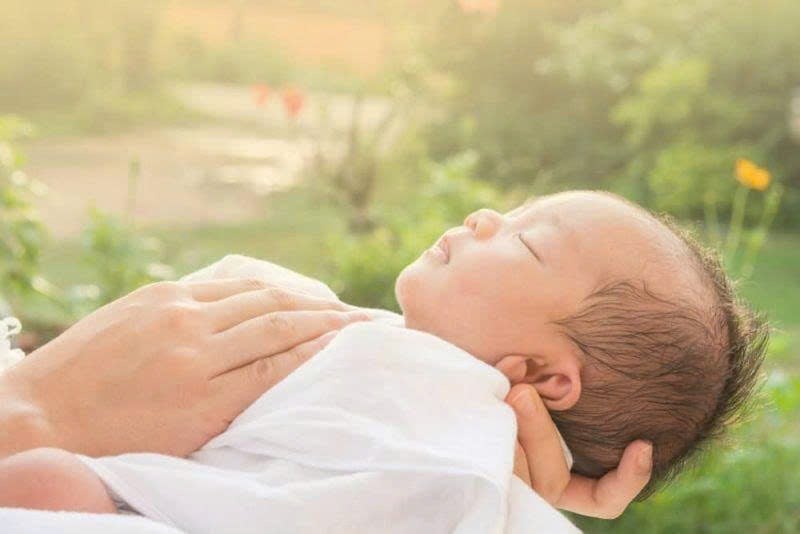
Exposing children to morning sunlight is a natural way to help their bodies synthesize vitamin D.
Typical symptoms include:
Excessive sweating in the head area, especially when breastfeeding or after sleeping;
Excessive, prolonged sweating;
The child is tired, fussy, and doesn't sleep soundly.
Easily susceptible to colds and respiratory infections.
Prolonged dehydration and electrolyte imbalance can weaken children and affect their physical development. If not detected and treated promptly, this condition can lead to serious complications.
Parents should pay special attention and take their children to a medical facility if they see the following signs:
Excessive and prolonged sweating;
Children often have mild fevers;
Thin hair, slow tooth eruption;
The fontanelle is slow to close.
Delayed in learning to roll over, crawl, or walk;
Children are tired, have poor appetite, and are slow to gain weight.
These could be symptoms related to micronutrient deficiencies or underlying medical conditions that require early diagnosis and treatment.
How to treat night sweats in children
Depending on the cause, parents can apply appropriate care measures to improve the condition of night sweats.
Proper vitamin D supplementation
Exposing children to morning sunlight is a natural way for the body to synthesize vitamin D. The ideal time is before 10 a.m., starting with 10 minutes and gradually increasing to 20–30 minutes each day.
However, it is necessary to avoid exposing children to direct sunlight and ensure they are properly protected.
Keep the baby's body cool and dry.
Dress your child in loose-fitting clothes made of absorbent cotton;
Avoid over-bundling;
Keep the bedroom well-ventilated and at a comfortable temperature.
Maintain good personal hygiene and bathe regularly.
Establish a balanced diet.
Nutrition plays a crucial role in improving children's overall health:
Increase your intake of green vegetables and fruits with cooling properties;
Make sure your child drinks enough water every day;
Limit foods that are high in fat, sugar, or calories;
Some traditional dishes such as clam porridge, black sticky rice porridge, mung bean sweet soup, etc., can help improve excessive sweating if used appropriately.
In summary: Night sweats in children are a common and mostly benign phenomenon. However, parents need to carefully monitor accompanying symptoms to promptly detect any abnormalities.
Proper care, combined with adequate nutrition and a suitable living environment, will help children develop healthily. In cases of suspected pathological night sweats, early examination is necessary to ensure the child's safety.
Pham Huong (source: Health & Life Newspaper)
Source: https://yte.nghean.gov.vn/tin-chuyen-nganh/phan-biet-mo-hoi-trom-sinh-ly-va-benh-ly-o-tre-1013441




























































































Comment (0)