

Cancer from one sign
Mr. NXL (74 years old, residing in Hanoi ) came to K Hospital (Hanoi) for a check-up after noticing traces of blood in his stool. In addition, he occasionally experienced abdominal pain.
Through endoscopy and examination, doctors discovered that Mr. L. had a polyp-like tumor occupying approximately half the circumference of the rectum, located about 6cm from the anal margin. Magnetic resonance imaging (MRI) and colonoscopy results showed the tumor was located in the middle section of the rectum, with a length of about 3.5cm. The patient was diagnosed with stage III rectal cancer (3B), meaning the tumor had progressed locally and showed signs of metastasis to nearby lymph nodes.
When he heard about cancer, this man remained quite calm and trusted his doctor's advice. He believed that if you have a disease, you should treat it; he didn't view it as a "death sentence."
Following a consultation, doctors from the Department of Gastrointestinal Surgery 2 (K Hospital) developed a suitable treatment plan for the patient. Before surgery, Mr. L. underwent pre-operative chemotherapy and radiotherapy to reduce the size of the tumor, thereby increasing the effectiveness of the treatment.
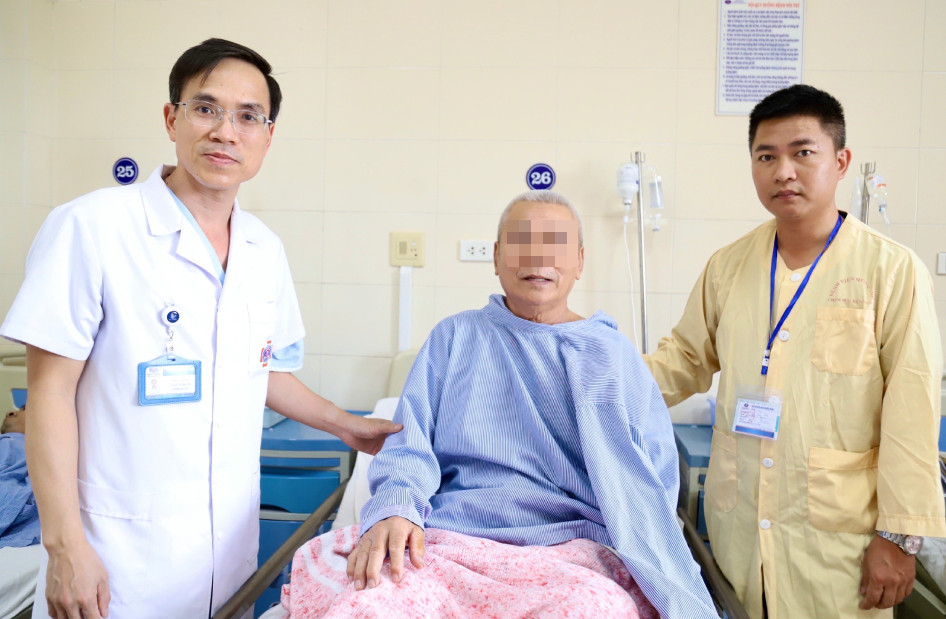
The post-treatment results showed that the tumor responded well, with no further signs of invasion into surrounding tissues or regional lymph nodes. However, the biggest challenge was the tumor's location very low in the rectum, requiring highly precise surgery to completely remove the cancerous lesion while preserving the patient's physiological function.
Dr. Doan Trong Tu, Head of the Department of Gastrointestinal Surgery 2 at K Hospital, and his team decided to perform robotic laparoscopic rectal resection combined with lymph node dissection for the patient.
According to doctors, surgery for low rectal cancer is a difficult technique because the rectum is located deep within the pelvis, surrounded by many important organs such as the bladder, ureters, large blood vessels, and the nervous system that controls urinary and sexual functions.
Specifically, the lower pole of the tumor is only about 5.6mm from the anal margin and about 3.3mm from the anorectal junction. This location is very difficult to access using traditional open surgery if a safe resection margin is desired while preserving the anal sphincter for the patient.
Thanks to the support of modern robotic systems, doctors can precisely dissect each layer of tissue, separating tumors from surrounding structures with clearer images and more precise manipulation.
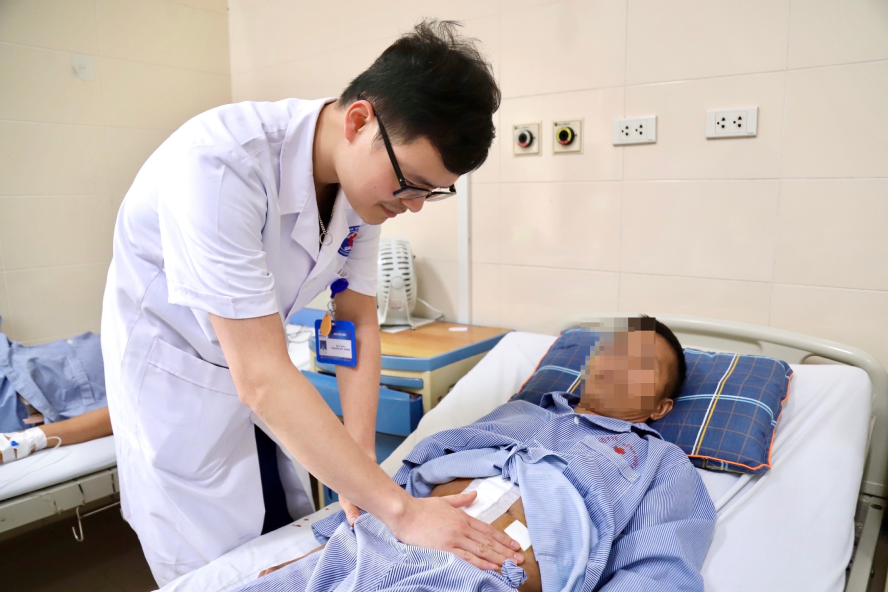
After the surgery, Mr. L. recovered well, experienced little pain, had almost no blood loss, and his hospital stay was significantly shorter compared to open surgery.
According to Dr. Tu, for patients with rectal cancer, especially those with low-lying and complex lesions, the treatment goal is not only to completely remove the tumor but also to try to preserve the anal sphincter to maintain quality of life after treatment.
Signs that require immediate medical attention.
Dr. Tú advises people to proactively undergo regular health checkups and screenings for gastrointestinal cancers. Early detection is crucial for treatment, especially for the elderly.
Compared to other types of gastrointestinal cancer, the chances of curing colon cancer are higher, with a 5-year survival rate of 40-60%, and the earlier the stage, the better the prognosis. However, due to non-specific symptoms, it is often overlooked.
Symptoms of the disease:
- Digestive disorders, bloody diarrhea.
- Persistent abdominal pain, bloating, nausea.
- Rapid weight loss and unexplained fatigue.
Furthermore, Dr. Tú affirmed that age is not a reason to give up when diagnosed with cancer. If health conditions permit and treatment is properly specialized, even patients over 70-80 years old still have a chance of effective treatment.

Source: https://vietnamnet.vn/phat-hien-ung-thu-tu-1-vet-mau-la-2517096.html






































































































Comment (0)