


People harvest cassava in the 2025-2026 crop year.
Over the past decades, cassava has been asserting and playing an important role in the crop structure of the province, especially in mountainous and midland communes. This is a crop with wide adaptability, easy cultivation, low investment costs, contributing significantly to job creation, increasing income for people, especially ethnic households with difficult land conditions and limited intensive farming level. To increase the economic value of this key crop, the cassava production model has changed significantly from self-sufficiency and spontaneous production to contract production, associated with highly commodity processing.
In the 2025-2026 crop year, cassava will be planted in 85 communes across the province, with varieties such as: KM140, KM94, HN5, HN1... The total cassava area in the province is 13,561 hectares, the average yield is estimated at about 17.5 tons/ha, the expected output is about 237,000 tons. However, cassava production in the province still faces many difficulties and challenges, such as: the organization of production in many areas is still scattered and small; the cassava varieties planted are mainly old varieties, leaving the seeds for many crops, leading to poor seed quality, both degenerated and susceptible to pests and diseases; the situation of pests and diseases, especially the virus mosaic disease on cassava, is complicated, affecting productivity and product quality. Investment in cassava infrastructure and mechanization in cassava production is still limited; Cassava production still lacks sustainable investment links, especially links between factories and farmers; application of scientific and technical advances in cassava intensive cultivation is still slow.
In the cassava production area of Cat Van commune, for many years now, people have considered cassava not only a poverty-reducing crop but also a crop that generates wealth. To "overcome" the limitations in cassava production such as pests and diseases, unsustainable production and consumption of products, agricultural cooperatives have guided people in choosing new varieties that can adapt to the environment and weather, and limit pests and diseases. At the same time, they have organized production and product consumption links with businesses to ensure product output. Ms. Luong Thi Tinh, Van Hoa village, Cat Van commune, said: "In recent years, cassava plants have often been affected by mosaic disease, so productivity and quality have decreased, making it difficult to connect and sell to factories. Therefore, to ensure economic value, in the 2025-2026 crop year, with more than 1.5 hectares of cassava, my family has switched to HN1, HN3, HN5 varieties to resist the disease and ensure the quality of processing factories. At the same time, from the beginning of the season, we contacted the agricultural cooperative to sign a contract to supply seeds, fertilizers and consume products to ensure output. Thanks to that, it is estimated that this year, my family will achieve an output of about 35 - 40 tons, with an estimated revenue of more than 60 million VND."
There are currently 4 factories in the province, including Phuc Thinh cassava starch processing factory, Ba Thuoc cassava starch processing factory, Nhu Xuan cassava starch processing factory, Luan Thanh cassava starch processing factory and 2 cassava starch processing facilities, with a total capacity of 300,000 tons of fresh tubers/year. In the 2025-2026 crop year, cassava starch processing factories and facilities have signed contracts to link and consume about 9,595 hectares of cassava products with local producers, accounting for more than 70.7% of the production area, ensuring stable output for products, avoiding the situation of "good harvest, low price" causing damage to the people. To increase the value of cassava, some localities such as Nhu Xuan, Luan Thanh, Kien Tho, Thiet Ong, Cat Van... have built high-yield cassava production models, applying synchronous mechanization and new techniques, with productivity reaching 25 - 30 tons/ha.
In the context of the province's agricultural sector shifting towards concentrated commodity production, linked with processing and stable consumption markets, cassava continues to be identified as one of the key crops in the midland and mountainous areas of the province. To sustainably develop cassava, strengthening value chain linkages, applying scientific and technological advances, especially selecting and using high-yielding, disease-resistant cassava varieties; and expanding the deep processing industry are urgent requirements.
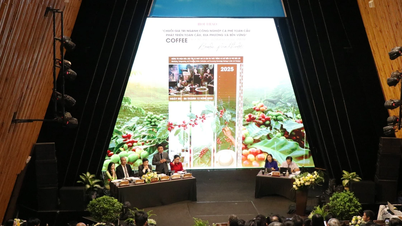
At the workshop "Solutions to improve the efficiency of the sustainable cassava production value chain", Deputy Director of the Department of Agriculture and Environment of Thanh Hoa province, Nguyen Duc Cuong, emphasized: To sustainably develop the value chain in cassava production, Thanh Hoa province has directed localities to review and verify the land fund for cassava cultivation to convert the crop structure appropriately; organize production associated with the development of raw material areas. At the same time, promote the application of scientific and technical advances in production, gradually improve and invest in infrastructure of production areas to contribute to improving product quality and developing processed products, expanding the consumption market for local cassava.
Article and photos: Le Hoa
Source: https://baothanhhoa.vn/phat-trien-chuoi-gia-tri-cay-san-nbsp-theo-huong-ben-vung-270965.htm



















































































Comment (0)