

It has been more than 40 years since humanity faced the disease of the century HIV/AIDS. From a “death sentence,” thanks to medical advances and community efforts, HIV/AIDS has become a “controllable chronic disease.”
The world is closer than ever to ending the pandemic by 2030, but paradoxically, 2025 will see the most worrying reversals in decades.
The biggest question now is not the ability of medicine, but the will of humanity: Will we protect the achievements we have made, or let them be swept away?
According to the latest report of the Joint United Nations Programme on HIV/AIDS (UNAIDS) and the World Health Organization (WHO), about 40.8 million people worldwide are living with HIV, of which women and girls account for 53%.
While the numbers are still huge, they reflect strong medical progress: new infections are down 61% from the peak in 1996 and down 40% from 2010 to 1.3 million in 2024; AIDS-related deaths have fallen 70% since 2004, to around 630,000 in 2024. The global target – to reduce deaths to below 250,000 by 2025 – is still a long way off, but the improving trend is clear.
Thanks to the “detect-treat-suppress” strategy, 31.6 million people are now on antiretroviral (ARV) treatment, up from 7.7 million in 2010. They can live healthy lives, with little or no chance of transmitting the virus.
However, huge gaps remain: 9.2 million people are not accessing treatment and 5.3 million people do not know they have HIV. These are weak links that allow the virus to continue to spread silently.
The year 2025 will see a major “shock” to the global HIV/AIDS prevention system. The financial crisis, combined with US cuts in international aid, will cause the global health support budget to fall by 30-40% compared to 2023 - according to estimates by the Organization for Economic Cooperation and Development (OECD).
The sudden shortage disrupted drug supply chains, severely limiting testing and prevention services like PrEP (pre-exposure prophylaxis). Many community organizations were forced to close.
The shortages are evident in Africa: PrEP stocks have fallen by 31% in Uganda and 64% in Burundi; Nigeria has reduced condom distribution by 55%; Ethiopia and Congo have suffered severe testing shortages. Zimbabwe has had to lay off health workers en masse as funding dried up, leaving medicines in warehouses and patients without care.
Sub-Saharan Africa remains the epicenter of the pandemic, accounting for two-thirds of people living with HIV globally. While Eastern and Southern Africa have made strong progress in reducing new infections, the scale of the epidemic is so large that any disruption could be catastrophic.
More worryingly, about 450,000 women here have lost connection with community workers - the key force connecting patients with health services.
In Europe, the challenge is “late diagnosis.” Data from the European Centre for Disease Prevention and Control (ECDC) shows that 54% of HIV cases are detected when the immune system is severely weakened, reducing the effectiveness of treatment and increasing the risk of death.
Meanwhile, Eastern Europe, Central Asia, the Middle East, North Africa and some Latin American countries have seen rising or stagnant trends in new infections, mainly among men who have sex with men and injecting drug users, where legal barriers and stigma remain high.
The year 2025 marks 35 years of Vietnam's efforts to prevent and combat HIV/AIDS. Thanks to the strong, synchronous implementation and expansion of activities towards a comprehensive approach, providing full services from prevention, testing and treatment of HIV/AIDS, Vietnam has achieved many positive results and become a bright spot on the map of HIV/AIDS prevention and control in the region and globally.
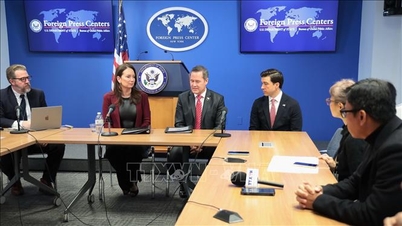
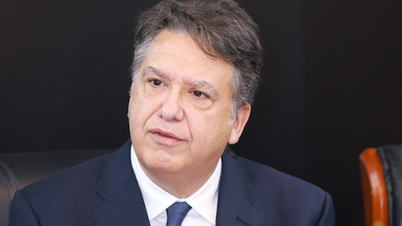
Mr. Raman Hailevich, Country Director of UNAIDS in Vietnam, said that it is estimated that HIV prevention efforts in Vietnam during the period 2004-2024 have helped prevent more than 1.2 million people from being infected with HIV and nearly 320,000 people from dying from AIDS.
Mr. Raman Hailevic affirmed that the achievements that Vietnam has made are the result of the strong and decisive leadership of the Party and State of Vietnam in HIV/AIDS prevention and control, and the result of a people-centered policy over many years. However, the reduction of international funding is a significant challenge for Vietnam.
One of the biggest low points in the 2025 report is children. UNICEF warns of growing inequality: 77% of adults living with HIV are on treatment, but only 55% of children are.
Lack of newborn testing and disruptions in prevention of mother-to-child transmission caused 75,000 AIDS-related child deaths last year.
These figures reflect a heartbreaking truth: children in sub-Saharan Africa are many times more likely to die from AIDS than children in other regions.
Despite the challenging landscape, scientific advances offer great hope. New prevention methods, such as long-acting injectables or Lenacapavir, given every six months, promise to revolutionize prevention.
HIV research also laid the foundation for CAR-T therapy in cancer treatment – demonstrating its value beyond HIV/AIDS prevention.
But science cannot prevail without the “social vaccine”: compassion, inclusiveness and political commitment. 2025 will see many countries tighten laws criminalizing same-sex relations and the activities of community groups – measures that stifle access to health care.
“The financial crisis has exposed the fragility of the hard-fought progress,” warned UNAIDS Executive Director Winnie Byanyima, adding that if the 2030 target is not met, the world could see 3.3 million new infections between 2025 and 2030 alone. The fear is not that the virus will mutate, but that the global support system will weaken.
As Ms Byanyima said: “This is a moment of choice: let the shocks destroy decades of progress, or unite to end AIDS. Millions of lives depend on the decision we make today.”
This is why the United Nations has chosen the global theme for World AIDS Day 2025 as “Overcoming disruption, transforming the AIDS response.”
The question is no longer “Can we end AIDS?” but “Do we have the will to do it?” The drugs are there, the science is there. HIV/AIDS is no longer just a medical challenge, but a test of humanity’s compassion and responsibility.
If countries fail to act to fill the funding gap and protect human rights, the gains of the past 40 years could be washed away – and the door to ending the greatest pandemic in history could be closing before our eyes./.
(TTXVN/Vietnam+)
Source: https://www.vietnamplus.vn/phep-thu-trach-nhiem-doi-mat-voi-can-benh-the-ky-hivaids-post1080306.vnp


![[Photo] National Assembly Chairman Tran Thanh Man receives First Vice Chairman of the Federation Council of the Federal Assembly of the Russian Federation](/_next/image?url=https%3A%2F%2Fvphoto.vietnam.vn%2Fthumb%2F1200x675%2Fvietnam%2Fresource%2FIMAGE%2F2025%2F12%2F02%2F1764648408509_ndo_br_bnd-8452-jpg.webp&w=3840&q=75)































































































Comment (0)