

 |
Starship V3, the largest rocket in human history. Photo: SpaceX. |
On the morning of May 23rd, SpaceX successfully completed the 12th integrated test flight of its Starship program. This was also the first flight of the improved version, Starship V3.
Standing at a height of 124 meters, Starship V3 is currently the largest and most powerful rocket system ever built by humans in the history of aerospace.
The launch followed an emergency delay the previous day due to a technical malfunction in the launch pad's hydraulic system. During the official test, the system operated correctly. The Starship V3 rocket successfully activated its engine assembly, lifted off, and completed its near-orbital flight. The spacecraft then landed safely in the Indian Ocean.
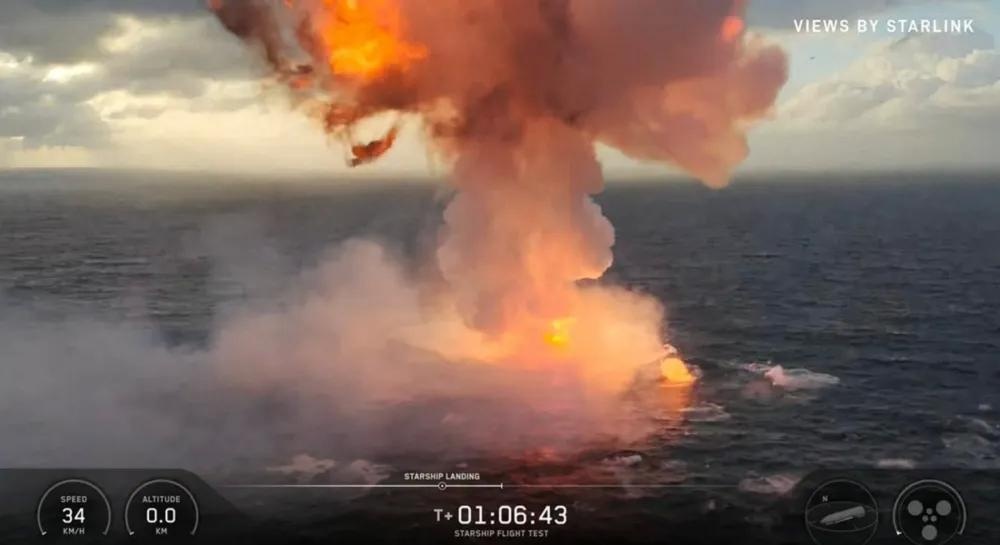 |
Starship V3 has successfully landed in the Indian Ocean. Photo: SpaceX. |
Although the flight wasn't absolutely perfect, with the spacecraft losing an engine during flight and the booster stage not functioning exactly as planned, SpaceX stated that the main objective of the test was accomplished. The company always prioritizes gathering real-world data to quickly optimize subsequent versions.
Following the successful landing of the spacecraft, NASA Administrator Jared Isaacman offered congratulations and stated that this experiment brings humanity closer to its goal of conquering the Moon and Mars.
"Congratulations to the SpaceX team on completing the historic launch and landing of Starship V3! You've scored a fantastic goal for humanity," Elon Musk also shared on social media.
Compared to its predecessors, the Starship V3 boasts groundbreaking technological upgrades. The rocket utilizes the new Raptor 3 engine. This engine nearly doubles thrust while reducing weight by 1.1 tons and costing only one-quarter of the production cost of the first generation.
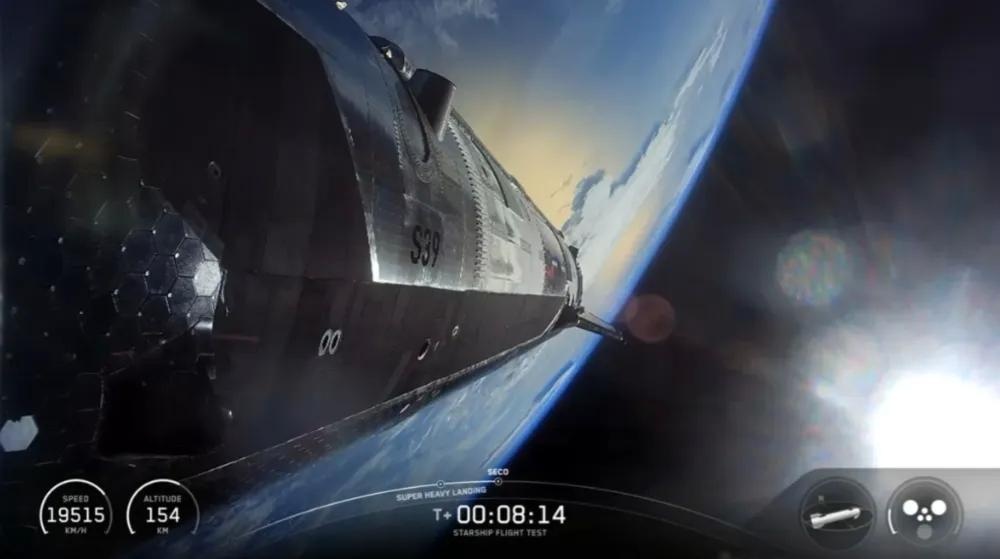 |
Starship V3 is the foundation for Elon Musk's ambition to build an AI data center in space. Photo: SpaceX. |
The system of 33 engines achieves a total thrust of over 9,000 tons, increasing the payload capacity in low Earth orbit (LEO) from 35 tons in the V2 generation to over 100 tons. The stainless steel fuselage structure has also been made thinner to reduce weight by 10%.
Analysts believe that Starship V3 is more than just a pure transportation vehicle. This development is part of Elon Musk's long-term strategy after SpaceX completed its merger with the artificial intelligence company xAI.
SpaceX is aiming to build AI data centers in orbit. Moving high-performance computing nodes into space will help leverage the abundant solar energy and extremely low temperatures of space. This is seen as a fundamental solution to the energy consumption and heat dissipation challenges of today's massive AI systems.
Besides the technological aspect, this launch took place right after SpaceX filed for its IPO, scheduled to be listed on June 12th. The successful test is strong evidence for investors, directly boosting SpaceX's valuation in the capital markets and potentially making Elon Musk the world's first billionaire with $1 trillion .
Source: https://znews.vn/phong-thanh-cong-ten-lua-lon-nhat-trong-lich-su-post1653616.html























































































Comment (0)