

“Many parents with children with autism spectrum disorder (ASD) are reluctant to share this information with teachers and schools when their children reach school age. They are afraid that their children will be discriminated against, making it difficult to receive and support their children,” said Ms. Simona, Professional Director of the International Center for Diagnosis and Early Intervention of Autism Spectrum Disorders (VICA).

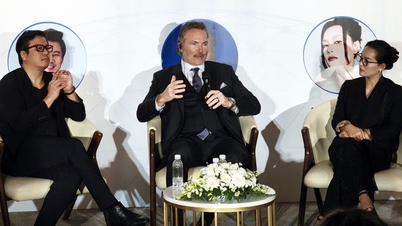
The educational seminar "I have special rights" took place on the afternoon of December 6 in Ho Chi Minh City (Photo: Organizing Committee).
Speaking at the educational seminar “I have special rights” on raising public awareness of autism spectrum disorder held on the afternoon of December 6 in Ho Chi Minh City, Ms. Simona affirmed that autism spectrum disorder is not a disease or condition that needs to be “fixed”.
Children can be intervened and achieve positive results depending on the stage of detection. She emphasized that in addition to early intervention (0-3 years old, ideally 3-6 years old), when children enter school age, close coordination between family and school plays a decisive role in helping children integrate and develop.
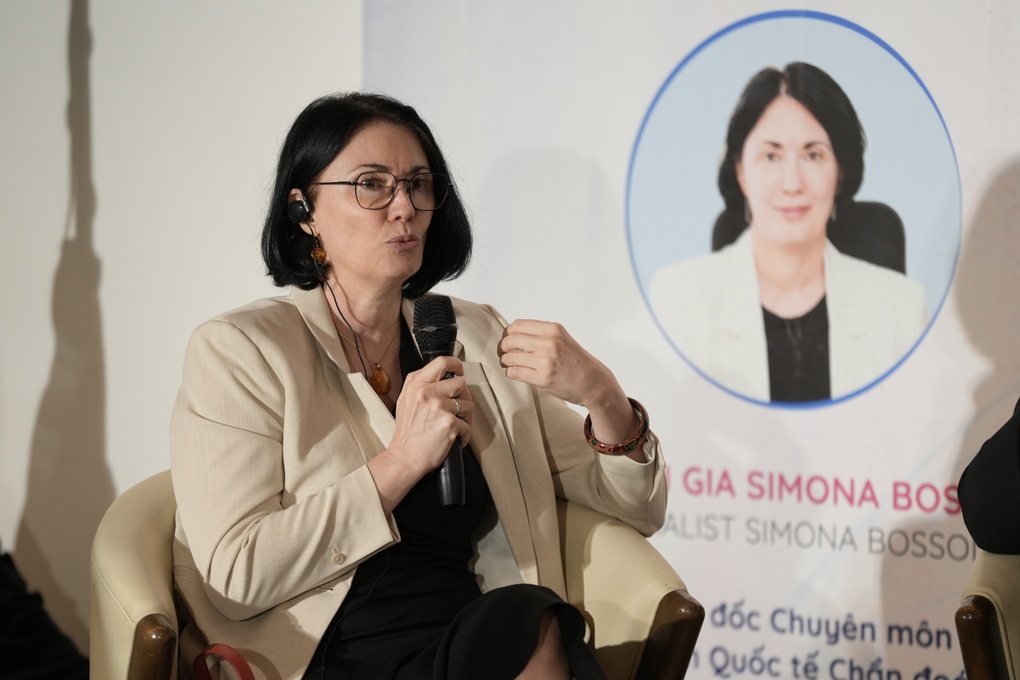
Ms. Simona, Professional Director of the International Center for Diagnosis and Early Intervention of Autism Spectrum Disorders (Photo: BTC).
Mr. Thanh Bui, founder of Embassy Education, said that many parents, for fear of discrimination, choose to "hide" their children's condition, do not seek support solutions, and in some cases even keep their children at home even though they are old enough to need education.
Currently, Vietnam has more than 1 million autistic people, with an estimated 1 in 100 children born with autism spectrum disorder. The number of children diagnosed increases rapidly each year, while social awareness of this group of children remains limited.
“Many people look at children in a negative light, as if this is a disease that needs treatment. But they are just looking at the world in their own way. They have special rights and need to be respected to live like everyone else,” said Mr. Thanh Bui.
According to him, in order for children with autism spectrum disorder to integrate and become independent, parents and the community must have more open awareness. At the same time, Vietnam needs to build an “ecosystem” of comprehensive support for autistic people, from diagnosis, early intervention, inclusive or specialized education, psychological counseling, career guidance, employment support to elderly care, like the models in Singapore and Australia.
Mr. Michael M. Mueller, founder of the International Behavior Analysis Organization (IBAO), suggested that Vietnam could consider developing special education and inclusive education at the same time.
He stressed that teachers, who work in educational institutions capable of receiving children with autism spectrum disorders, need to be professionally trained instead of relying solely on personal experience; at the same time, it is necessary to increase the number of specialized teachers to improve their ability to support children.

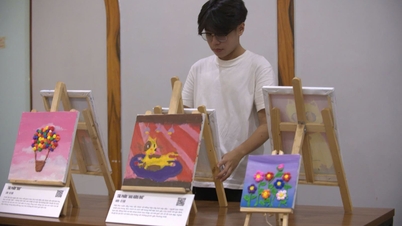
The art exhibition "Spectrum of Silence" is part of the program, organized to raise public awareness about children with autism spectrum disorder (Photo: Organizing Committee).
Ms. Lap Phuong, a sculptor and educational practitioner, suggested that localities should promote vocational training programs suitable to the abilities of autistic people, helping them have opportunities to participate in production and business activities.
Experts say society needs to raise awareness and understand that autistic people do not see, hear or react to the world like normal people.
The special rights of autistic people do not lie in being given priority over others, but in being seen, heard and respected for their differences, perceived as advantages, abilities and ways of perceiving the world.
Source: https://dantri.com.vn/giao-duc/phu-huynh-ngai-noi-that-tre-tu-ky-mat-co-hoi-hoa-nhap-20251206204826098.htm






















![[Photo] National Assembly Chairman Tran Thanh Man attends the VinFuture 2025 Award Ceremony](/_next/image?url=https%3A%2F%2Fvphoto.vietnam.vn%2Fthumb%2F1200x675%2Fvietnam%2Fresource%2FIMAGE%2F2025%2F12%2F05%2F1764951162416_2628509768338816493-6995-jpg.webp&w=3840&q=75)














































Comment (0)