Long-lasting batteries and ultra-thin designs: Are Big Tech falling behind?
Silicon-carbon battery technology enables smartphones to be both thin and have massive batteries, but Apple, Samsung, and Google are still staying out of this potentially lucrative market.
Báo Khoa học và Đời sống•24/04/2026
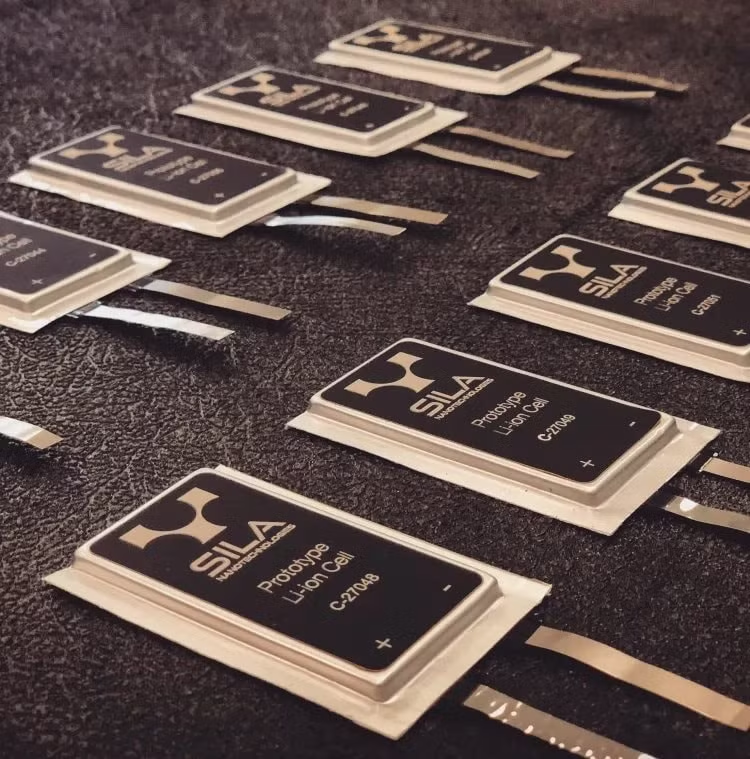
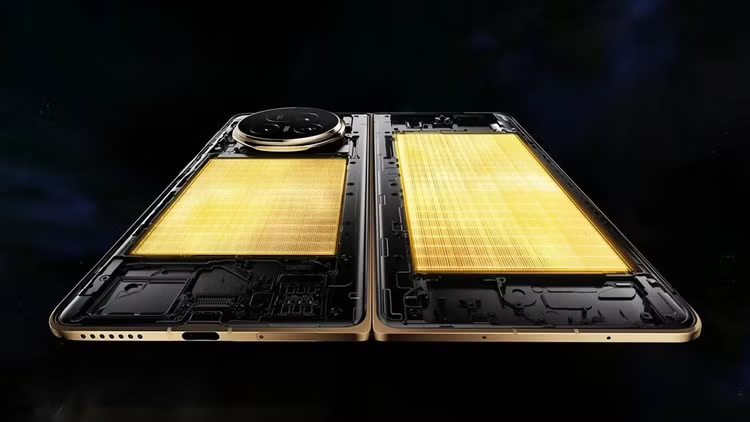
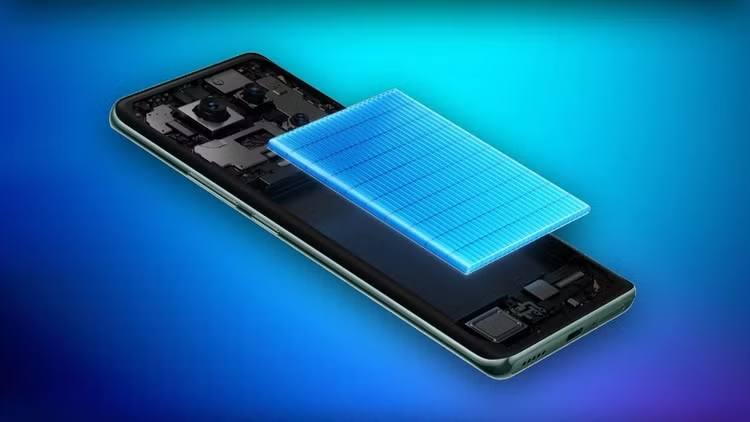
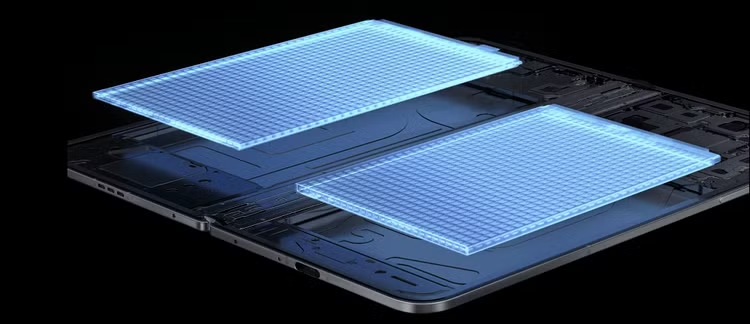
The smartphone market is witnessing a technological turning point as silicon-carbon batteries dramatically increase capacity while maintaining a slim and lightweight design, creating a new trend in mobile experience. Unlike traditional lithium-ion batteries, this technology uses a mixture of silicon and graphite at the cathode, resulting in significantly higher energy density, opening up the possibility of fitting large batteries into compact devices.
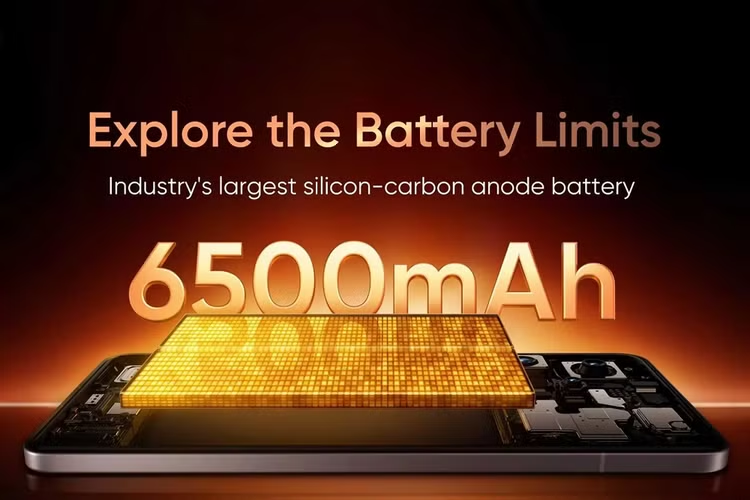
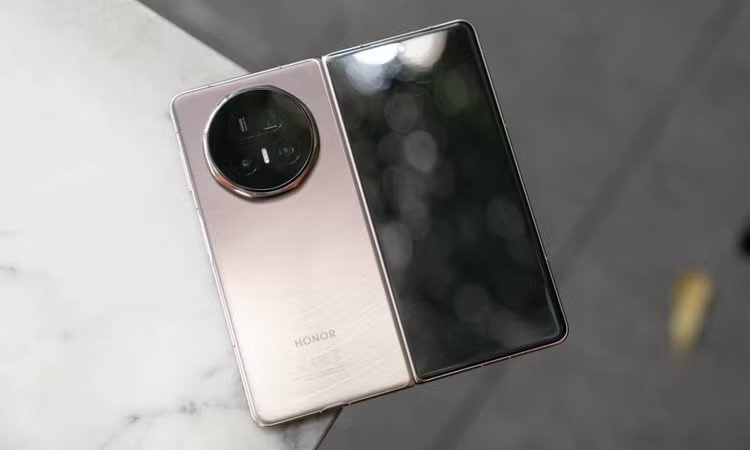
Many brands like Honor and OPPO have quickly adopted this technology, with devices boasting batteries ranging from 5,600mAh to 8,000mAh while maintaining impressively slim designs.
Even big names like Huawei, Xiaomi, and Vivo have joined the race, making silicon-carbon batteries the new mainstream trend.
Meanwhile, the three "giants" Apple, Samsung, and Google are being cautious and have not yet incorporated this technology into mass-market commercial products. The main reason lies in the durability issue, as silicon tends to expand significantly during charging and discharging, which can cause the battery to degrade faster after prolonged use. In addition, strict regulations on battery lifespan in Europe, along with international shipping barriers for high-capacity batteries, make the widespread adoption of this technology more complicated.
However, if durability issues are resolved, silicon-carbon batteries could very well become the next big thing in the smartphone industry, and staying out of the game for too long could cause major players to lose their competitive edge.

 Báo Khoa học và Đời sống•24/04/2026






![[GALLERY] Witnessing the first landing of an Italian F-35B fighter jet on a highway.](https://vphoto.vietnam.vn/thumb/402x226/vietnam/resource/IMAGE/2026/05/24/1779625960562_f-35b-della-marina-militare-2-jpg.webp)







![[GALLERY] Elon Musk shocks with the statement that people may not need to go to work.](https://vphoto.vietnam.vn/thumb/402x226/vietnam/resource/IMAGE/2026/05/24/1779625359765_el-png.webp)







































































Comment (0)