

According to the organizing committee representative, the workshop contributed to clarifying the concept and potential of the lifestyle economy in Vietnam, while analyzing consumption trends associated with lifestyle.
The workshop also suggested new business models that focus on customer experience and style, contributing to improving the quality of products and services of businesses in particular and promoting economic growth in general.
The workshop took place in the context of the lifestyle economy entering a period of strong transformation thanks to a clear change in consumer behavior from "eating well, dressing warmly" to "eating well, dressing well and living a quality life".
Consumers in big cities, especially Ho Chi Minh City, are gradually interested in products and services that express personality, aesthetic value, depth of experience and lifestyle.

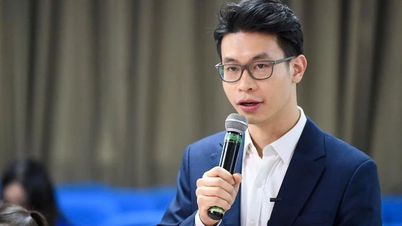
Mr. Le Tri Thong, Chairman of YBA, CEO of PNJ shared at the event (Photo: Organizing Committee).
When searching for a product, they not only compare technical specifications or prices, but also consider the suitability with their lifestyle, personality and self-image. Intangible factors such as brand story, shopping space, quality of advice or after-sales service also play an increasingly decisive role in choosing and evaluating products and services.
Consumption, therefore, is not simply an act of buying and selling, but also becomes a personal language - where each choice is a way to express the buyer's worldview and value system.
According to Mr. Le Tri Thong - Vice Chairman of the Board of Directors and General Director of PNJ, the boom of lifestyle economy is most clearly demonstrated in Ho Chi Minh City, the economic locomotive of the country and one of the newly formed megacities of Southeast Asia. This is a new development direction, contributing to shaping the urban identity and supporting the goal of becoming a creative, livable city by 2030.
Mr. Thong analyzed that Ho Chi Minh City has many unique conditions such as large population size, open cultural environment and high spending on activities related to lifestyle. The city also concentrates many businesses in industries directly related to the lifestyle economy such as tourism, sports, cuisine, fashion , jewelry, art, etc.
In addition, the city also possesses a highly skilled workforce in design, marketing, performance and event organization - important pieces to promote economic activities towards enhancing experiences and lifestyle.

Ho Chi Minh City has many unique conditions such as a large population, an open cultural environment and high spending on lifestyle-related activities (Photo: BTC).
“To develop a sustainable lifestyle economy, Ho Chi Minh City needs a comprehensive strategy to clearly define its “uniqueness”. Shaping a distinct and highly recognizable identity will help the city avoid spreading out, lacking highlights, and overlapping with major lifestyle cities in the world such as Seoul, Milan, Paris or Bangkok”, Mr. Thong shared.
At PNJ, Mr. Le Tri Thong said the company saw great potential from the lifestyle economy and quickly made strategic adjustments to adapt to this trend. Instead of focusing only on the physical properties of jewelry products, PNJ shifted strongly to creating emotional value and experience for customers.
Accordingly, businesses invest long-term in design capacity, brand communication, building thematic collections, and expanding cooperation with domestic and foreign partners.
Through each collection, PNJ introduces a product and tells stories associated with national culture and traditions, combined with international aesthetic trends and a modern spirit. The intangible values "implanted" into each design become factors that help the brand create a deeper connection with customers, especially the younger generation - a group of consumers who increasingly value personality and experience.
From an international perspective, Mr. Stefano Canali - Chairman & CEO of CANALI - commented that Vietnam, especially Ho Chi Minh City, is emerging as a potential market. The rapid development of the middle class and the emergence of a new generation of consumers have promoted the need to seek sophisticated, in-depth and personalized values in the shopping journey.
According to Mr. Stefano Canali, more and more Vietnamese customers favor products that honor the value of craftsmanship and the spirit of minimalism, in line with the trend of “whispered luxury” – a philosophy that emphasizes discreet luxury, not ostentatious, focusing on emotions and personal experiences rather than form. That is also the core value that CANALI has persistently pursued for over a century.

Mr. Stefano Canali - Chairman, CEO of CANALI - shares from the perspective of an international brand (Photo: BTC).
Ho Chi Minh City has recently become the “locomotive” for business models associated with experiences and lifestyles. The emergence of branded real estate projects, music festivals, and large-scale cultural and entertainment events shows that consumer demand goes beyond the framework of simple shopping, towards experiences that combine emotions, space, and community. Most recently, CANALI also announced its entry into the market through cooperation with PNJ, targeting elite customers.
In the long term, experts say the lifestyle economy is expected to continue to expand as consumers continue to prioritize spiritual values over material needs. The younger generation, especially Gen Z and Millennials, not only care about products but also focus on feelings, stories and personal imprints associated with each experience and style.
Along with that, the development of technology, social networks and personalization trends are creating conditions for businesses to design many new business models, turning shopping into an emotional journey.
Source: https://dantri.com.vn/kinh-doanh/pnj-thuc-day-kinh-te-lifestyle-tai-tphcm-20251205221853262.htm














































Comment (0)