


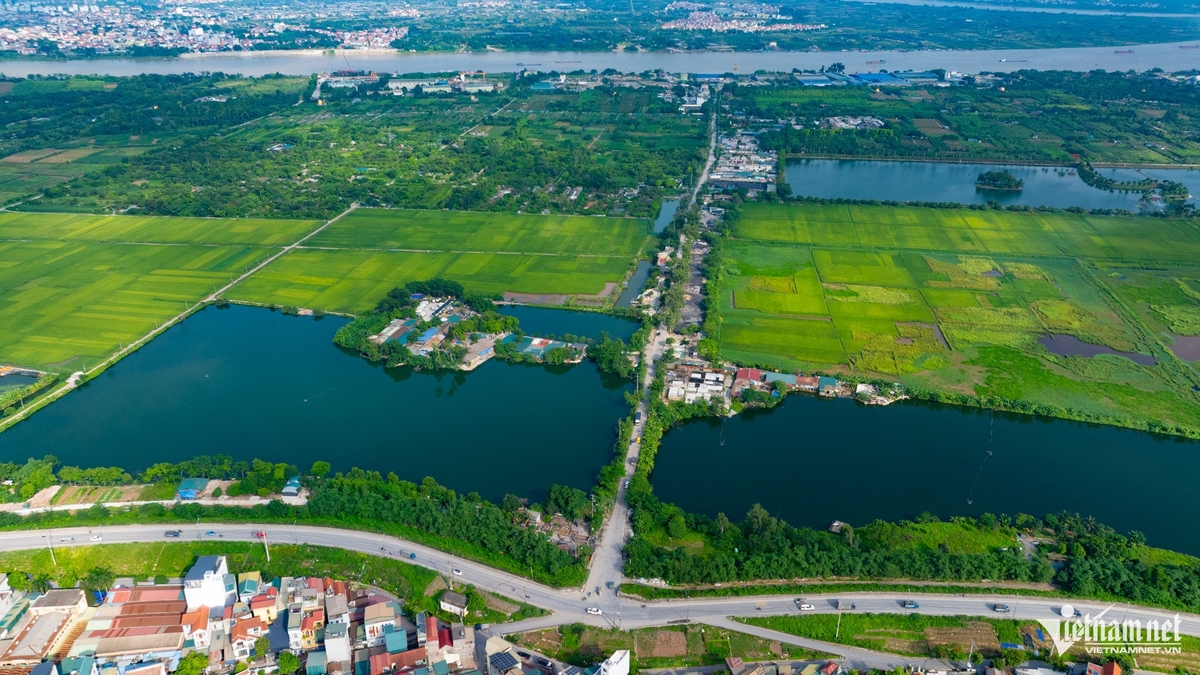
Mai Anh Tuan, whose real name was Mai The Tuan, was born in 1815 in Lang Mieu village, Thinh Hao ward, Hoan Long district (now O Cho Dua ward, Hanoi ). His ancestral home was in Hau Trach village, Thach Gian commune, Nga Son district, Thanh Hoa province. The Mai The family was a prestigious lineage in Thanh Hoa, with many members achieving high academic honors and serving as officials under the Le dynasty, such as Mai The Chuan and Mai The Uong. Among them, Huong Linh Hau Mai The Chuan – Mai Anh Tuan's great-great-grandfather – passed the doctoral examination in 1731 and served as the Governor of Lang Son under King Le Hien Tong. He was responsible for the renovation of Lang Son citadel – the provincial administrative center – in the 20th year of the Canh Hung era (1756). Today, a street in the ancient citadel of Lang Son (in Luong Van Tri ward) is named after him.
According to historical records, Mai Anh Tuan was renowned for his intelligence and studiousness. In the Quy Mao examination (the 3rd year of Thieu Tri's reign – 1843), he passed the First Class Doctoral examination, ranking third (Tham Hoa), and was also the top scorer in that examination. The Dai Nam Nhat Thong Chi (National History Institute of the Nguyen Dynasty, Thanh Hoa province section) records that he was "the first person to pass the First Class examination of this dynasty." This was because from the time the Nguyen Dynasty opened the Imperial Examination in 1822 until then, the positions of "Three Top Scholars": Trang Nguyen, Bang Nhan, and Tham Hoa had all been vacant (the Nguyen Dynasty did not award the title of Trang Nguyen). Mai Anh Tuan was the first person to pass the Tham Hoa examination of the Nguyen Dynasty. Delighted at having selected such a talented individual, Emperor Thieu Tri changed his name from Mai The Tuan to Mai Anh Tuan and bestowed upon him a poem to express his affection and respect for this virtuous and talented person.
According to the Đại Nam Liệt Truyện (National History Institute of the Nguyễn Dynasty, Thuận Hoá Publishing House - Huế , 2006, Volume 4), after passing the Thám Hoa examination, Mai Anh Tuấn was entrusted with many important responsibilities in the court. He was appointed as a Hanlin Academy writer, Cabinet Secretary, and Hanlin Academy scholar… Being a straightforward and upright person, on April 2, 1851, he submitted a petition to Emperor Tự Đức advising that it was unnecessary to escort a Qing Dynasty (Chinese) official in distress back to his country according to the old custom, but instead to send him on merchant ships. He suggested that the money should be used to reward soldiers to “quickly sweep away the foreign bandits” who were causing trouble in the Lạng Sơn border region. Despite the loyalist's heartfelt and reasonable words, the king was still not satisfied, accusing him of "treason and disrespect" and sending him to Lang Son to serve as the Chief Justice – an official responsible for overseeing criminal law (equivalent to a deputy provincial governor) – from April 1851.
According to historical records, since the reign of Emperor Tự Đức (mid-19th century), the situation on the northern border of Vietnam was rarely peaceful. Qing Dynasty bandits from across the border frequently raided and plundered, causing much damage and leading to widespread suffering and displacement of the local people. The Nguyễn Dynasty often had to send skilled generals to Lạng Sơn to suppress the bandits. Therefore, serving as a magistrate in this area was a very difficult and dangerous task. Nevertheless, Mai Anh Tuấn happily and enthusiastically took up his post. Upon arriving at his new position, he implemented many positive measures to fulfill his responsibilities to the court. He began reforming the law, severely punishing criminals, and leading troops to suppress the bandits. According to the book Đại Nam Liệt Truyện, just over a month after arriving in Lạng Sơn, he personally led troops to victory against the enemy at Hữu Khánh (Đồng Bộc commune, Lộc Bình district), earning praise from the Emperor. Taking advantage of the situation, he submitted a petition requesting "the suspension of official duties, the cessation of transportation duties, and the training of local militia to ease the burden on the people and secretly repel the enemy" as a strategy to govern the country and stabilize the border region. Later, the Tam Đường bandits (a gang of bandits led by Quảng Nghĩa Đường, Lục Thắng Đường, and Đức Thắng Đường) invaded Tiên Yên (Quảng Ninh) and advanced deep into the Yên Bác area (present-day Na Dương and Lộc Bình). They gathered over 3,000 people and divided themselves to plunder. Judge Mai Anh Tuấn and Commander Nguyễn Đạc led 1,000 troops to pursue them. When Nguyễn Đạc was killed, Mai Anh Tuấn immediately led troops to rescue the scattered soldiers in the mountains, but due to the treacherous terrain, the overwhelming number of enemy troops, and the enemy's strength, he was killed in action in August 1851. Upon receiving the news, the king was deeply saddened: “Mai Anh Tuan was a student who enthusiastically joined the fight against the enemy, disregarding his own safety and being killed. I shed tears of sorrow” (Dai Nam Thuc Luc Chinh Bien – National History Institute of the Nguyen Dynasty, Volume 7, Education Publishing House, 2006). King Tu Duc ordered Mai Anh Tuan's remains to be brought back to his birthplace for burial, and posthumously bestowed upon him the title of Han Lam Vien Truc Hoc Si (Academy Scholar).
According to some documents at the Institute of Han Nom Studies, when he passed away, the Governor-General and Minister of the Northern Region, Nguyen Dang Giai, composed a eulogy praising his talent and admirable qualities (recorded in the Lang Trinh Chronicle).
According to the Đại Nam Liệt Truyện (Biographies of Great Figures of Đại Nam), upon his death, the king issued a decree instructing officials in Lạng Sơn province to erect a temple in his honor in Đoàn Thành – where he worked during his final years. Officials in Thanh Hóa province also built a temple in his hometown – Hậu Trạch village, Thạch Giản commune, Nga Sơn district (now Nga Thắng commune). This temple still stands today and was classified as a National Historical and Cultural Monument in 1991. His tomb is located in a small alley on Đê La Thành street (Ô Chợ Dừa ward, Hanoi). His memorial tablet and incense burner have been placed in the Trung Nghĩa Temple within the Imperial Citadel (Huế) since the 9th year of Tự Đức's reign (1856). This is a place dedicated to worshipping officials, high-ranking ministers, and those who rendered loyal service to the Nguyễn dynasty. A street in Ô Chợ Dừa ward (Hanoi) and a high school in his hometown are named after him.
It can be said that the struggle against bandits (Khach invaders) to protect the homeland and country is one of the outstanding characteristics of Lang Son's history in the latter half of the 19th century. In that righteous struggle, countless heroic sacrifices have been recorded in history books and passed down through folklore, such as Nguyen Le, Nguyen Viet Thanh, Mai Anh Tuan, Nguyen Tho Ky, and General Binh Quan… The life and career of the late scholar Mai Anh Tuan very truthfully and clearly reflected the historical context of Lang Son, the arduous and fierce war against the invasion of bandits to protect the sacred territorial sovereignty of the Fatherland, and for the peace of the border region of Lang Son.
Source: https://baolangson.vn/quan-an-sat-lang-son-mai-anh-tuan-5091571.html






















































































Comment (0)