


According to Report No. 1698/TTr-UBND from the Provincial People's Committee to the Ministry of Construction , based on a comprehensive review according to the criteria of Resolution No. 111/2025/UBTVQH15 of the Standing Committee of the National Assembly, Quang Ninh has currently met 13 out of 15 standards for a Type I urban area. This result was achieved through a detailed assessment process based on three major groups of criteria, reflecting quite fully the urban development picture of the province in terms of socio-economic aspects, urbanization level, and infrastructure quality.
Specifically, Quang Ninh's criteria group, "location, role, and socio-economic development conditions," met 5 out of 6 standards, demonstrating a solid foundation for development. The province possesses a system of economic zones and functional areas of national and international significance, such as Van Don, Mong Cai, and Quang Yen, along with prominent heritage sites and tourism centers. This meets the standard for its role as a driving force for regional and national development. In the last three years, Quang Ninh has not only maintained a GRDP growth rate higher than the national average but has also continuously increased per capita income, reaching over 81 million VND by 2025. Not receiving supplementary central government budget allocations further affirms the province's financial self-sufficiency – a crucial criterion for a Type I urban area.
However, in this group of criteria, the province's FDI attraction in 2025 is not yet among the top 10 localities nationwide. This is due to the international context and objective impacts. Quang Ninh is continuing to improve through various specific solutions to enhance the quality of growth and competitiveness in the coming period.
In terms of "urbanization level," Quang Ninh has met 3 out of 4 criteria, notably with an urbanization rate of 81.23%, far exceeding the minimum requirement. The urban system has been reorganized towards a streamlined and efficient structure with 54 commune-level administrative units, including 30 wards. In particular, the expanded Ha Long urban area, with a population of nearly 687,000 people, plays a central role, creating a driving force for the entire province. However, the standard for the total urban population (required at 2.5 million people) has not yet been met, as the province's total population is only over 1.5 million. This is a "technical" limitation but also reflects the reality that Quang Ninh still has significant potential to attract residents, develop urban areas in depth, and expand its economic space.
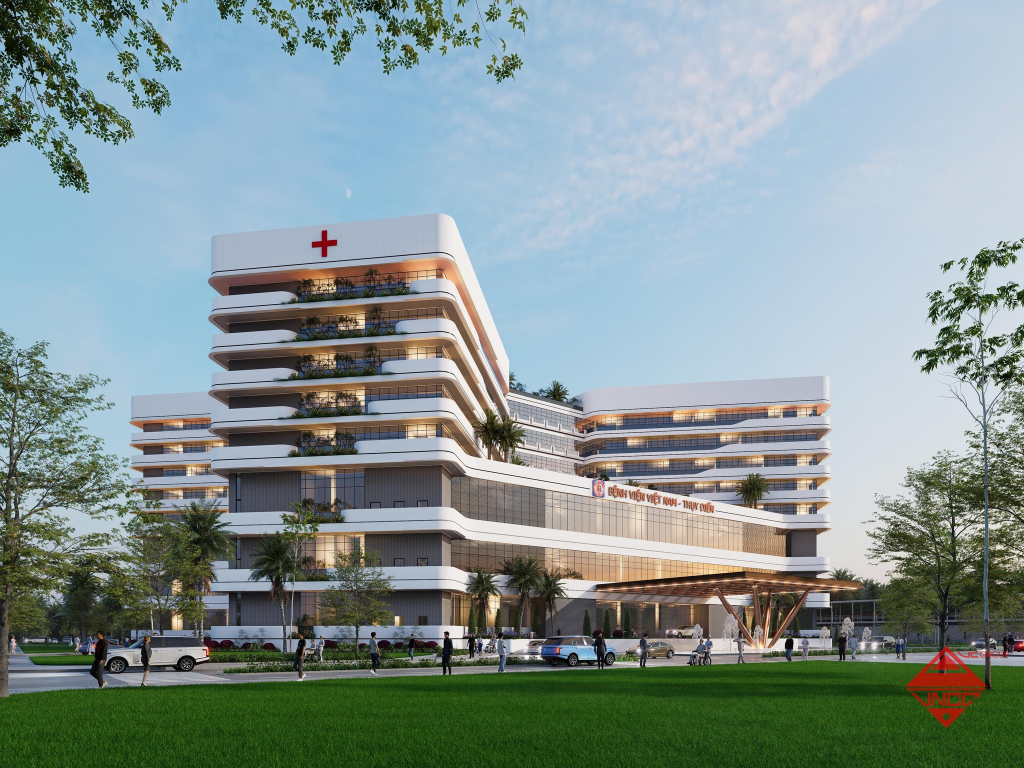
A highlight of the assessment is the group of criteria related to "level of infrastructure development and urban spatial organization," where Quang Ninh fully met all 5/5 standards. Its transportation infrastructure system, with regional and international connectivity and three major hubs – an airport, an international passenger port, and a deep-water seaport – has created a significant advantage over many other localities nationwide. Social infrastructure indicators also reached high levels, with the number of hospital beds, educational facilities, cultural and sports facilities exceeding standards; the solid waste treatment rate reaching nearly 100%; and the clean water supply system covering almost all urban residents. These figures demonstrate that the quality of urban life in Quang Ninh has approached the high standards of developed cities.
One notable point is that Quang Ninh is assessed to have reached the minimum level of a smart city, thanks to its synchronously invested information technology infrastructure, efficient operation of the Intelligent Operations Center (IOC), and the application of digital technology in many sectors such as transportation, healthcare, and tourism. This not only helps improve management efficiency but also creates a foundation for the development of the digital economy and digital society in the future...
Quang Ninh's request for recognition as a Class I urban area is of particular importance, especially given that in early April, the Politburo concluded on the policy of establishing Quang Ninh city as a centrally-governed city in 2026. Therefore, recognizing Quang Ninh as a Class I urban area carries significant meaning beyond a mere title. It acknowledges the province's rapid, sustainable, and clearly defined development over the past years and is a necessary condition for Quang Ninh to complete its application for the establishment of a centrally-governed city – a goal already set by the central government for implementation in 2026.
Achieving Type I urban status will create new "institutional space" for Quang Ninh, providing the province with more tools and mechanisms to attract investment, develop infrastructure, and improve urban management quality. Quang Ninh will develop according to a multi-center urban model, integrating land, sea, islands, and border areas into a unified whole. New growth drivers such as the green economy, marine economy, heritage economy, digital economy, and cultural industry will be strongly promoted, linked to comprehensive digital transformation.
The proposal for recognition as a Class I urban area is a step towards fulfilling the criteria, a strategic milestone, and opens a new phase of development for Quang Ninh. Once the conditions are met, the goal of becoming a centrally-governed city by 2026 will have a solid foundation for realization, transforming Quang Ninh into one of the most dynamic, modern, and highly competitive urban areas in the region.
Source: https://baoquangninh.vn/quang-ninh-co-ban-dat-tieu-chi-do-thi-loai-i-3406260.html






















































































Comment (0)