

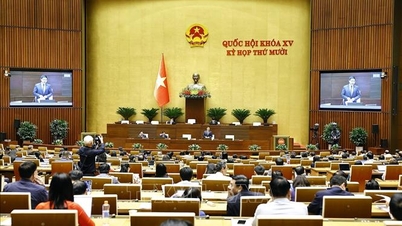
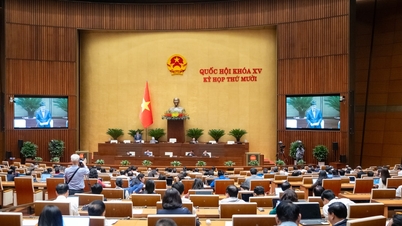
On the afternoon of December 9, continuing the program of the 10th session of the 15th National Assembly , under the direction of Vice Chairman of the National Assembly Nguyen Duc Hai, delegates discussed the draft law amending and supplementing a number of articles of the Law on Value Added Tax (VAT). In particular, the tax rate on waste, by-products, and scrap became a topic that attracted many opinions.
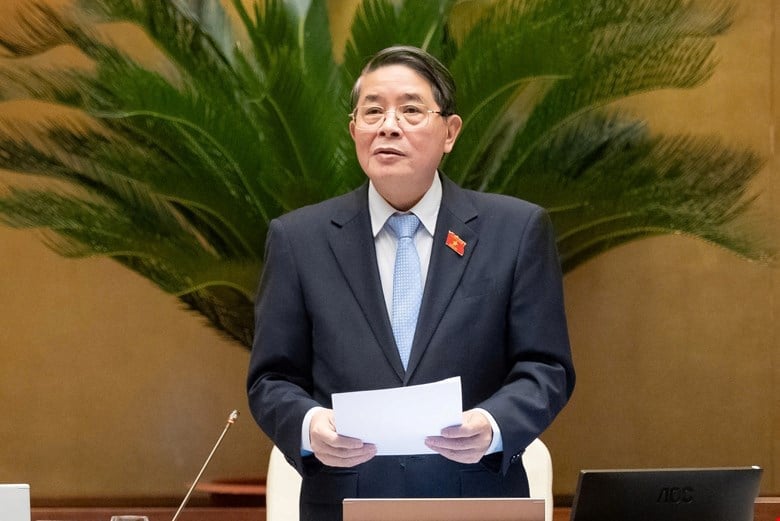
Vice Chairman of the National Assembly Nguyen Duc Hai chaired the meeting. Photo: Quochoi.vn
Untangling the tax rate bottleneck for scrap
According to many delegates, this draft law has been carefully prepared by the Government, the Ministry of Finance and the tax sector, demonstrating a listening to reality and accurately reflecting the need to remove obstacles for businesses. The amendment is expected to create a stable, tight and easy-to-implement policy framework, while preventing budget losses or tax fraud.
Among the four groups of policies proposed for adjustment, Clause 5, Article 9, relating to tax rates on waste, by-products, and scrap, is the point of most concern.
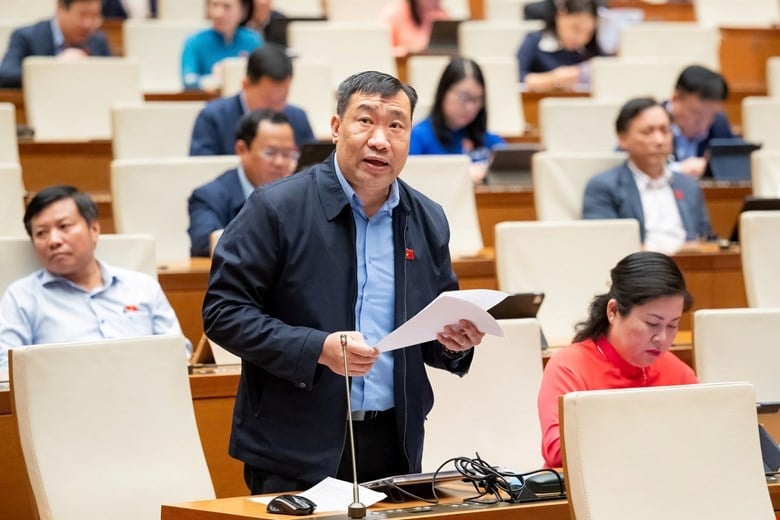
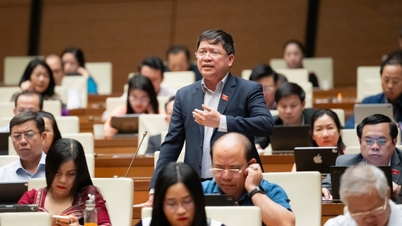
Delegate Thach Phuoc Binh (Vinh Long). Photo: Quochoi.vn
Delegate Thach Phuoc Binh (Vinh Long) said that the proposal to apply tax rates based on nine types of recovered waste and scrap is consistent with the reality of many industries such as textiles, wood processing, metallurgy, food production... which generate large amounts of scrap. Previously, due to the lack of specific regulations, tax authorities were forced to apply a general rate of 10%, causing difficulties and losses for businesses.
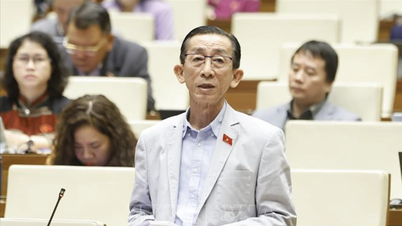
Delegate Tran Huu Hau (Tay Ninh) assessed that removing the first paragraph of Clause 5, Article 9 would bring “double benefits”. According to him, this would not only help animal feed processing facilities reduce input costs, creating equality with imported raw materials, but also support tens of thousands of agricultural and aquatic product processing facilities to consume all waste such as bran, wine lees, beer lees, shrimp shells, etc.
“The new regulation will increase processing efficiency, reduce environmental pollution and promote green production and circular economy,” he stressed.
Citing evidence from the Cassava Association, the delegate stated: 20 million tons of fresh cassava are processed each year, producing more than 4 million tons of cassava residue, which is a major source of pollution. If exempted from tax, this residue will have the opportunity to become animal feed, creating additional value.
From local practice, delegate Tran Huu Hau said that after July 1, 2005, tax authorities in 5 places have provided three different instructions on cassava residue tax: some places consider it animal feed (not subject to tax), some apply 5%, and some calculate 10%. "It is necessary to clearly stipulate in the decree and circular to avoid different interpretations in each place", he suggested, and at the same time proposed to put cassava husks and roots, good raw materials for organic fertilizers, into the category of non-taxable to avoid backlog and pollution.
Need to classify clearly and consistently
Many delegates said that in order to apply tax rates to each item, detailed instructions are needed based on the HS code and physical properties of each type of waste and scrap.
Delegate Thach Phuoc Binh proposed to issue a specific list of codes, properties and tax rates for each group of scrap to avoid the situation where each locality has different understanding. Enterprises also need to develop standards for scrap in production and keep transparent records, while tax authorities should apply a risk management mechanism instead of manual inspection.
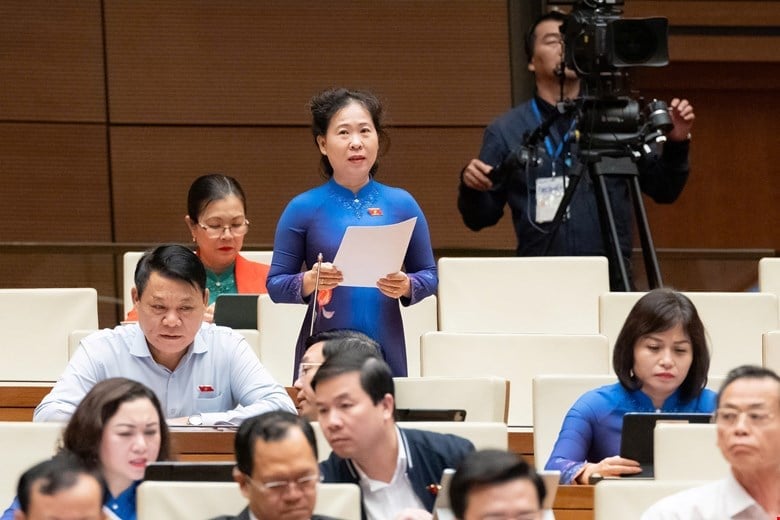
Delegate To Ai Vang (Can Tho). Photo: Quochoi.vn
Delegate To Ai Vang (Can Tho) added that the criteria for what constitutes waste, by-products, and scrap must be determined based on the technical basis of each production process, avoiding subjective assessments.
According to delegate To Ai Vang, there should be clear guidance on documents and certificates for non-cash payments, especially after raising the threshold to VND5 million to ensure tax deduction conditions. She also suggested reviewing the compatibility between VAT regulations and other taxes such as environmental protection tax, especially for toxic waste.
From a tax perspective, delegate Tran Anh Tuan (HCMC) noted that waste, by-products, and scrap only generate tax when sold on the market or consumed; only then will there be sales to calculate output tax and deduct input tax.
Delegates agreed that the business community has high expectations for this amendment. The law, once passed, will create a better legal corridor for the agricultural and aquatic product processing, animal feed and organic fertilizer production industries, which have made important contributions to Vietnam's agriculture and exports.
Source: https://nongnghiepmoitruong.vn/quoc-hoi-nong-tranh-luan-thue-suat-voi-phe-pham-phu-pham-phe-lieu-d788502.html




![[Photo] Urgently help people soon have a place to live and stabilize their lives](/_next/image?url=https%3A%2F%2Fvphoto.vietnam.vn%2Fthumb%2F1200x675%2Fvietnam%2Fresource%2FIMAGE%2F2025%2F12%2F09%2F1765248230297_c-jpg.webp&w=3840&q=75)










































![[Photo] General Secretary To Lam works with the Standing Committees of the 14th Party Congress Subcommittees](https://vphoto.vietnam.vn/thumb/402x226/vietnam/resource/IMAGE/2025/12/09/1765265023554_image.jpeg)




















Comment (0)