

Housing prices in Hanoi nearly doubled in just 6 years
In recent years, housing prices have continuously "broken the peak" and established new price levels, becoming a hot topic from the National Assembly agenda to social forums.
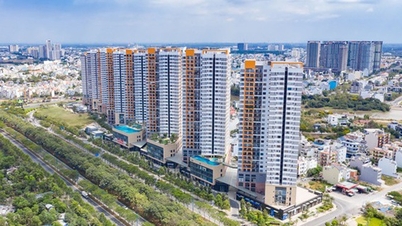
According to research data from the Vietnam Real Estate Market Research and Evaluation Institute (VARS IRE), by the end of the third quarter of 2025, the apartment price index in Hanoi, Da Nang and Ho Chi Minh City increased by 96.2%, 72.6% and 56.9% respectively compared to 2019.
The average selling price of projects in the sample set in these three cities has reached 78.9 million VND/m2 in Hanoi, 67.4 million VND/m2 in Da Nang and 81.6 million VND/m2 in Ho Chi Minh City.
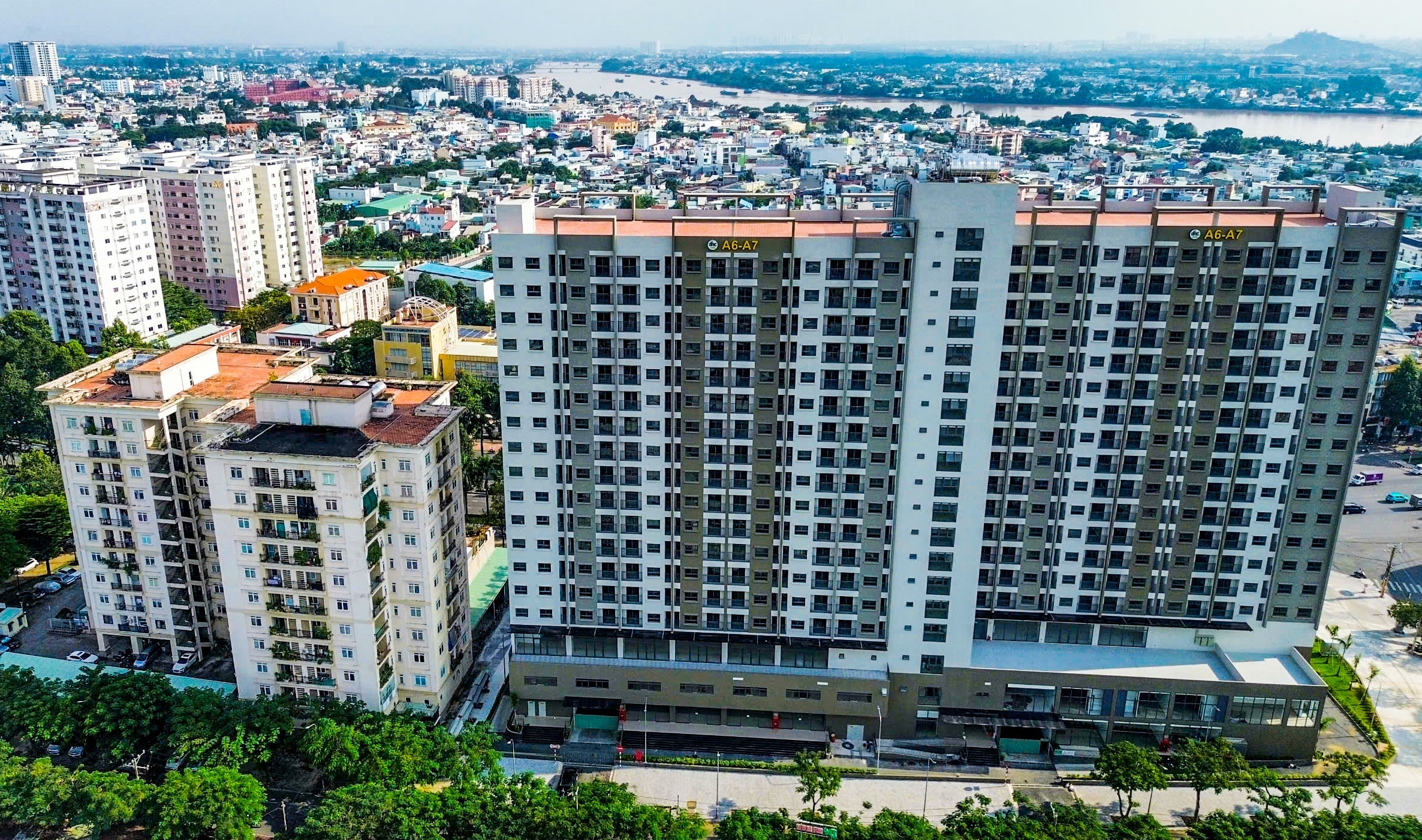
Up to now, apartment prices in Ho Chi Minh City are moving towards higher prices after a long period of accumulation, while apartment prices in Da Nang and Hanoi are starting to trend sideways at high prices as investors are not yet under much financial pressure and expectations of price increases are still maintained.
Meanwhile, the average income of workers is only about 15 million VND/month, making the housing price/income ratio far beyond affordability.
It takes a young couple about 10 years to save up enough capital to buy a house, but during that time, house prices increase faster than savings, leading to a situation where "savings can never keep up with house prices."
The reality makes choosing to rent a house for a long time become an increasingly popular trend. However, in the context of the housing rental market in Vietnam still lacking professionalism and stability, renting a house can only help reduce financial pressure in the short term, but cannot meet the sustainable housing needs of the people.
Although the State has issued many policies to promote the development of social housing (NƠXH), helping to improve the speed of implementing the NƠXH Project, the results have not met expectations.
Because the current development of social housing mainly relies on policies to encourage businesses, however, low profit margins, complicated procedures, lack of clean land funds and unstable incentive mechanisms make businesses lack motivation to participate.
Faced with this situation, many experts have recommended changing the social housing development model in the direction of the State playing a leading role, from policy planning, land allocation, capital sources to implementation organization.
National Housing Fund is needed
Recently, the Government issued Decree 302/2025, establishing the National Housing Fund, operating at two levels: the Central Fund is established and managed by the Ministry of Construction, while the Local Fund is established and managed by the Provincial People's Committee.
The Fund's sources are diverse, including the State budget, land fund value for social housing infrastructure, proceeds from selling public properties, proceeds from auctioning land use rights, and voluntary contributions from within and outside the country as well as other legal sources.
Notably, the Fund's core objective is to create and develop social housing for rent, and is also allowed to purchase commercial housing for rent to officials, civil servants, public employees and workers.
Commenting on this issue, the Vietnam Real Estate Market Research and Evaluation Institute (VARS IRE) believes that the State's direct participation in creating social housing, especially social housing for rent, is a strategic housing solution, in line with international trends.
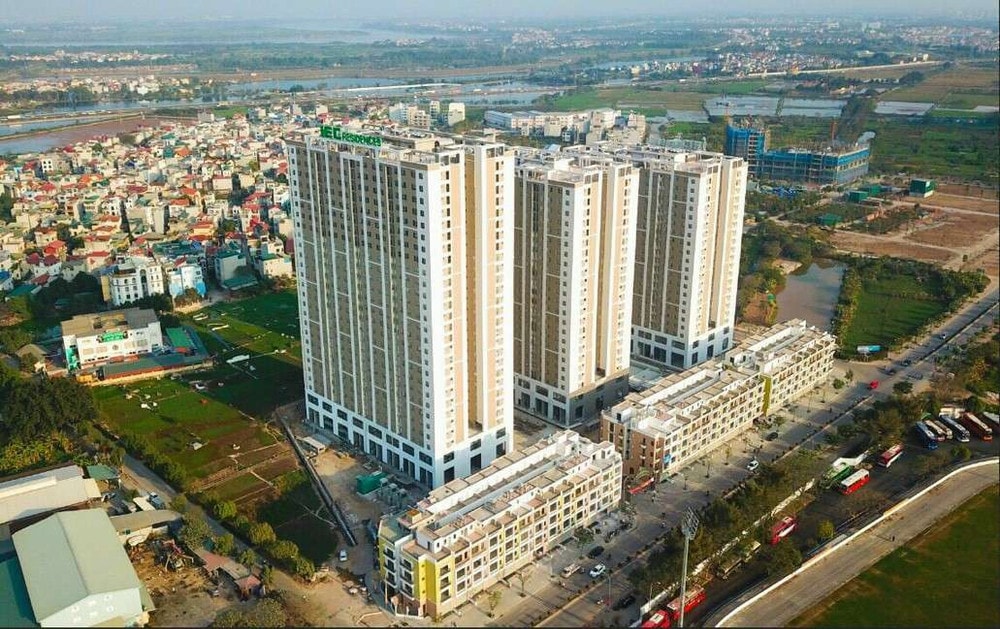
In fact, many countries have successfully implemented this model. For example, in Singapore, more than 80% of the population lives in houses developed by HDB, South Korea has established state-owned enterprises specializing in developing social housing, Germany has a long-term support policy for low-cost housing with a commitment to rent lower than the market for 15-25 years.
In Vietnam, developing the rental housing market is a necessary step. In the context of rising social housing prices, beyond the financial capacity of many middle-income groups and many problems arising in the process of implementing policies, focusing on the rental-only model, not for sale, will help ensure a stable supply, limit speculation and maintain rental costs at a reasonable and sustainable level.
“Thanks to that, people, especially low- and middle-income groups, will have a real opportunity to settle down, while gradually reducing the pressure on home ownership,” VARS IRE emphasized.
However, for renting to truly become a sustainable solution, VARS IRE believes that it is necessary to promote public-private partnership (PPP), in which businesses participate in project construction, and the State buys back ownership or leases back for operation.
At the same time, it is necessary to continue researching and promulgating regulations on rental housing standards, including limiting annual price increases, applying long-term lease contracts and making adjustment conditions transparent, and proposing incentive mechanisms and policies to encourage social participation in promoting rental housing construction.
In the long term, when the supply of housing, especially affordable housing and rental housing, improves, the balance of supply and demand in the market will gradually stabilize. Part of the demand for ownership will be replaced by rental demand, helping to reduce the pressure on price increases and creating conditions for the real estate market to operate more transparently and sustainably, while opening up real housing opportunities for the majority of people.
Meanwhile, Mr. Dinh Minh Tuan, Business Director of PropertyGuru Vietnam also analyzed: Building 1 million social houses before 2030 is a very ambitious project. However, if we continue with the old form, in the way of encouraging businesses and banks to participate in the direction of contribution, the goal will be difficult to achieve.
“If we have a Fund that demonstrates the proactive role of the State in creating capital for people to buy social housing and supporting investors with capital for construction, it will be a dual measure to quickly promote the social housing market,” said Mr. Tuan.
According to Mr. Tuan, the first impact of the National Housing Fund is certainly to help investors have capital to speed up the construction progress of social housing projects at more suitable prices.
The second impact is to support the people. Currently, customers who borrow to buy a house have to pay interest with a large part of their income. However, with the new loan package of the national housing fund, the loan period is longer, the payment is lower, so buying a house can be easier.
Source: https://congluan.vn/quy-nha-o-quoc-gia-lieu-co-phai-la-giai-phap-cho-khung-hoang-nha-o-tai-viet-nam-10320069.html
![[Photo] Parade to celebrate the 50th anniversary of Laos' National Day](/_next/image?url=https%3A%2F%2Fvphoto.vietnam.vn%2Fthumb%2F1200x675%2Fvietnam%2Fresource%2FIMAGE%2F2025%2F12%2F02%2F1764691918289_ndo_br_0-jpg.webp&w=3840&q=75)



![[Photo] Worshiping the Tuyet Son statue - a nearly 400-year-old treasure at Keo Pagoda](/_next/image?url=https%3A%2F%2Fvphoto.vietnam.vn%2Fthumb%2F1200x675%2Fvietnam%2Fresource%2FIMAGE%2F2025%2F12%2F02%2F1764679323086_ndo_br_tempimageomw0hi-4884-jpg.webp&w=3840&q=75)


















































































Comment (0)