

 |
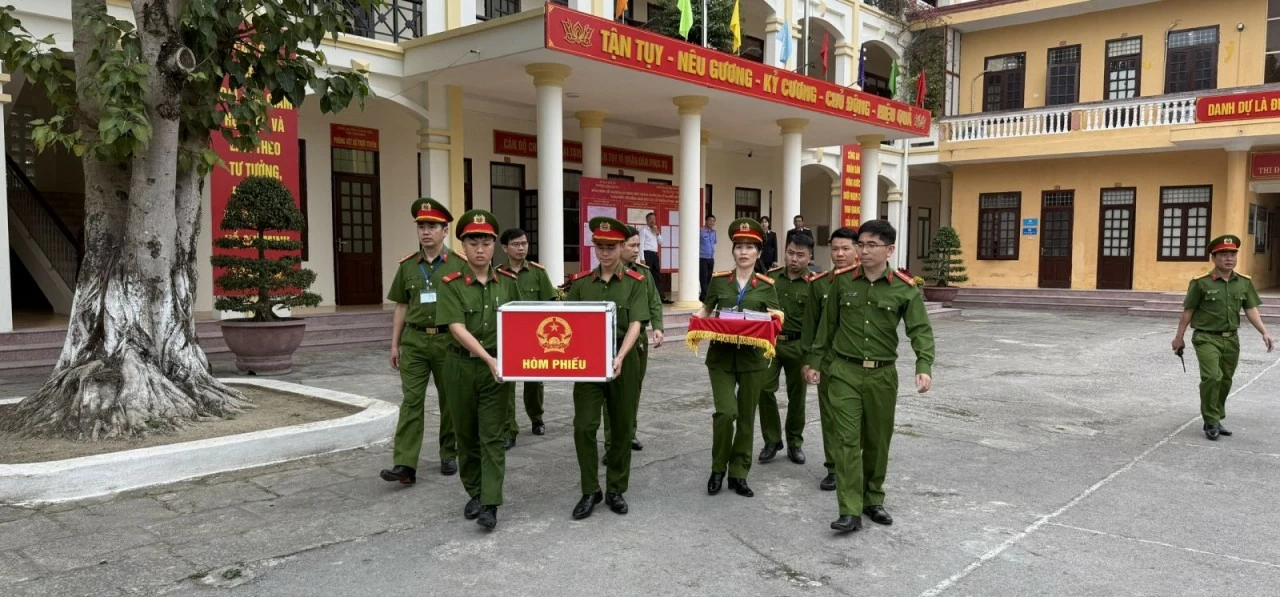
| The polling station at the Thanh Hoa Provincial Police Detention Center brought supplementary ballot boxes directly into the isolation areas so that detainees could exercise their rights and civic duties. (Source: Thanh Hoa Provincial Police) |
Thanh Hoa, a strategically important area with a large population, faces significant challenges in ensuring the right to vote for those under temporary detention, those in custody, and trainees at compulsory drug rehabilitation centers. This is not merely about enforcing the law but also carries humanitarian significance, affirming the principle of "leaving no one behind" in the country's political life.
Not separated by the "wall" of confinement.
In modern Vietnamese legal thought, the 2013 Constitution (amended and supplemented in 2025) established a golden principle: Human rights and civil rights can only be restricted by law in necessary cases for reasons of national defense, national security, public order, social safety, social morality, and public health.
The right to vote and stand for election is a fundamental political right, allowing citizens aged 18 and over to directly elect representatives to the National Assembly and People's Councils, except in cases where this right is revoked by law (such as loss of civil capacity or serving a prison sentence).
Article 29 of the 2015 Law on Election of National Assembly Deputies and People's Council Deputies stipulates: Voters who are currently detained, held in custody, or undergoing compulsory education or compulsory rehabilitation measures shall be registered on the voter list to elect National Assembly deputies and People's Council deputies at the provincial level where they are being detained, held in custody, or undergoing compulsory education or compulsory rehabilitation measures.
Throughout the country in general, and Thanh Hoa province in particular, this viewpoint is being concretized by showing respect for each vote cast by those who are under investigation or undergoing compulsory rehabilitation. Ensuring their right to vote is not only about enforcing the law, but also about affirming human dignity.
For someone who has made mistakes, holding a ballot in their hand sends a powerful message: They are still part of the community, still have rights and responsibilities for the future of the country. The shift from a "management and isolation" mindset to one of "guaranteeing rights and rehabilitating through education" is a significant step forward in the democratization process at the local level. This demonstrates that human rights in Vietnam are not abstract slogans but practical actions, placing people at the center of all development policies.
So that no one is left behind.
Thanh Hoa province, with its vast territory and large-scale detention and rehabilitation facilities, has developed a "special" election process that is absolutely in accordance with the law, ensuring the authenticity of each ballot.
To prevent isolation from becoming a barrier to information, facilities such as the Provincial Police's Detention Center and Drug Rehabilitation Center have implemented an internal multimedia communication model. Voter lists and brief biographies of candidates are prominently and publicly displayed in the corridors of the detention cells and common areas. The internal public address system is utilized to widely disseminate information about the rights, obligations, and biographies of candidates. For voters with limited rights, or those who are ill or unable to travel, staff will personally distribute leaflets and convey information to help voters in these special areas have sufficient data to make informed choices, ensuring that the selection is the result of personal judgment and not coercion.
Lieutenant Colonel Nguyen Tien Dung, Superintendent of the Provincial Police Detention Center, stated that the Provincial Police Detention Center currently has one main facility and nine sub-detention centers located in various areas throughout the province. In accordance with legal regulations regarding the right to vote for detainees, the unit has proactively coordinated closely with local Party committees, authorities, and election committees at all levels to regularly review and update voter changes, promptly supplementing the list according to regulations, ensuring that no eligible voters are overlooked.
In addition, the detention center has developed a specific plan, assigning personnel to prepare all necessary conditions to organize the exercise of the right to vote by the electorate in accordance with the law. The unit has also focused on disseminating information about the meaning and importance of the election, as well as the rights and obligations of citizens, helping detainees understand their rights and responsibilities when participating in this important national event.
“We believe that ensuring the right to vote for voters who are being held in custody is not only about strictly enforcing the law, but also about clearly demonstrating the humane and democratic nature of the regime. Therefore, every step, from reviewing the voter list and preparing polling stations to organizing voters to exercise their right to vote, is implemented meticulously and according to procedure, while ensuring absolute security and safety at the detention facility,” Lieutenant Colonel Nguyen Tien Dung emphasized.
A unique characteristic of detention and rehabilitation centers is the constant fluctuation of the voter base. In Thanh Hoa, the police force closely coordinated with the Election Committee to update the voter list right up to the opening time. Even those released or who completed their rehabilitation on election day were given thorough guidance and support to exercise their civic rights at the nearest polling station or local polling place. At rehabilitation centers such as Centers No. 1 and No. 2, the process of compiling lists for hundreds of trainees was meticulous, ensuring that 100% of eligible individuals received voter cards.
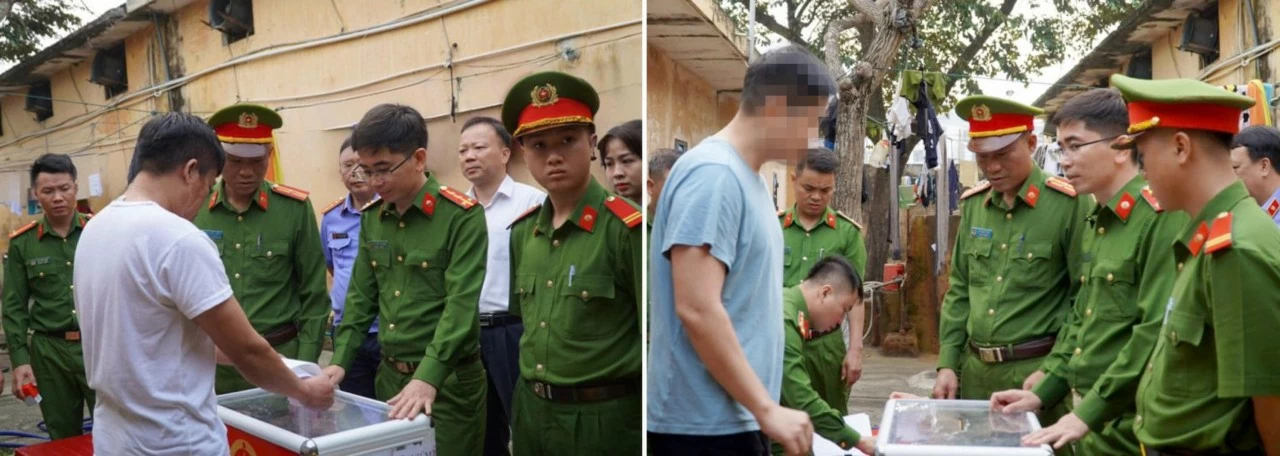 |
Detainees at the Thanh Hoa Provincial Police Detention Center exercise their right to vote. (Source: Thanh Hoa Provincial Police) |
Lieutenant Colonel Nguyen Tuan Ngoc, Head of Drug Rehabilitation Center No. 1 in Thanh Hoa province, said: Through the review process, Drug Rehabilitation Center No. 1 has compiled a list of 608 eligible voters (including 533 trainees currently undergoing rehabilitation at the center) who meet the criteria to exercise their right to vote. For newly admitted trainees, the unit is making efforts to update the list and guide them on relevant legal procedures to ensure no one is left out. At the same time, it is coordinating with local authorities where trainees who have completed or are about to complete their rehabilitation reside to notify and compile voter lists at their places of residence, ensuring the rights of trainees after reintegrating into the community. The goal is to have an accurate voter list compiled before March 15th, so that trainees, whether at the center or having returned home, can cast their ballots and exercise their civic rights.
For individuals subject to strict supervision or who are ill and have limited mobility, detention centers and rehabilitation facilities prepare and arrange supplementary ballot boxes to be placed at each cell door or location where voters are staying, so they can exercise their rights and fulfill their obligations.
Each ballot is cast in private, placed in a sealed ballot box under the supervision of the election committee. Along with ensuring voters' right to vote, plans for security, safety, fire prevention, medical services, and handling any unforeseen situations on election day are also meticulously prepared by the relevant units to ensure that election day truly becomes a celebration for the entire nation.
Practice is the most compelling answer.
From an educational and humanitarian perspective, participating in elections at specialized facilities serves as a "special psychological therapy." For those undergoing rehabilitation or currently detained, the stigma of past mistakes is often the biggest obstacle preventing them from reintegrating into society.
NVT, a trainee at Drug Rehabilitation Center No. 1, said: "After being informed by the officers about my rights and responsibilities, I felt both moved and proud. Being able to hold a ballot and directly vote for those I trust makes me feel like I am still a useful and trustworthy citizen."
Such statements show that the ballot now not only signifies the selection of a representative, but also carries the power of tolerance. It awakens self-respect, affirms the self-worth of each individual, and helps them understand that society still trusts them. This is the most important prerequisite for them to confidently walk the "path of righteousness" and reintegrate into society.
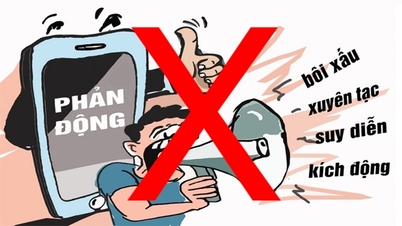
Furthermore, transparency in elections in specific areas of Thanh Hoa is a "sharp weapon" to directly refute the distorted narratives of hostile forces and ill-intentioned organizations.
Historically, whenever the country experiences major political events, especially elections, subversive elements often claim that Vietnam "rigifies" the results in prisons. The reality in Thanh Hoa shows that the multi-layered monitoring process, involving the Fatherland Front, the Election Committee, and the voters themselves, has created a barrier preventing any errors. The voluntary and enthusiastic participation of drug rehabilitation trainees and detainees is the most vivid evidence refuting any coercion.
By proactively bringing the right to vote to those under detention or custody – something that even many developed countries still struggle with – Vietnam affirms that it not only protects the right to life and freedom but also the political rights of those who have committed offenses.
On the morning of March 15th alone, 100% of voters who were being held in temporary detention, or undergoing compulsory drug rehabilitation at drug rehabilitation centers in Thanh Hoa province, fulfilled their civic rights and duties. Each vote cast by a detainee, a prisoner, or a rehabilitation trainee was a dose of moral support, a recognition of their social standing, helping them overcome feelings of guilt, correct their mistakes, and strive to reintegrate into society. This is a genuine human right, deeply rooted in the traditional ethics and humanism of the Vietnamese people.
Ensuring the right to vote in detention centers and drug rehabilitation facilities in Thanh Hoa province is a vivid testament to the superiority of our system. It is a harmonious blend of the strictness of the law and the warmth of human compassion. The ballots cast from behind the gates of these detention centers and rehabilitation facilities have sown the seeds of faith in justice and in the hope of returning to fulfill the full rights and obligations of an honest citizen. This is the core value of human rights that we are striving to cultivate every day.
Source: https://baoquocte.vn/quyen-bau-cu-cua-nhung-cu-tri-dac-biet-395325.html























































































Comment (0)