

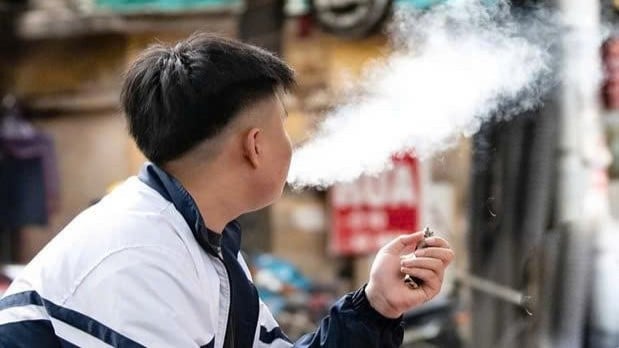
Protecting young people from the dangerous effects of e-cigarettes and heated tobacco products
Dr. Nguyen Trung Nguyen, Director of the Poison Control Center, Bach Mai Hospital, said that cigarettes contain 1.5-3% nicotine, while e-cigarettes can contain 35-69 mg/ml, dozens of times higher.
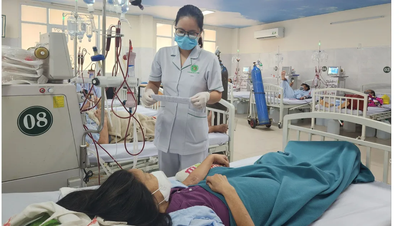
Citing cases of children who had to go to the Poison Control Center for emergency treatment due to e-cigarette poisoning with serious health consequences, Dr. Nguyen regretted that the brain damage in these cases could not be recovered. More importantly, many cases, although they had no symptoms, when examined, discovered signs of lung damage, nerve damage, etc.
E-cigarettes and heated tobacco products are portrayed as less harmful and suitable for young people, but in reality they pose a greater risk of nicotine addiction. In addition to long-term effects including cancer, heart and lung disease, nicotine consumption in children and adolescents has a particularly harmful impact on brain development, with long-term consequences including learning disorders and anxiety disorders.
It is alarming that electronic cigarette devices and heated tobacco products have become perfect camouflage tools to commit crimes, bringing illegal substances into schools, public places, and among young people without control.
Faced with serious health impacts, Vietnam has issued Resolution 173/2024/QH15 banning e-cigarettes and heated tobacco products. Vietnam has been recognized by the international community for its pioneering role in banning e-cigarettes and heated tobacco products, protecting the health and future of the younger generation.
According to WHO Representative in Vietnam, Dr. Angela Pratt, although the implementation and enforcement of the National Assembly 's ban on new tobacco products is still in its early stages, available evidence shows that the initial ban has clearly created positive impacts.
"According to data from the Poison Control Center, Bach Mai Hospital, the number of emergency room visits related to the use of these products - especially among young people - decreased by nearly 70% in the 10 months after the ban was issued compared to the same period before. Promotion by influencers has largely stopped, signaling a strong deterrent," Dr. Angela Pratt cited.
It is impossible to "leave open" the absolute ban on investment and business in electronic cigarettes and heated tobacco products.
However, in order for the National Assembly’s ban on these harmful products to be effectively implemented, Dr. Angela Pratt emphasized, it is necessary to ensure that the e-cigarette and heated tobacco business must be included in the list of prohibited investment and business sectors in the Investment Law (amended) (Article 6) without any exceptions. This is necessary to protect the achievements in public health that have been achieved and at the same time strengthen Vietnam’s reputation in the international arena as a pioneering country in protecting people’s health.
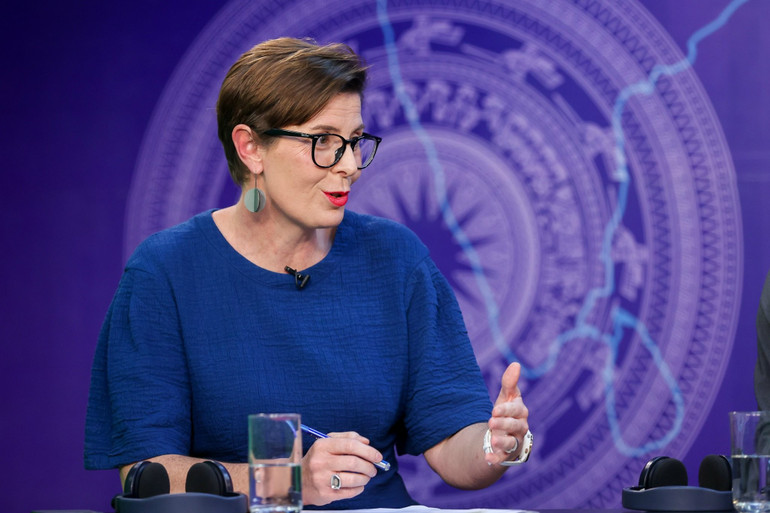
Allowing production for export poses many risks, weakens the health and social protection rationale of the ban, creates inconsistencies in the legal system, creates opportunities for smuggling and leakage of goods into the domestic market, and places a heavy burden on control and law enforcement.
Ms. Nguyen Thi Viet Nga, Deputy Head of the National Assembly Delegation of Hai Phong City, emphasized that the current Draft Investment Law (amended) only includes traditional cigarettes in the list of conditional businesses, but leaves open, does not stipulate an absolute ban on investment and business in electronic cigarettes and heated tobacco, which is a step backward in policy, potentially disastrous, beyond the normal medical framework, has become a security issue, social order and political responsibility.
"This is a matter of 'life or death' for school security and social order and safety, and more broadly, the survival of our nation and people. If we do not ban the sale of these devices, we are indirectly providing a 'cover' for drug criminals targeting Vietnamese youth," said Ms. Viet Nga.
Therefore, this delegate affirmed that putting e-cigarettes and heated tobacco products on the list of prohibited investment and business activities is a decision, a courageous and courageous action, affirming that we are not penetrated by interest groups, demonstrating unity of will with the Party, and the highest responsibility of the National Assembly for the safety and health of the people, especially the young generation, and the survival of the nation.
Dr. Ulysses Dorotheo, Director of SEATCA - Southeast Asia Tobacco Control Alliance, affirmed that including these products in the List of prohibited investment and business sectors is extremely necessary to ensure the consistency of the legal system and in accordance with Vietnam's international commitments under the Framework Convention on Tobacco Control (FCTC) of the World Health Organization (WHO).
Currently, 42 countries in the world have banned e-cigarettes, 24 countries have banned heated tobacco products. In the ASEAN region, in addition to Vietnam, 4 other countries including Singapore, Thailand, Laos and Cambodia have banned both types of products; Brunei has banned e-cigarettes; and Malaysia will also ban e-cigarettes from 2026.
The complete ban on e-cigarettes and heated tobacco products in the Investment Law demonstrates Vietnam’s full implementation of international commitments – especially the WHO Framework Convention on Tobacco Control (WHO FCTC); the convention recommends member states to prevent the development, production and marketing of new tobacco products that have not been proven safe, while protecting young people from tobacco industry interference.
Source: https://nhandan.vn/quyet-liet-cam-thuoc-la-dien-tu-de-bao-ve-nhung-thanh-tuu-ve-suc-khoe-cong-dong-post927229.html



![[Photo] Prime Minister Pham Minh Chinh receives President of Cuba's Latin American News Agency](/_next/image?url=https%3A%2F%2Fvphoto.vietnam.vn%2Fthumb%2F1200x675%2Fvietnam%2Fresource%2FIMAGE%2F2025%2F12%2F01%2F1764569497815_dsc-2890-jpg.webp&w=3840&q=75)



![[Video] Building a free basic health care service package, aiming towards gradually eliminating hospital fees](https://vphoto.vietnam.vn/thumb/402x226/vietnam/resource/IMAGE/2025/12/02/1764633707029_kham-png.webp)




























































Comment (0)