

Effective models from the grassroots
Khanh Khe commune ( Lang Son ) was established from three communes: Khanh Khe, Xuan Long and Binh Trung. The whole commune has more than 13,000 people, of which ethnic minorities account for 98.86%.
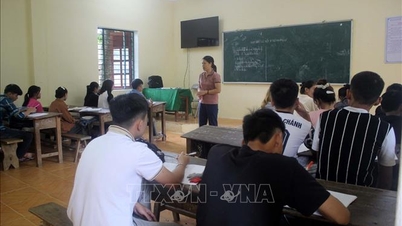
Since March, Khanh Khe commune has opened four literacy classes at four schools, attracting about 100 students. Of these, 80 students are qualified to graduate.
According to Lang Son’s report, the province has maintained a steady level 2 literacy rate, with thousands of people being mobilized to attend classes each year. The literacy rate among the 15-60 age group is over 97.2%, with the literacy rate among ethnic minorities increasing significantly. This result comes from the concerted efforts of the entire political system.
The Steering Committee for Universal Education and Literacy Eradication at all levels has been promptly strengthened and operates substantially; the Department of Education and Training has proactively advised and issued many documents directing and providing practical professional guidance.
Notably, the province organized a Math and Vietnamese language exchange contest for students of literacy classes, both to test and evaluate results and to create a useful playground, helping learners become more confident when using their knowledge.
At the commune and village levels, the model of “Groups to mobilize students to attend literacy classes” has been clearly effective. With the participation of village chiefs, party cell secretaries, organizations and teachers, the groups have “gone to every alley, knocked on every door, checked every subject”, grasped the thoughts and reasons for absenteeism to have appropriate mobilization measures.
Thanks to that, many communes have opened literacy classes with flexible times and locations, mainly in the evenings at village cultural houses or people's homes, convenient for people's daily life and work.

The Community Learning Centers of 65 communes effectively maintain websites, fanpages, and Zalo groups to disseminate policies, learning materials, and spread production models and exemplary learning examples. The centers also coordinate with agricultural extension, justice, health, and women's associations to organize thousands of training courses according to actual needs.
The province has implemented regular education, especially literacy and community learning centers, in a systematic, creative and practical manner. Models such as “Mobilization Team” or “Exchange Competition” are considered to have great practical value and need to be studied for replication.
Efforts to overcome difficulties
Mr. Nguyen Xuan Thuy - Deputy Director of the Department of Vocational Education and Continuing Education (Ministry of Education and Training) - acknowledged the efforts of Lang Son province in implementing the work of eliminating illiteracy, especially in mobilizing learners in the conditions of a large area, scattered population and over 92% of whom are ethnic minorities.
For example, in Ba Son commune, the literacy rate of people aged 15-60 is 99.30% at level 1, and 92.76% at level 2. Classes are divided into groups according to level, combining cultural activities and educational videos to create interest for learners.
Mr. Nguyen Xuan Thuy said that provinces and cities have proactively strengthened the Steering Committee for Universal Education and Literacy Eradication, timely supplemented personnel, and developed annual implementation plans suitable to local realities.
Many Departments of Education and Training also advised the Provincial People's Committee and People's Council to issue specialized resolutions, stipulating specific spending levels for illiteracy eradication work. This contributes to concretizing the Circulars of the Ministry of Finance (17/2022/TT-BTC, 15/2022/TT-BTC, now 55/2023/TT-BTC), creating an important legal corridor for the allocation and disbursement of capital sources.
The directive documents of the Ministry of Education and Training such as Official Dispatch 640/BGDĐT-GDTX, Official Dispatch 4024/BGDĐT-GDTX... are seriously implemented and deployed to the commune and ward levels, ensuring consistency in implementation methods and goals.
At the same time, communication work is being promoted by localities in many diverse forms, especially targeting ethnic minorities - a group that is easily left behind in accessing education.
In Son La, more than 300 news articles and reports are broadcast in three languages: Mandarin, Thai and Mong, helping information reach the right audience.
Lang Son has applied technology strongly by equipping 200 electronic information pages for community learning centers, organizing operational training for 400 students and launching the contest "Excellent literacy propagandist".
Many localities also cooperate to create intuitive and easy-to-understand video clips and reports, contributing to spreading the message of lifelong learning and improving the effectiveness of literacy work.
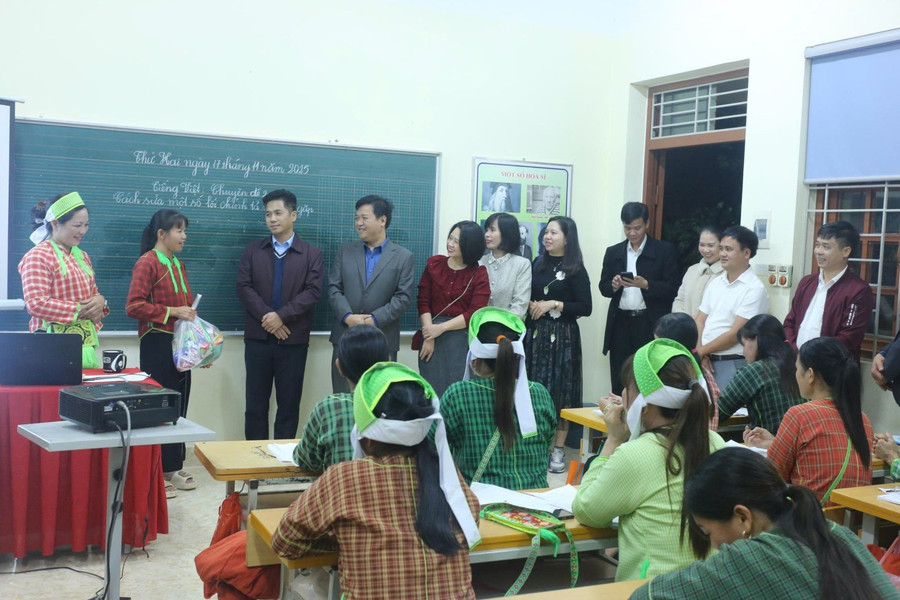
In the period 2020 - 2023, the work of mobilizing people to participate in literacy classes continues to be strongly implemented in many localities, especially in ethnic minority and mountainous areas. However, the results between localities are still uneven, some places are not really drastic even though the number of illiterate people is still high.
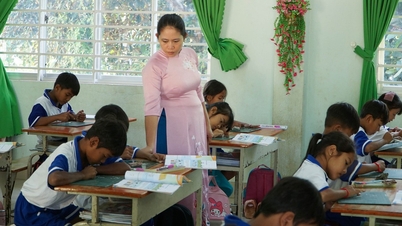
Many provinces have flexibly opened classes suitable to local characteristics, enhancing coordination between continuing education centers, community learning centers and general schools. Thanks to that, tens of thousands of students have had the opportunity to perfect their reading and writing skills, gradually improving the quality of human resources at the grassroots level.
However, the report also pointed out that some localities are still confused in surveying and forecasting the number of illiterate people; mobilizing students to attend classes is not really effective. This leads to the mobilization rate not being commensurate with actual needs, especially in remote areas.
The specific results for the 2020-2023 period nationwide are: 79,280 people were mobilized to study literacy.
Provinces under the National Target Program 1719:
• 59,635 people participated in XMC, including:
- XMC Phase 1 Class (Grades 1–3): 38,014 students (25,778 students are ethnic minorities).
- XMC class phase 2 (Grades 4-5): 21,621 students (14,758 students are ethnic minorities).
Source: https://giaoducthoidai.vn/quyet-liet-xoa-mu-chu-di-tung-ngo-go-tung-nha-post759910.html




![[Photo] Urgently help people soon have a place to live and stabilize their lives](/_next/image?url=https%3A%2F%2Fvphoto.vietnam.vn%2Fthumb%2F1200x675%2Fvietnam%2Fresource%2FIMAGE%2F2025%2F12%2F09%2F1765248230297_c-jpg.webp&w=3840&q=75)































































![[Photo] General Secretary To Lam works with the Standing Committees of the 14th Party Congress Subcommittees](https://vphoto.vietnam.vn/thumb/402x226/vietnam/resource/IMAGE/2025/12/09/1765265023554_image.jpeg)





























Comment (0)